


Overview of Optical Biosensors for Early Cancer Detection: Fundamentals, Applications and Future Perspectives
- PMID: 36829508
- PMCID: PMC9953566
- DOI: 10.3390/biology12020232
Overview of Optical Biosensors for Early Cancer Detection: Fundamentals, Applications and Future Perspectives
Abstract
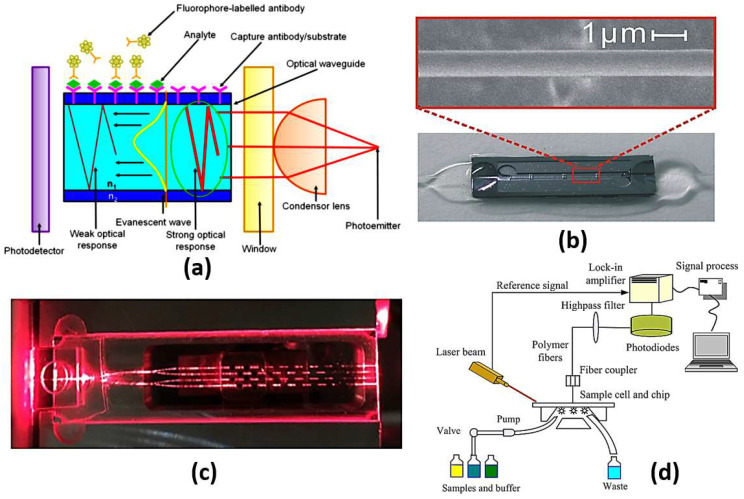
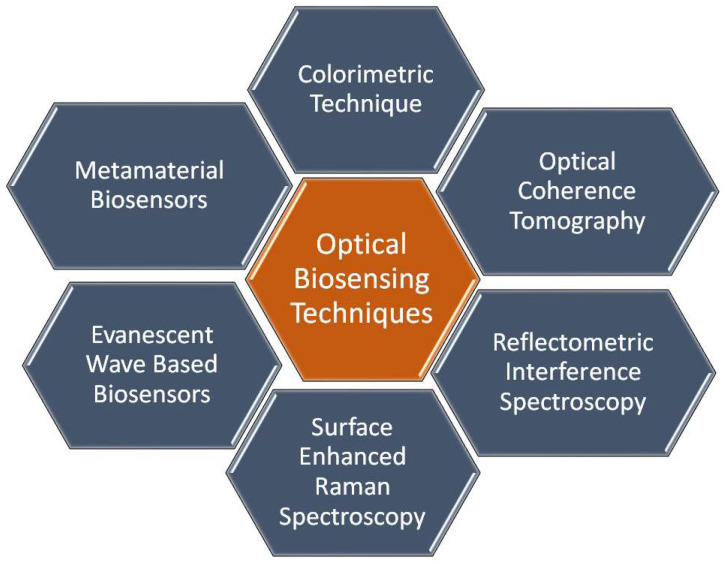
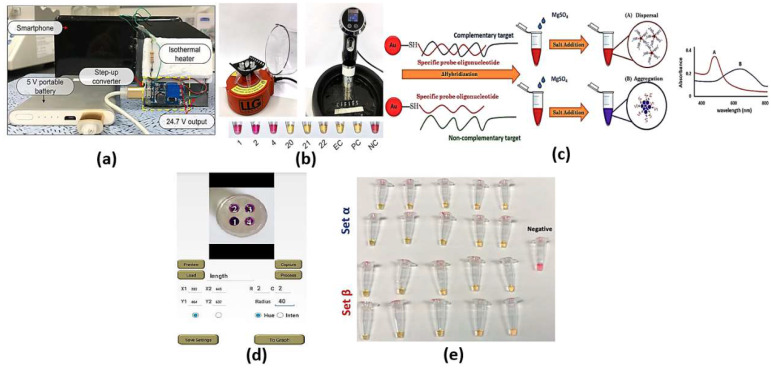
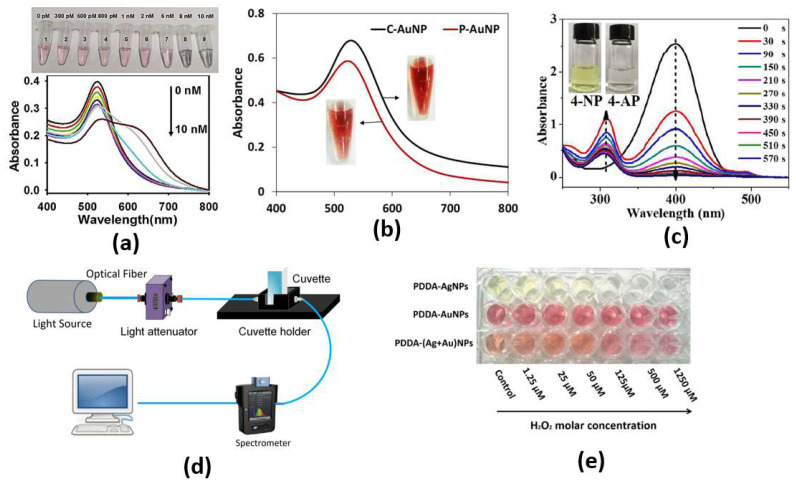
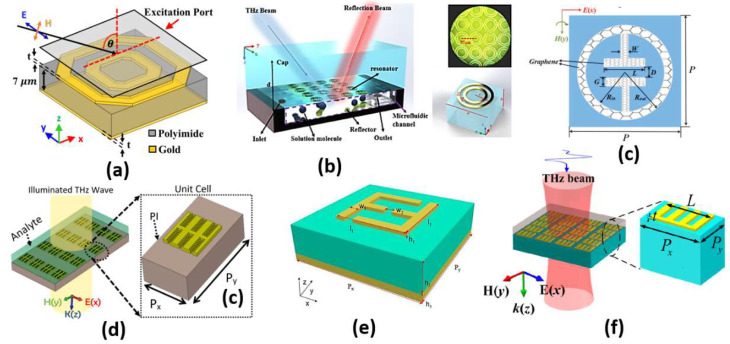
Conventional cancer detection and treatment methodologies are based on surgical, chemical and radiational processes, which are expensive, time consuming and painful. Therefore, great interest has been directed toward developing sensitive, inexpensive and rapid techniques for early cancer detection. Optical biosensors have advantages in terms of high sensitivity and being label free with a compact size. In this review paper, the state of the art of optical biosensors for early cancer detection is presented in detail. The basic idea, sensitivity analysis, advantages and limitations of the optical biosensors are discussed. This includes optical biosensors based on plasmonic waveguides, photonic crystal fibers, slot waveguides and metamaterials. Further, the traditional optical methods, such as the colorimetric technique, optical coherence tomography, surface-enhanced Raman spectroscopy and reflectometric interference spectroscopy, are addressed.
Keywords: early cancer detection; label free; metamaterial; optical biosensors; plasmonic biosensor.
Conflict of interest statement
The authors declare no conflict of interest.
Figures
References
-
- National Cancer Institute. [(accessed on 20 April 2022)]; Available online: https://www.cancer.gov/about-cancer/understanding/statistics.
-
- Sinha T. Tumors: Benign and Malignant. Cancer Ther. Oncol. Int. J. 2018;10:555790. doi: 10.19080/CTOIJ.2018.10.555790. - DOI
Publication types
Grants and funding
LinkOut - more resources
Full Text Sources
