


Raised FGF23 Correlates to Increased Mortality in Critical Illness, Independent of Vitamin D
- PMID: 36829583
- PMCID: PMC9953634
- DOI: 10.3390/biology12020309
Raised FGF23 Correlates to Increased Mortality in Critical Illness, Independent of Vitamin D
Abstract
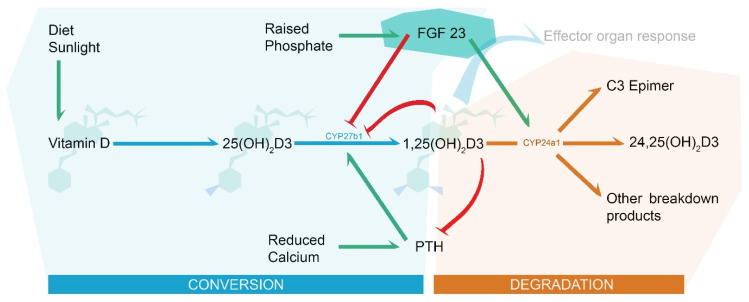
Background: Fibroblast Growth Factor (FGF23) is an endocrine hormone classically associated with the homeostasis of vitamin D, phosphate, and calcium. Elevated serum FGF23 is a known independent risk factor for mortality in chronic kidney disease (CKD) patients. We aimed to determine if there was a similar relationship between FGF23 levels and mortality in critically ill patients.
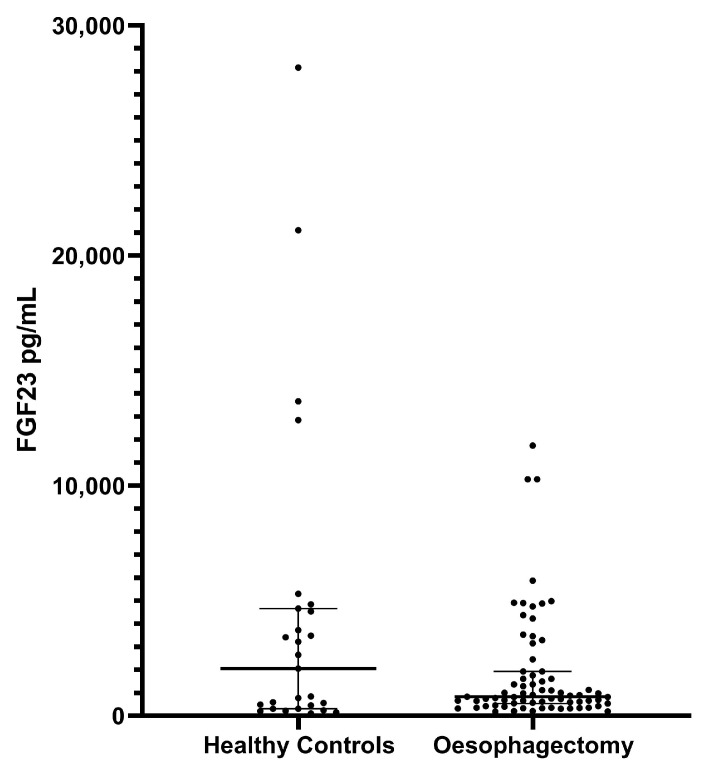
Methods: Plasma FGF23 levels were measured by ELISA in two separate cohorts of patients receiving vitamin D supplementation: critical illness patients (VITdAL-ICU trial, n = 475) and elective oesophagectomy patients (VINDALOO trial, n = 76). Mortality data were recorded at 30 and 180 days or at two years, respectively. FGF23 levels in a healthy control cohort were also measured (n = 27).
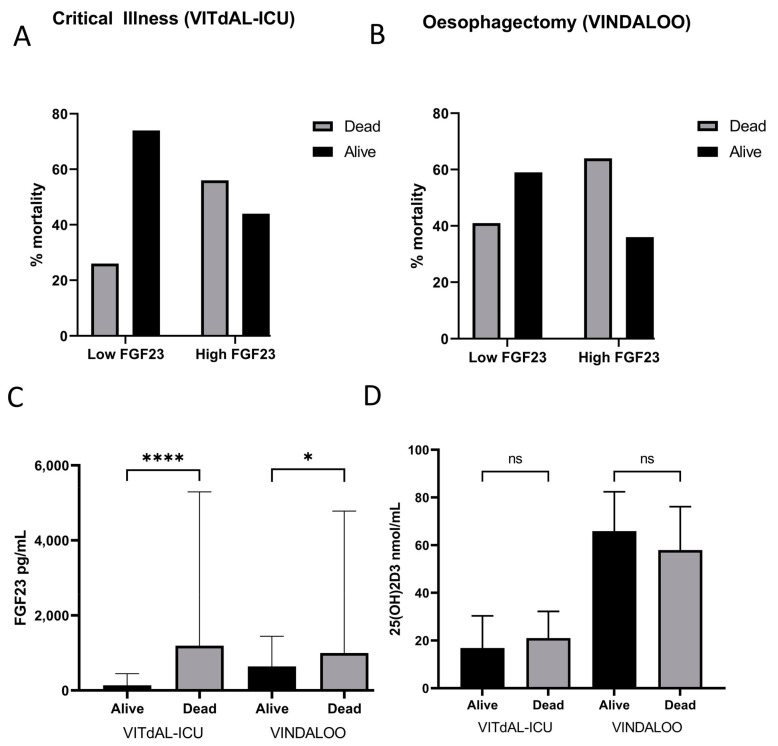
Results: Elevated FGF23 (quartile 4 vs. quartiles 1-3) was associated with increased short-term (30 and 180 day) mortality in critical illness patients (p < 0.001) and long-term (two-year) mortality in oesophagectomy patients (p = 0.0149). Patients who died had significantly higher FGF23 levels than those who survived: In the critical illness cohort, those who died had 1194.6 pg/mL (range 0-14,000), while those who survived had 120.4 pg/mL (range = 15-14,000) (p = 0.0462). In the oesophagectomy cohort, those who died had 1304 pg/mL (range = 154-77,800), while those who survived had 644 pg/mL (range = 179-54,894) (p < 0.001). This was found to be independent of vitamin D or CKD status (critical illness p = 0.3507; oesophagectomy p = 0.3800). FGF23 levels in healthy controls were similar to those seen in oesophagectomy patients (p = 0.4802).
Conclusions: Elevated baseline serum FGF23 is correlated with increased mortality in both the post-oesophagectomy cohort and the cohort of patients with critical illness requiring intensive care admission. This was independent of vitamin D status, supplementation, or CKD status, which suggests the presence of vitamin D-independent mechanisms of FGF23 action during the acute and convalescent stages of critical illness, warranting further investigation.
Keywords: FGF23; critical illness; intensive care.
Conflict of interest statement
The authors declare no conflict of interest.
Figures
References
-
- Zajic P., Amrein K. Vitamin D deficiency in the ICU: A systematic review. Minerva Endocrinol. 2014;39:275–287. - PubMed
-
- Parekh D., Dancer R.C.A., Lax S., Cooper M.S., Martineau A.R., Fraser W.D., Tucker O., Alderson D., Perkins G.D., Gao-Smith F., et al. Vitamin D to prevent acute lung injury following oesophagectomy (VINDALOO): Study protocol for a randomised placebo controlled trial. Trials. 2013;14:100. doi: 10.1186/1745-6215-14-100. - DOI - PMC - PubMed
-
- Amrein K., Schnedl C., Holl A., Riedl R., Christopher K.B., Pachler C., Urbanic Purkart T., Waltensdorfer A., Munch A., Warnkross H., et al. Effect of high-dose vitamin D3 on hospital length of stay in critically ill patients with vitamin D deficiency: The VITdAL-ICU randomized clinical trial. Jama. 2014;312:1520–1530. doi: 10.1001/jama.2014.13204. - DOI - PubMed
Grants and funding
- NIHR129593/National Institute for Health Research
- 14143/Jubilaumsfonds
- Chernajovsky Foundation
- MCFPHD20F\2/British Lung Foundation
- NIHR17/147/33/National Institute for Health Research
- MR/S002782/1/MRC_/Medical Research Council/United Kingdom
- MR/N021185/1/MRC_/Medical Research Council/United Kingdom
- G1100196/MRC_/Medical Research Council/United Kingdom
- Fresenius Kabi
- Starter Fellowship/Birmingham Health Partners
- MR/X000338/1/MRC_/Medical Research Council/United Kingdom
- NIHR131600/National Institute for Health Research
- MR/J011266/1/MRC_/Medical Research Council/United Kingdom
LinkOut - more resources
Full Text Sources
