Review
. 2023 Jan 23;12(2):258.
doi: 10.3390/antiox12020258.

Potential Role of Quercetin Glycosides as Anti-Atherosclerotic Food-Derived Factors for Human Health

Affiliations
Review

Potential Role of Quercetin Glycosides as Anti-Atherosclerotic Food-Derived Factors for Human Health

Junji Terao. Antioxidants (Basel). .

Abstract

Quercetin is a monomeric polyphenol of plant origin that belongs to the flavonol-type flavonoid subclass. Extensive studies using cultured cells and experimental model animals have demonstrated the anti-atherosclerotic effects of dietary quercetin in relation to the prevention of cardiovascular disease (CVD). As quercetin is exclusively present in plant-based foods in the form of glycosides, this review focuses on the bioavailability and bioefficacy of quercetin glycosides in relation to vascular health effects. Some glucose-bound glycosides are absorbed from the small intestine after glucuronide/sulfate conjugation. Both conjugated metabolites and deconjugated quercetin aglycones formed by plasma β-glucuronidase activity act as food-derived anti-atherogenic factors by exerting antioxidant, anti-inflammatory, and plasma low-density lipoprotein cholesterol-lowering effects. However, most quercetin glycosides reach the large intestine, where they are subject to gut microbiota-dependent catabolism resulting in deglycosylated aglycone and chain-scission products. These catabolites also affect vascular health after transfer into the circulation. Furthermore, quercetin glycosides may improve gut microbiota profiles. A variety of human cohort studies and intervention studies support the idea that the intake of quercetin glycoside-rich plant foods such as onion helps to prevent CVD. Thus, quercetin glycoside-rich foods offer potential benefits in terms of cardiovascular health and possible clinical applications.

Keywords: atherosclerosis; bioavailability; cardiovascular disease; endothelial dysfunction; gut microbiota; onion flavonoids; quercetin glycosides.


Conflict of interest statement

The author declares no conflict of interest.

Figures
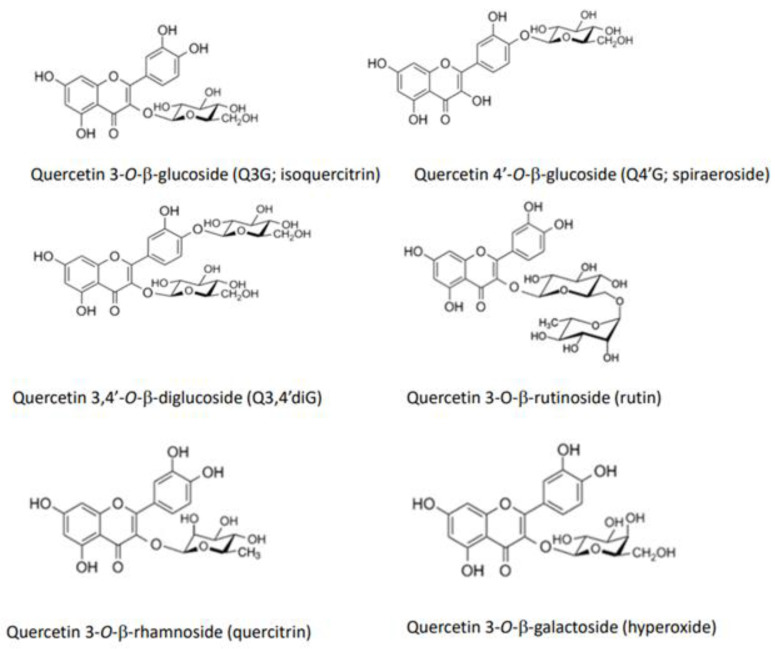
Figure 1
Figure 1
Structures of major quercetin glycosides present in vegetables.
Figure 2
Figure 2
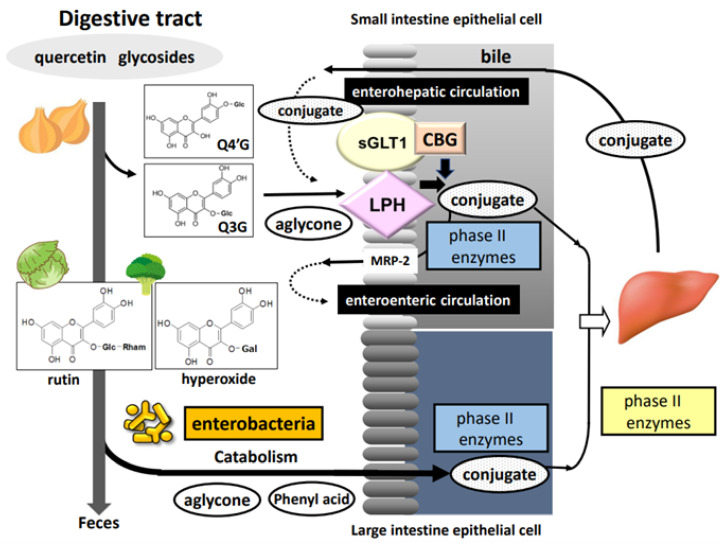
Processing of dietary quercetin glycosides in the intestinal tract (CBG: cellular β-glucosidase; LPH: lactase phlorizin hydrolase; MRP-2: multidrug resistance-associated protein-2; sGLT1: sodium glucose cotranporter-1; Glc: glucose; Gal: galactose; Rham; rhamnose).
Figure 3
Figure 3
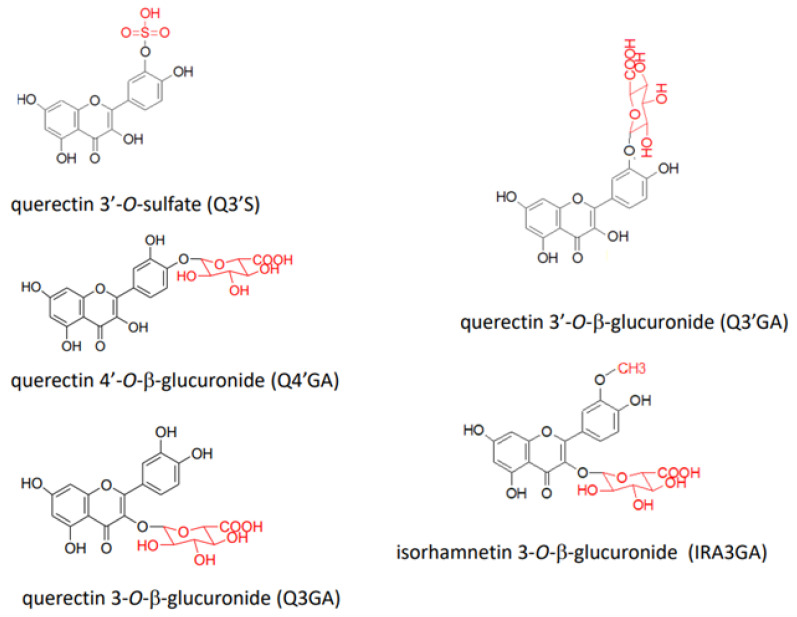
Structures of representative quercetin conjugated metabolites detected in human plasma.
Figure 4
Figure 4
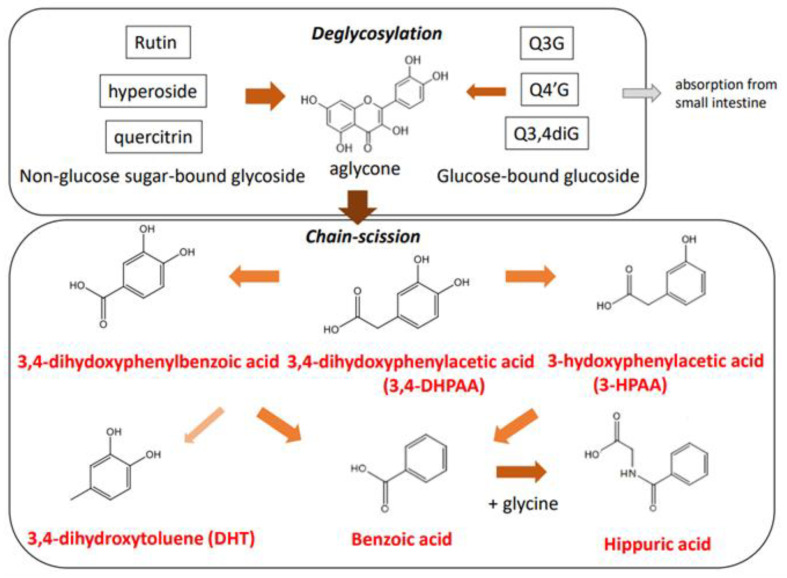
Gut microbiota-dependent catabolic pathway of quercetin glycosides in the large intestine.
Figure 5
Figure 5
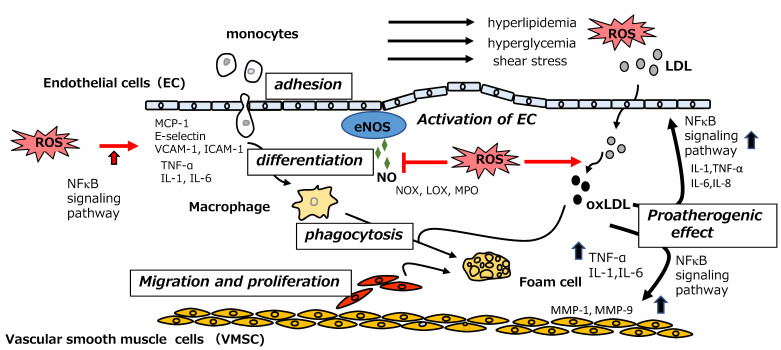
Vascular events in the initial stage of atherosclerosis (eNOS: endothelial nitric oxide synthase; ICAM-1: intermolecular adhesion molecule-1; IL-1; interleukin-1, IL-6: interleukin-6; IL-8: interleukin-8; LDL; low-density lipoprotein; LOX; lipoxygenase; MCP-1: monocyte chemotactic protein-1; MMP-1: matrix metalloproteinase-1; MMP-9: matrix metalloproteinase-9; MPO: myeloperoxidase; NFκB: nuclear factor kappa B; NOX; NADPH oxygenase; oxLDL: oxidized low-density lipoprotein; ROS: reactive oxygen species; TNF-α: tumor necrosis factor-α; VCAM-1: vascular cell adhesion molecule-1).
Figure 6
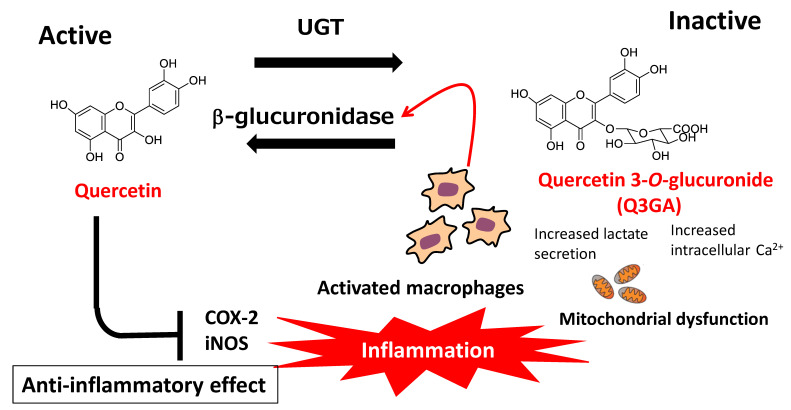
Figure 6
Physiological significance of deconjugation of quercetin conjugated metabolites: conjugation–deconjugation cycle (COX-2: cyclooxyganse-2; iNOS: inducible nitric oxide synthase; UGT: UDP glucuronosyl transferase).
Figure 7
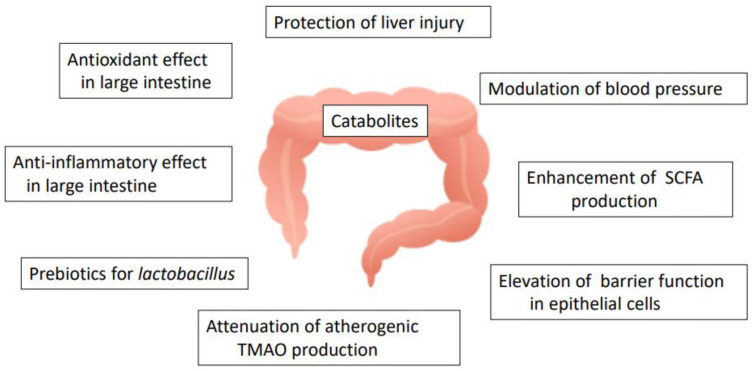
Figure 7
Possible role of quercetin glycosides in relation to gut microbiota activity (SCFA: short chain fatty acids; TMAO: trimethylamine oxide).

References

    1. Mathesius U. Flavonoid functions in plants and their interactions with other organisms. Plants. 2018;7:30. doi: 10.3390/plants7020030. - DOI - PMC - PubMed
    1. Ferreyra M.L.F., Rius S.P., Casati P. Flavonoids: Biosynthesis, biological functions, and biotechnological applications. Front. Plant Sci. 2012;3:222. doi: 10.3389/fpls2012.00222. - DOI - PMC - PubMed
    1. Biswas A., Thattai M. Promiscuity and specificity of eukaryotic glycosyltransferases. Biochem. Soc. Transact. 2020;48:891–900. doi: 10.1042/BST20190651. - DOI - PMC - PubMed
    1. Terao J., Piskula M.K., Yao Q. Protective effect of epicatechin, epicatechin gallate and quercetin on lipid peroxidation in phospholipid bilayers. Arch. Biochem. Biophys. 1994;308:278–284. doi: 10.1006/abbi.1994.1039. - DOI - PubMed
    1. Rice-Evans C.A., Miller N.J., Bolwell P.G., Bramley P.M., Pridham J.B. The relative antioxidant activities of plant-derived polyphenolic flavonoids. Free Radic. Res. 1995;4:375–383. doi: 10.3109/10715769509145649. - DOI - PubMed