


3D-Printed, Liquid-Filled Capsules of Concentrated and Stabilized Polyphenol Epigallocatechin Gallate, Developed in a Clinical Trial
- PMID: 36829983
- PMCID: PMC9952645
- DOI: 10.3390/antiox12020424
3D-Printed, Liquid-Filled Capsules of Concentrated and Stabilized Polyphenol Epigallocatechin Gallate, Developed in a Clinical Trial
Abstract
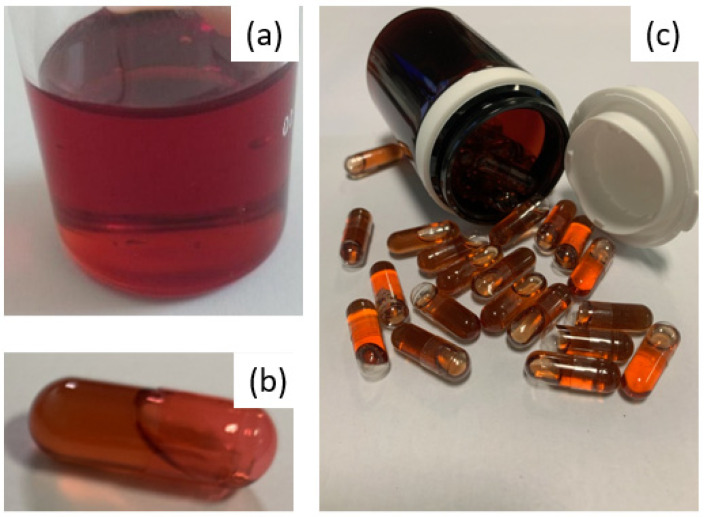
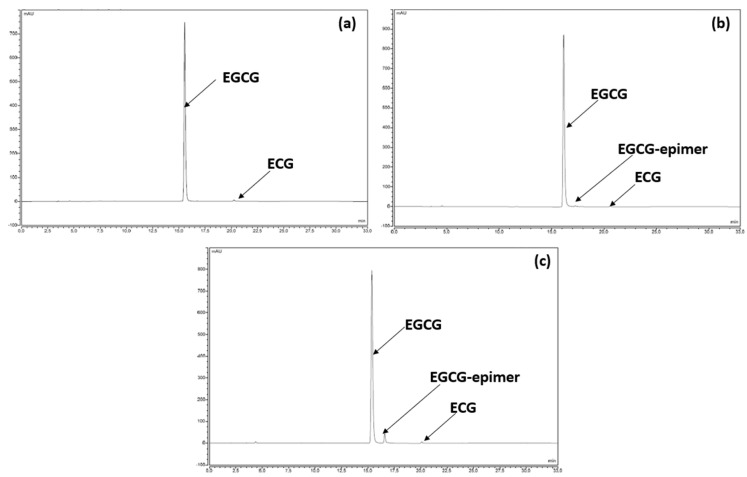
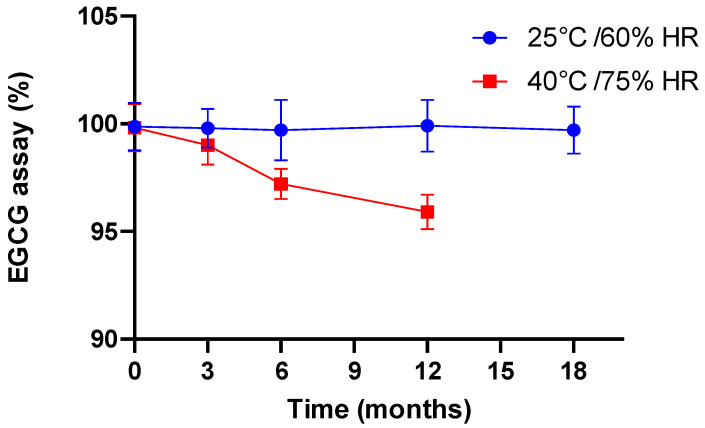
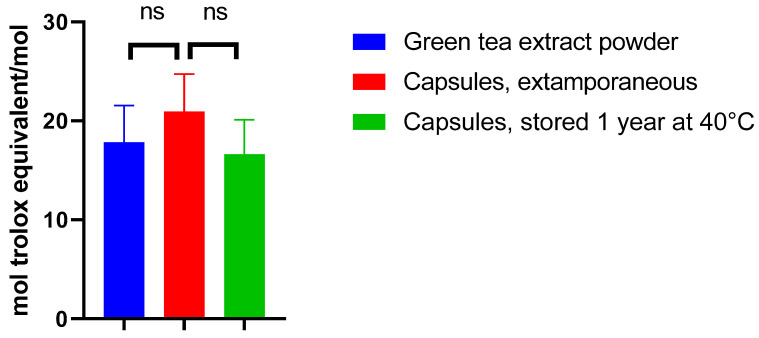
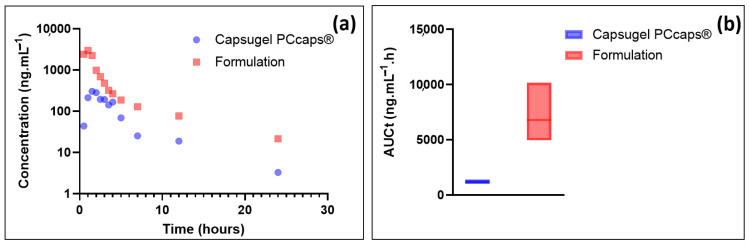
In vitro studies have shown that epigallocatechin gallate (EGCG), the most potent antioxidant of the green tea polyphenol catechins, is able to effectively prevent the formation of amyloid plaques and induce their clearance. However, its high chemical reactivity promotes high chemical instability, which represents a major obstacle for the development of pharmaceutical forms containing solubilized EGCG, an essential condition for a better systemic passage via the oral route. After discovering that EGCG forms a deep eutectic with choline chloride, we exploited this property to formulate and patent liquid-filled capsules containing 200-800 mg of soluble EGCG in easy-to-administer sizes. The gelatin envelopes used are of the conventional type and their filling has been achieved using 3D printing technology. Not only did the EGCG-choline complex allow the formulation of hydrophilic solutions with a high concentration of active substance but it also contributed significantly to its chemical stability, since after at least 18 months of storage at 25 °C/60% RH and one year at 40 °C/75% RH, the capsules show unchanged hardness, chromatographic profiles and antioxidant activity compared to T0. Preclinical studies in monkeys showed that bioavailability was increased by a factor of 10 compared to marketed capsules comprising EGCG powder. This pharmaceutical development was conducted in the context of upcoming clinical trials to evaluate EGCG alone or in combination when treating transthyretin and light-chain cardiac amyloidosis.
Keywords: bioavailability; epigallocatechin gallate; eutectic solution; formulation; oral solution; stability.
Conflict of interest statement
The authors declare no conflict of interest.
Figures
References
-
- Kristen A.V., Lehrke S., Buss S., Mereles D., Steen H., Ehlermann P., Hardt S., Giannitsis E., Schreiner R., Haberkorn U., et al. Green Tea Halts Progression of Cardiac Transthyretin Amyloidosis: An Observational Report. Clin. Res. Cardiol. 2012;101:805–813. doi: 10.1007/s00392-012-0463-z. - DOI - PMC - PubMed
LinkOut - more resources
Full Text Sources
Research Materials
