


Structure, Activation, and Regulation of NOX2: At the Crossroad between the Innate Immunity and Oxidative Stress-Mediated Pathologies
- PMID: 36829988
- PMCID: PMC9952346
- DOI: 10.3390/antiox12020429
Structure, Activation, and Regulation of NOX2: At the Crossroad between the Innate Immunity and Oxidative Stress-Mediated Pathologies
Abstract
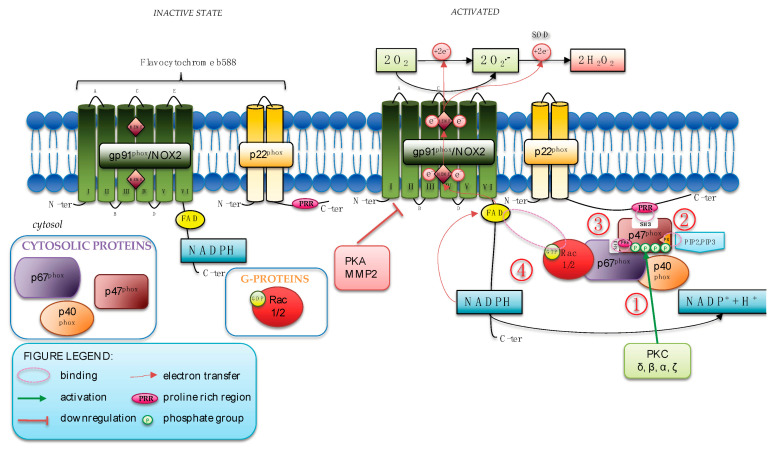
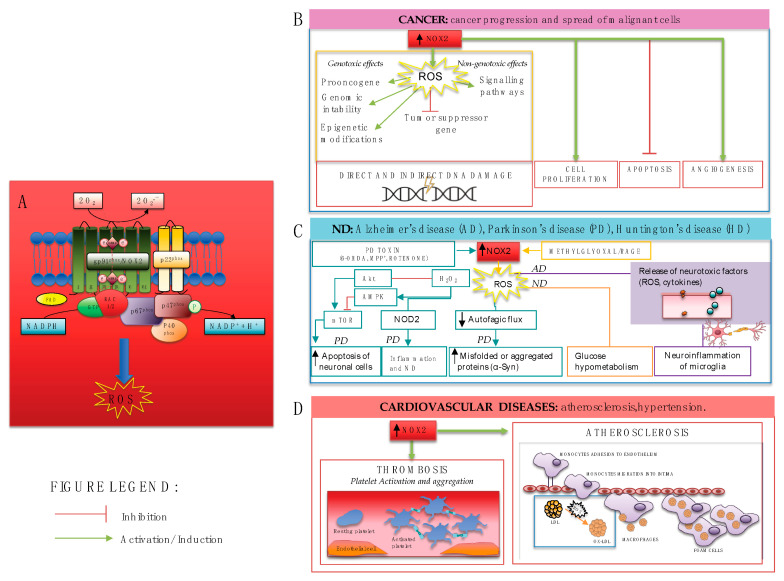
Nicotinamide adenine dinucleotide phosphate (NADPH) oxidase (NOX) is a multisubunit enzyme complex that participates in the generation of superoxide or hydrogen peroxide (H2O2) and plays a key role in several biological functions. Among seven known NOX isoforms, NOX2 was the first identified in phagocytes but is also expressed in several other cell types including endothelial cells, platelets, microglia, neurons, and muscle cells. NOX2 has been assigned multiple roles in regulating many aspects of innate and adaptive immunity, and human and mouse models of NOX2 genetic deletion highlighted this key role. On the other side, NOX2 hyperactivation is involved in the pathogenesis of several diseases with different etiologies but all are characterized by an increase in oxidative stress and inflammatory process. From this point of view, the modulation of NOX2 represents an important therapeutic strategy aimed at reducing the damage associated with its hyperactivation. Although pharmacological strategies to selectively modulate NOX2 are implemented thanks to new biotechnologies, this field of research remains to be explored. Therefore, in this review, we analyzed the role of NOX2 at the crossroads between immunity and pathologies mediated by its hyperactivation. We described (1) the mechanisms of activation and regulation, (2) human, mouse, and cellular models studied to understand the role of NOX2 as an enzyme of innate immunity, (3) some of the pathologies associated with its hyperactivation, and (4) the inhibitory strategies, with reference to the most recent discoveries.
Keywords: NOX2; immunity; inflammation; oxidative stress; therapeutics.
Conflict of interest statement
The authors declare no conflict of interest.
Figures
References
-
- Baldridge C.W., Gerard R.W. The extra respiration of phagocytosis. Am. J. Physiol. Content. 1932;103:235–236. doi: 10.1152/ajplegacy.1932.103.1.235. - DOI
-
- Bridges R.A., Berendes H., Good R.A. A fatal granulomatous disease of childhood: The clinical, pathological, and laboratory features of a new syndrome. [(accessed on 8 December 2022)];AMA J. Dis. Child. 1959 97:387–408. doi: 10.1001/archpedi.1959.02070010389004. Available online: https://pubmed.ncbi.nlm.nih.gov/13636694. - DOI - PubMed
Publication types
LinkOut - more resources
Full Text Sources
Miscellaneous
