. 2023 Jan 20;12(2):225.
doi: 10.3390/antibiotics12020225.

Antimicrobial Activities and Mode of Flavonoid Actions

Affiliations

Antimicrobial Activities and Mode of Flavonoid Actions

Amal Thebti et al. Antibiotics (Basel). .

Abstract

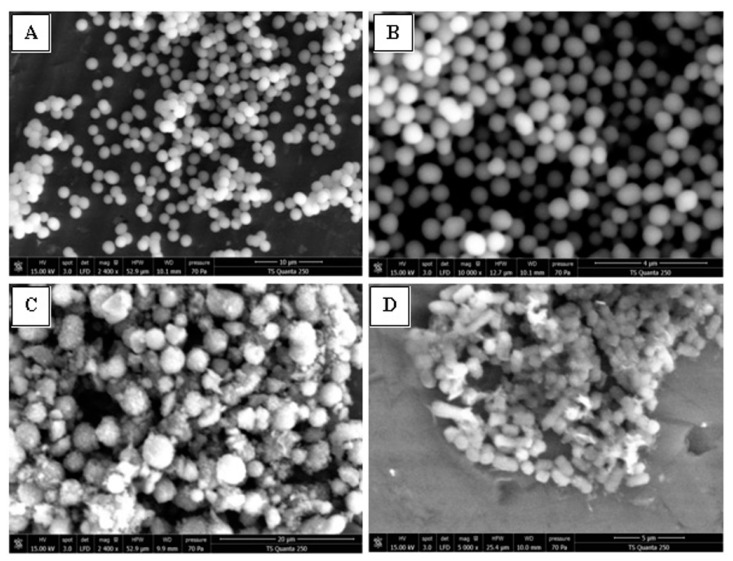
The emergence of antibiotics-resistant bacteria has been a serious concern for medical professionals over the last decade. Therefore, developing new and effective antimicrobials with modified or different modes of action is a continuing imperative. In this context, our study focuses on evaluating the antimicrobial activity of different chemically synthesized flavonoids (FLAV) to guide the chemical synthesis of effective antimicrobial molecules. A set of 12 synthesized molecules (4 chalcones, 4 flavones and 4 flavanones), bearing substitutions with chlorine and bromine groups at the C6' position and methoxy group at the C4' position of the B-ring were evaluated for antimicrobial activity toward 9 strains of Gram-positive and Gram-negative bacteria and 3 fungal strains. Our findings showed that most tested FLAV exhibited moderate to high antibacterial activity, particularly against Staphylococcus aureus with minimum inhibitory concentrations (MIC) between the range of 31.25 and 125 μg/mL and that chalcones were more efficient than flavones and flavanones. The examined compounds were also active against the tested fungi with a strong structure-activity relationship (SAR). Interestingly, leakage measurements of the absorbent material at 260 nm and scanning electron microscopy (SEM) demonstrated that the brominated chalcone induced a significant membrane permeabilization of S. aureus.

Keywords: antibacterial activity; antifungal activity; flavonoids; permeabilization.


Conflict of interest statement

The authors declare no conflict of interest.

Figures
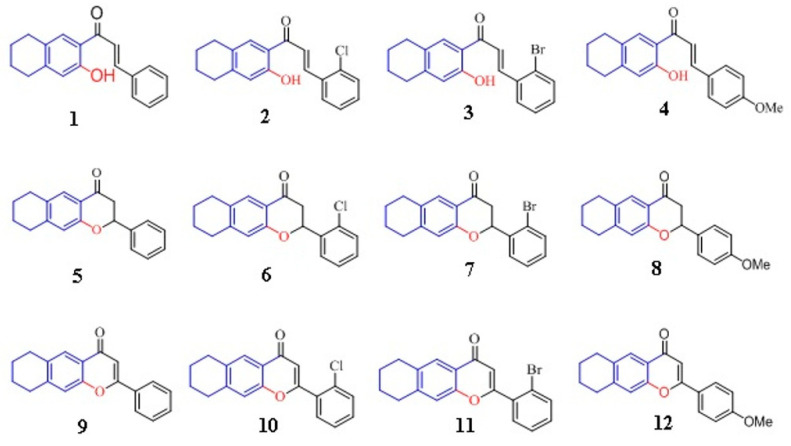
Figure 1
Figure 1
Flavonoids structures (chalcones (14), flavanones (58), and flavones (912)).
Figure 2
Figure 2
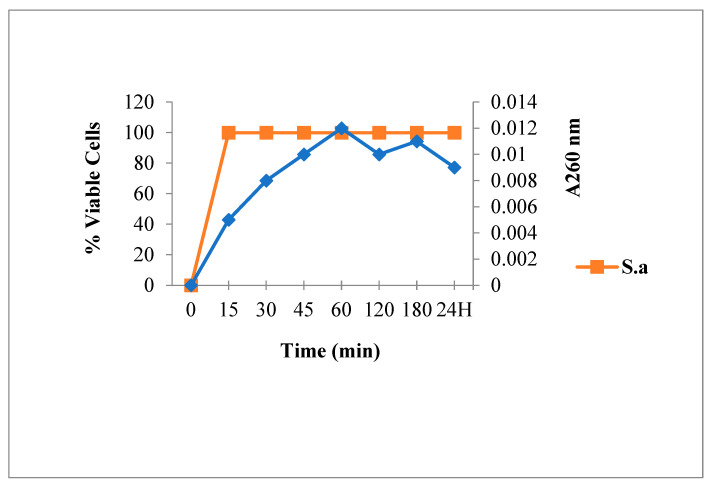
260 nm absorbent material release and viability of S. aureus in absence of antibacterial agent.
Figure 3
Figure 3
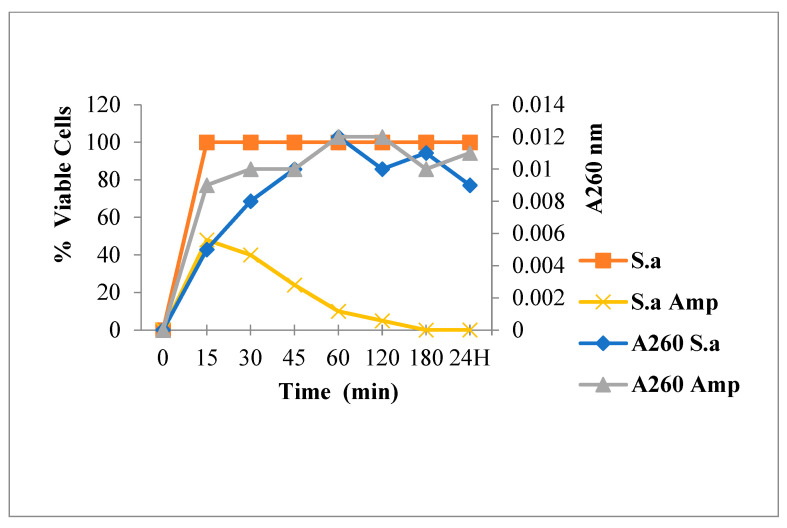
260 nm absorbent material release and viability of S. aureus following Ampicillin (Amp) treatment.
Figure 4
Figure 4
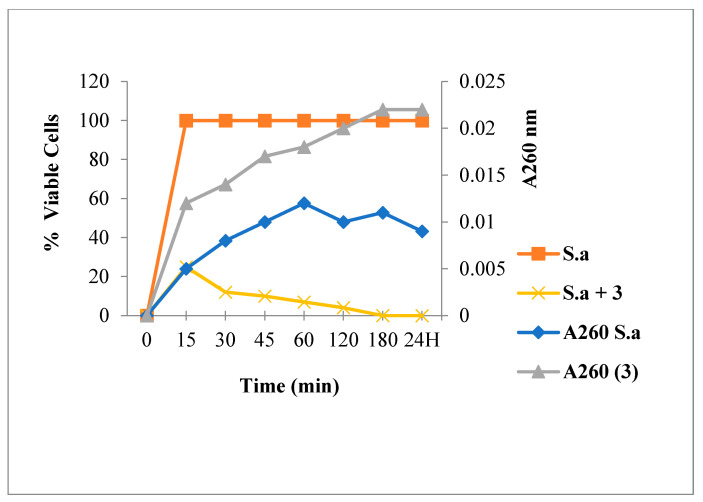
260 nm absorbent material release and viability of S. aureus following Chalcone 3 treatment.
Figure 5
Figure 5
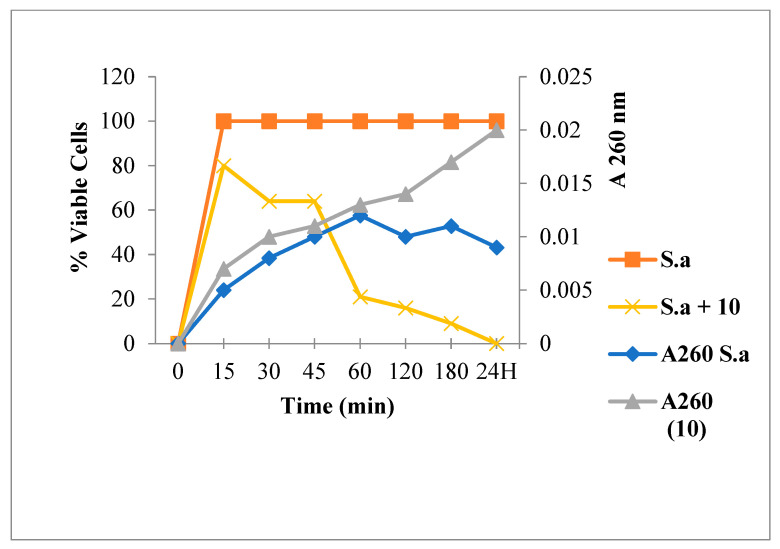
260 nm absorbent material release and viability of S. aureus following flavone 10 treatment.
Figure 6
Figure 6
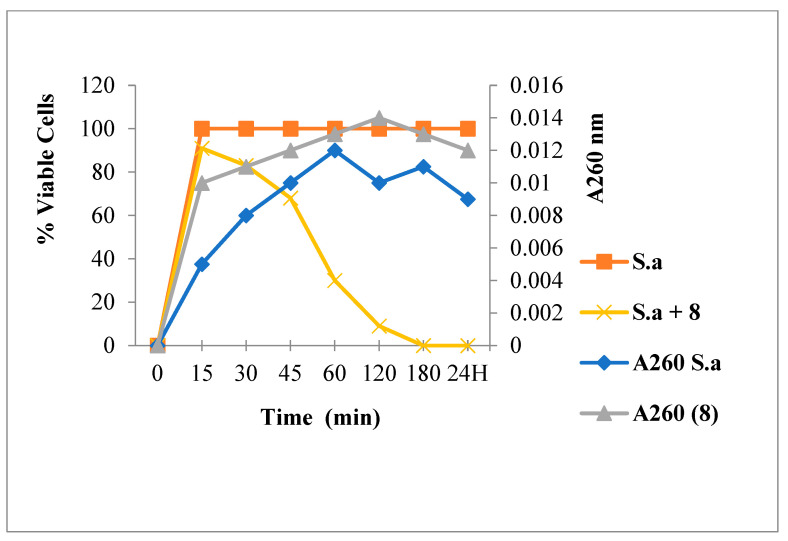
260 nm absorbent material release and viability of S. aureus following Flavanone 8 treatment.
Figure 7
Figure 7
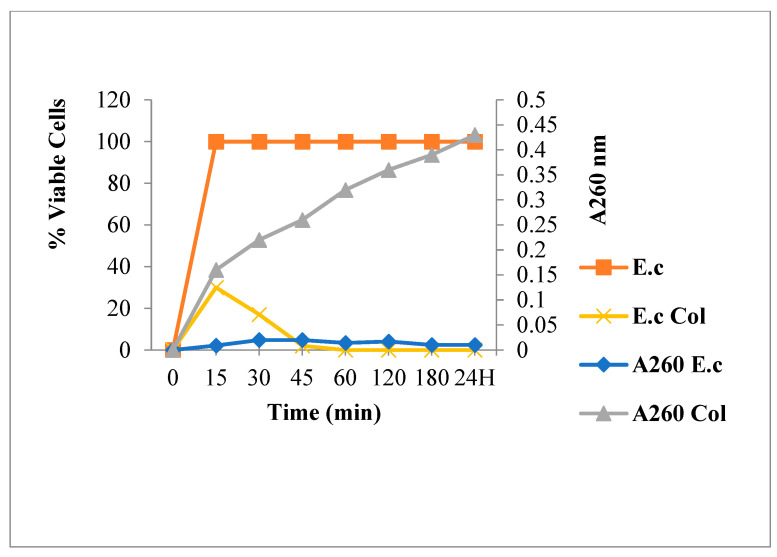
260 nm absorbent material release and E. coli viability following Colistin (Col) treatment.
Figure 8
Figure 8
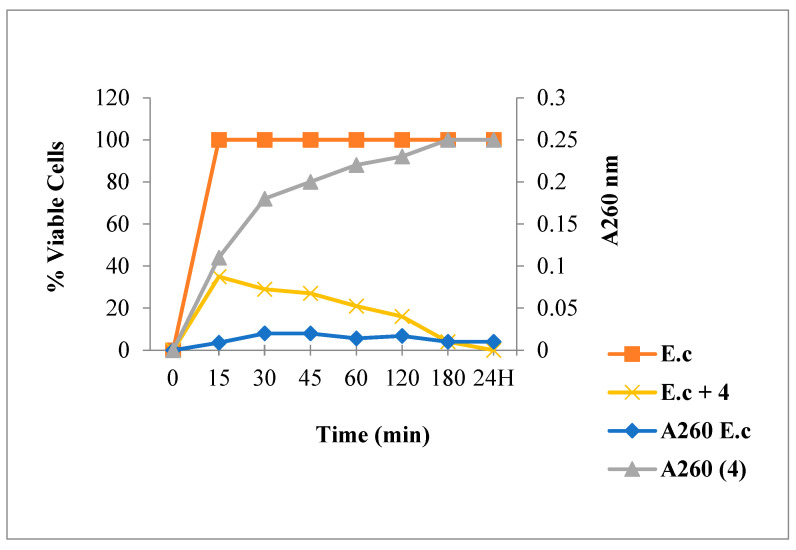
260 nm absorbent material release and E. coli viability following Chalcone 4 treatment.
Figure 9
Figure 9
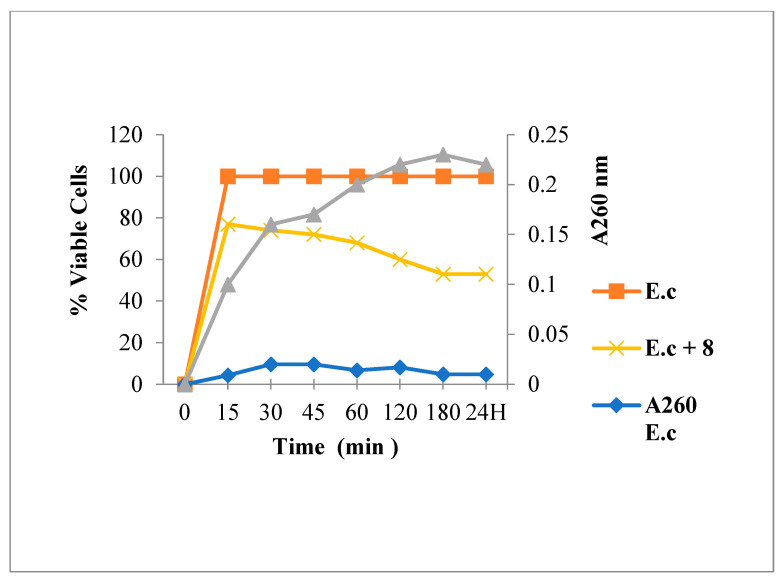
260 nm absorbent material release and E. coli viability following Flavanone 8 treatment.
Figure 10
Figure 10
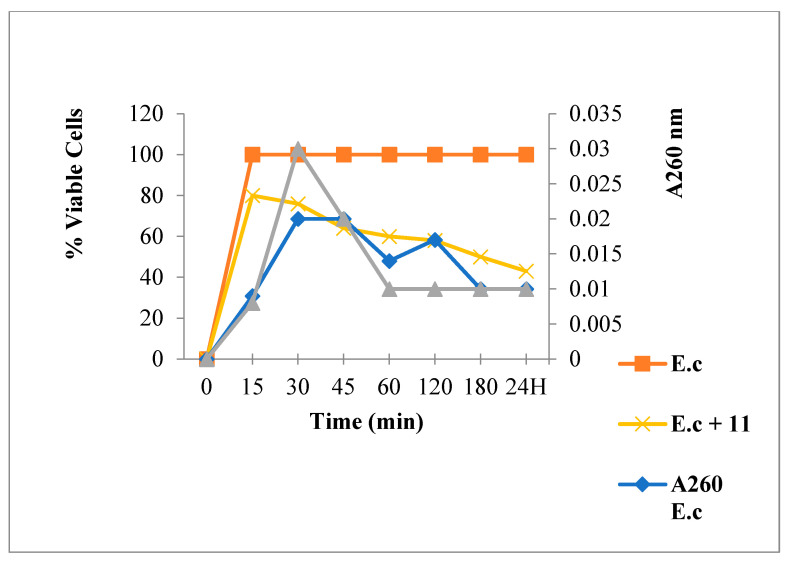
260 nm absorbent material release and E. coli viability following Flavone 11 treatment.
Figure 11
Figure 11
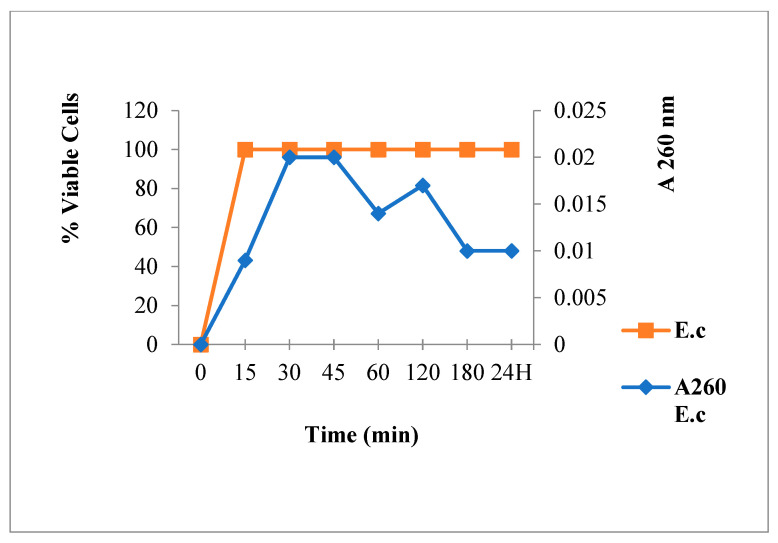
260 nm absorbent material release and viability of E. coli in absence of antibacterial agent.
Figure 12
Figure 12
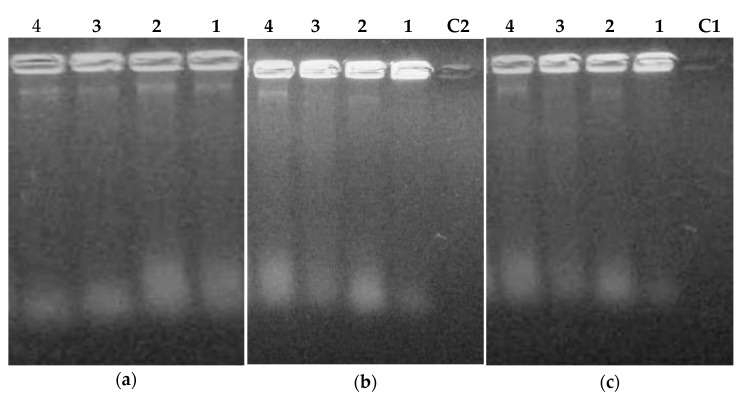
UV visualization of flavonoids treated S.aureus 60 lysates; (a) Chalcone 3 treatment, (b) Flavanone 8 treatment, (c) Flavone 10 treatment; 1 (1 × MIC) (µg/mL), 2 (2× MIC), 3 (3× MIC), 4 (4× MIC), C2 (Amp), C1 (Control).
Figure 13
Figure 13
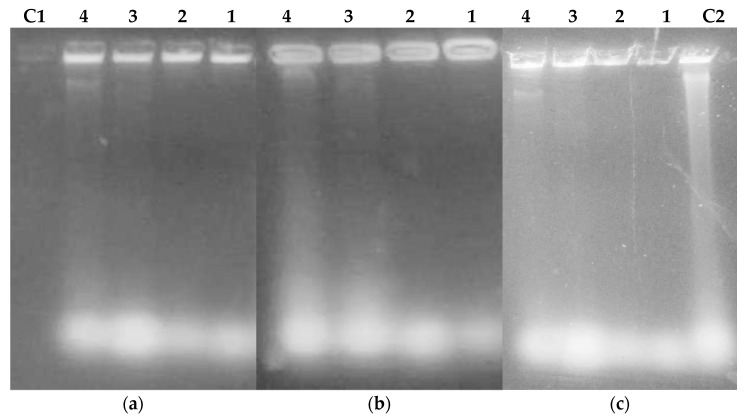
UV visualization of flavonoids treated E. coli ATCC 8739 lysates; (a) Chalcone 4 treatment, (b) Flavanone 8 treatment, (c) Flavone 11 treatment; 1 (1× MIC) (µg/mL), 2 (2× MIC), 3 (3× MIC), 4 (4× MIC), C1 (Control), C2 (Colistin).
Figure 14
Figure 14
Scanning electron microscopy of untreated S. aureus (A) and S. aureus treated with 1 × MIC (B), 4 × MIC (C), and 10 × MIC (D) of flavonoids.

References

    1. Ayukekbong J.A., Ntemgwa M., Atabe A.N. The threat of antimicrobial resistance in developing countries: Causes and control strategies. Antimicrob. Resist. Infect Contr. 2017;6:47. doi: 10.1186/s13756-017-0208-x. - DOI - PMC - PubMed
    1. Paterson D.L. Resistance in Gram-negative bacteria: Enterobacteriaceae. Am. J. Infect. Control. 2006;119:20–28. doi: 10.1016/j.ajic.2006.05.238. - DOI - PubMed
    1. Orhan D.D., Ozcelik B., Ozgen S., Ergun F. Antibacterial, antifungal, and antiviral activities of some flavonoids. Microbiol. Res. 2010;165:496–504. doi: 10.1016/j.micres.2009.09.002. - DOI - PubMed
    1. Magill S.S., Edwards J.R., Bamberg W., Zintars G.B., Dumyati G., Kainer M.A., Lynfield R., Maloney M., McAllister-Hollod L. Emerging Infections Program Healthcare-Associated Infections and Antimicrobial Use Prevalence Survey Team. Multistate point-prevalence survey of health care-associated infections. N. Engl. J. Med. 2014;370:1198–1208. doi: 10.1056/NEJMoa1306801. - DOI - PMC - PubMed
    1. Isenman H., Fisher D. Advances in prevention and treatment of vancomycin-resistant Enterococcus infection. Curr. Opin. Infect. Dis. 2016;29:577–582. doi: 10.1097/QCO.0000000000000311. - DOI - PubMed

LinkOut - more resources