


Lithium in Cancer Therapy: Friend or Foe?
- PMID: 36831437
- PMCID: PMC9954674
- DOI: 10.3390/cancers15041095
Lithium in Cancer Therapy: Friend or Foe?
Abstract
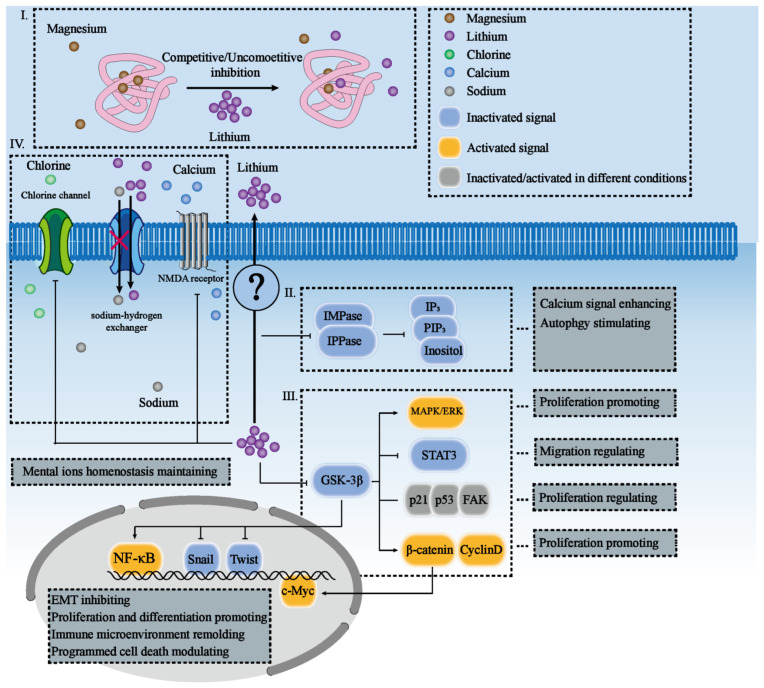
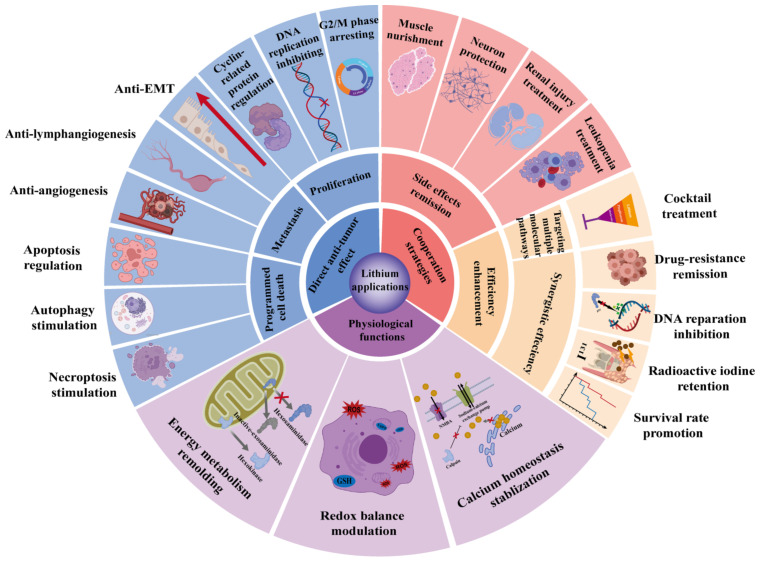
Lithium, a trace element important for fetal health and development, is considered a metal drug with a well-established clinical regime, economical production process, and a mature storage system. Several studies have shown that lithium affects tumor development by regulating inositol monophosphate (IMPase) and glycogen synthase kinase-3 (GSK-3). Lithium can also promote proliferation and programmed cell death (PCD) in tumor cells through a number of new targets, such as the nuclear receptor NR4A1 and Hedgehog-Gli. Lithium may increase cancer treatment efficacy while reducing side effects, suggesting that it can be used as an adjunctive therapy. In this review, we summarize the effects of lithium on tumor progression and discuss the underlying mechanisms. Additionally, we discuss lithium's limitations in antitumor clinical applications, including its narrow therapeutic window and potential pro-cancer effects on the tumor immune system.
Keywords: cancer therapy; cell death; lithium; tumor immune microenvironment.
Conflict of interest statement
The authors declare no conflict of interest.
Figures
References
Publication types
Grants and funding
LinkOut - more resources
Full Text Sources
Other Literature Sources
