


Hypoxia, a Targetable Culprit to Counter Pancreatic Cancer Resistance to Therapy
- PMID: 36831579
- PMCID: PMC9953896
- DOI: 10.3390/cancers15041235
Hypoxia, a Targetable Culprit to Counter Pancreatic Cancer Resistance to Therapy
Abstract
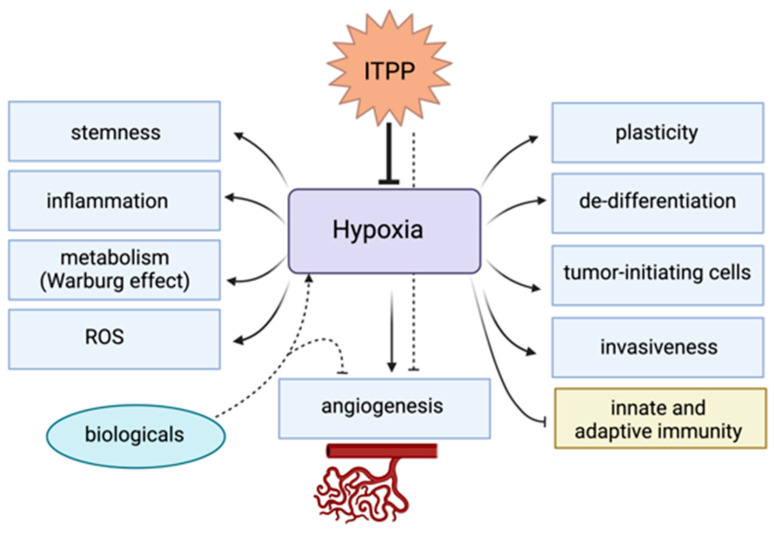
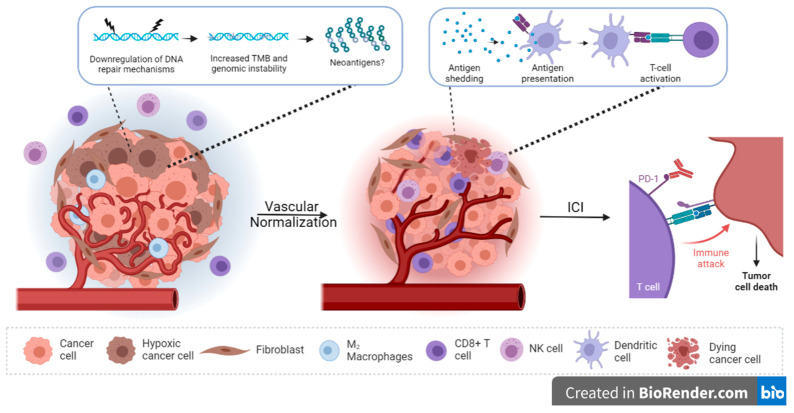
Pancreatic ductal adenocarcinoma (PDAC) is the most common type of pancreatic cancer, and it is a disease of dismal prognosis. While immunotherapy has revolutionized the treatment of various solid tumors, it has achieved little success in PDAC. Hypoxia within the stroma-rich tumor microenvironment is associated with resistance to therapies and promotes angiogenesis, giving rise to a chaotic and leaky vasculature that is inefficient at shuttling oxygen and nutrients. Hypoxia and its downstream effectors have been implicated in immune resistance and could be contributing to the lack of response to immunotherapy experienced by patients with PDAC. Paradoxically, increasing evidence has shown hypoxia to augment genomic instability and mutagenesis in cancer, suggesting that hypoxic tumor cells could have increased production of neoantigens that can potentially enable their clearance by cytotoxic immune cells. Strategies aimed at relieving this condition have been on the rise, and one such approach opts for normalizing the tumor vasculature to reverse hypoxia and its downstream support of tumor pathogenesis. An important consideration for the successful implementation of such strategies in the clinic is that not all PDACs are equally hypoxic, therefore hypoxia-detection approaches should be integrated to enable optimal patient selection for achieving improved patient outcomes.
Keywords: ITPP; genomic instability; hypoxia; hypoxia detection; hypoxia signature; immunotherapy; pancreatic cancer; targeting hypoxia; tumor mutational burden; vascular normalization.
Conflict of interest statement
R.A.K., H.M., P.A.C., M.D., P.L. and S.C. declare no conflict of interest. J.M.L. is co-founder and chairman of the scientific advisory board of NormOxys®, Inc., this being the company that holds the patent on ITPP. M.B.W. declares consulting activity with Boston Scientific, Medtronic, Verily, Endiatix.
Figures
References
-
- Ducreux M., Cuhna A.S., Caramella C., Hollebecque A., Burtin P., Goéré D., Seufferlein T., Haustermans K., Van Laethem J.L., Conroy T., et al. Cancer of the pancreas: ESMO Clinical Practice Guidelines for diagnosis, treatment and follow-up. Ann. Oncol. 2015;26((Suppl. S5)):v56–v68. doi: 10.1093/annonc/mdv295. - DOI - PubMed
-
- Collaborators GPC The global, regional, and national burden of pancreatic cancer and its attributable risk factors in 195 countries and territories, 1990–2017: A systematic analysis for the Global Burden of Disease Study 2017. Lancet Gastroenterol. Hepatol. 2019;4:934–947. doi: 10.1016/S2468-1253(19)30347-4. - DOI - PMC - PubMed
Publication types
LinkOut - more resources
Full Text Sources
