


Correlation between "Snake-Eyes" Sign and Role of Surgery with a Focus on Postoperative Outcome: A Systematic Review
- PMID: 36831844
- PMCID: PMC9954568
- DOI: 10.3390/brainsci13020301
Correlation between "Snake-Eyes" Sign and Role of Surgery with a Focus on Postoperative Outcome: A Systematic Review
Abstract
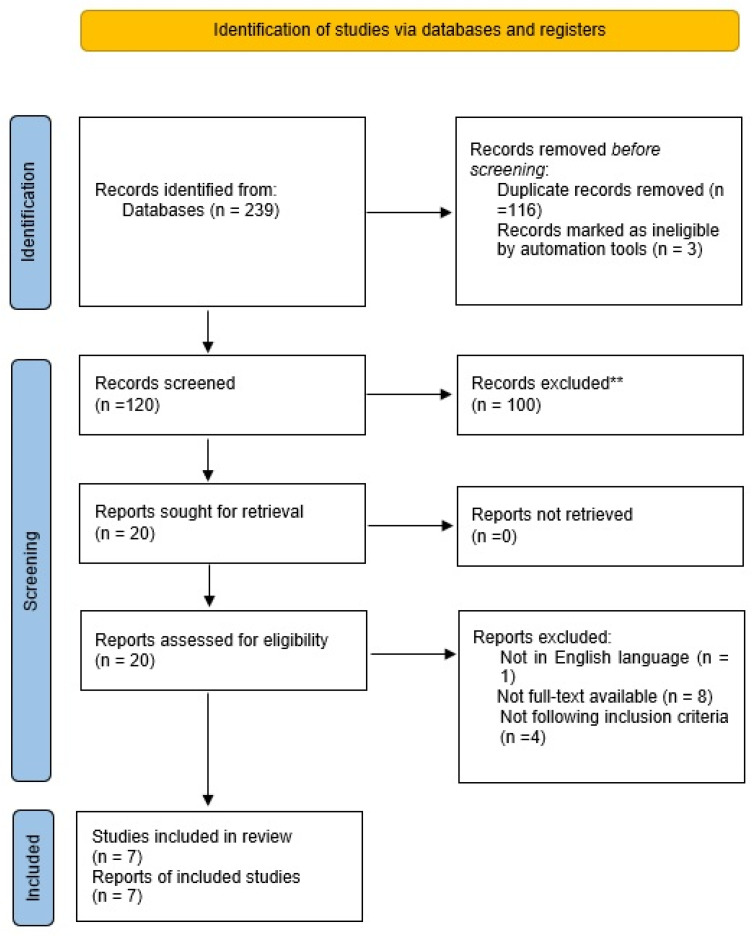
(1) Background: The "snake-eyes" sign represents a unique finding characterized by bilateral hyperintense symmetric, circular, or ovoid foci on T2-weighted MRI sequences in the anterior horn cells of the spinal cord. There are conflicting opinions as some authors affirm that it does not affect the prognosis of cervical myelopathy while other papers emphasize the opposite, stating how the "snake-eyes" sign constitutes an irreversible lesion and a predictor of poor prognosis. This systematic review evaluates the correlation between the "snake-eyes" sign and the prognosis of cervical myelopathy after surgery including anterior and/or posterior approaches; (2) Methods: A systematic literature review was conducted following the PRISMA statement and a total of seven papers were included; (3) Results: A total of 419 patients were evaluated, with a mean age of 55.72 ± 14.38 years. After surgery, 26.01% of patients experienced a significant clinical improvement, while in 61.81%, there was no significant improvement. In particular, 144 of 196 patients (73.5%) treated through an anterior approach and 114 of 223 (51.1%) that underwent a posterior approach, did not present a significant improvement. Furthermore, in 12.17% of patients, the postoperative outcome was not reported, leading to a high risk of bias in the assessment of the prognostic significance of the "snake-eyes" appearance; (4) Conclusions: The "snake-eyes" sign is usually considered as an unfavorable predictive marker for myelopathic surgical patients, but the pathophysiology is still unclear, and the results have not yet reached unified levels of evidence.
Keywords: cervical; cobra-eyes; myelopathy; outcome; spine; surgery.
Conflict of interest statement
The authors declare no conflict of interest.
Figures
References
Publication types
LinkOut - more resources
Full Text Sources
