


The Role of Multimodality Imaging Approach in Acute Aortic Syndromes: Diagnosis, Complications, and Clinical Management
- PMID: 36832136
- PMCID: PMC9954850
- DOI: 10.3390/diagnostics13040650
The Role of Multimodality Imaging Approach in Acute Aortic Syndromes: Diagnosis, Complications, and Clinical Management
Abstract
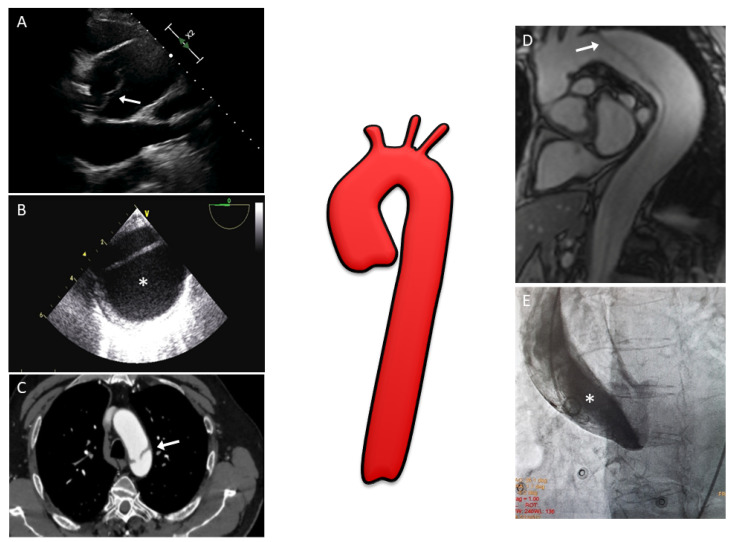
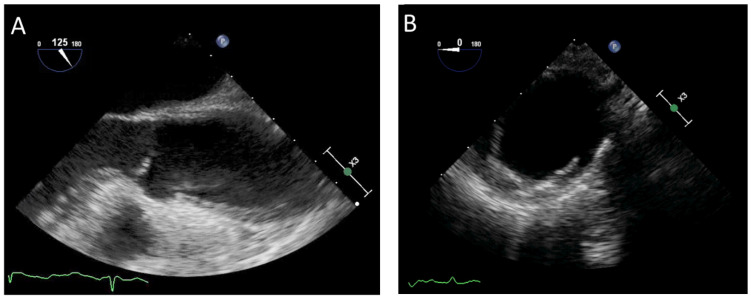
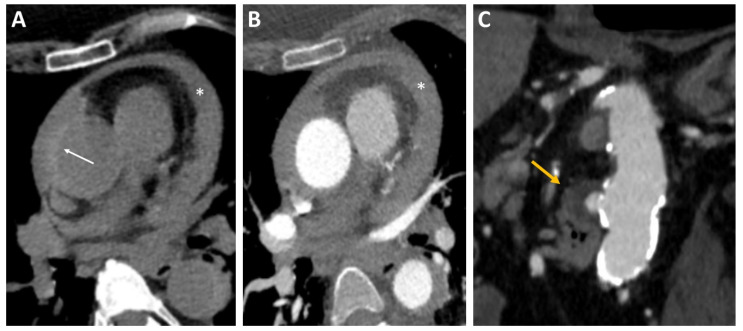
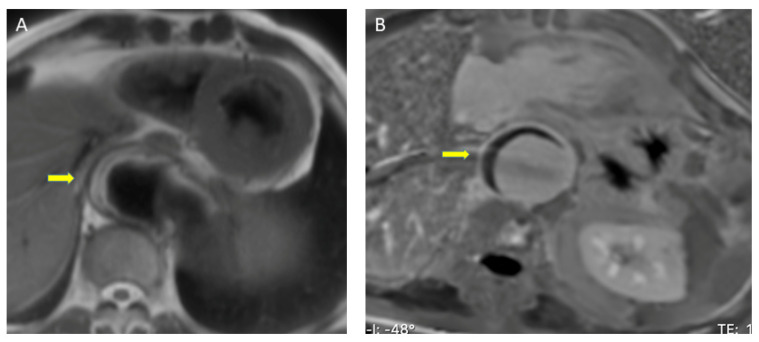
Acute aortic syndromes are life-threatening conditions with high morbidity and mortality. The principal pathological feature is acute wall damage with possible evolution towards aortic rupture. Accurate and timely diagnosis is mandatory to avoid catastrophic consequences. Indeed, misdiagnosis with other conditions mimicking acute aortic syndromes is associated with premature death. In this view, cardiovascular imaging is necessary for the correct diagnosis and management. Echocardiography, computed tomography, magnetic resonance imaging, and aortography allow for diagnosis, guarantee immediate treatment, and detect associated complications. Multimodality imaging is essential in the diagnostic work-up to confirm or rule out acute aortic syndromes. The aim of this review is to highlight the contemporary evidence on the role of single cardiovascular imaging techniques and multimodality imaging in the diagnosis and management of acute aortic syndromes.
Keywords: acute aortic syndromes; aortography; computed tomography; echocardiography; magnetic resonance imaging; multimodality imaging.
Conflict of interest statement
The authors declare that they have no conflict of interest.
Figures
References
-
- Mussa F.F., Horton J.D., Moridzadeh R., Nicholson J., Trimarchi S., Eagle K.A. Acute Aortic Dissection and Intramural Hematoma: A Systematic Review. JAMA. 2016;316:754–763. - PubMed
-
- Goldstein S.A., Evangelista A., Abbara S., Arai A., Asch F.M., Badano L.P., Bolen M.A., Connolly H.M., Cuéllar-Calàbria H., Czerny M., et al. Multimodality imaging of diseases of the thoracic aorta in adults: From the American Society of Echocardiography and the European Association of Cardiovascular Imaging: Endorsed by the Society of Cardiovascular Computed Tomography and Society for Cardiovascular Magnetic Resonance. J. Am. Soc. Echocardiogr. 2015;28:119–182. - PubMed
-
- Evangelista A., Isselbacher E.M., Bossone E., Gleason T.G., Eusanio M.D., Sechtem U., Ehrlich M.P., Trimarchi S., Braverman A.C., Myrmel T., et al. IRAD Investigators. Insights From the International Registry of Acute Aortic Dissection: A 20-Year Experience of Collaborative Clinical Research. Circulation. 2018;137:1846–1860. doi: 10.1161/CIRCULATIONAHA.117.031264. - DOI - PubMed
-
- Erbel R., Aboyans V., Boileau C., Bossone E., Bartolomeo R.D., Eggebrecht H., Evangelista A., Falk V., Frank H., Gaemperli O., et al. ESC Committee for Practice Guidelines. 2014 ESC Guidelines on the diagnosis and treatment of aortic diseases: Document covering acute and chronic aortic diseases of the thoracic and abdominal aorta of the adult. The Task Force for the Diagnosis and Treatment of Aortic Diseases of the European Society of Cardiology (ESC) Eur. Heart J. 2014;35:2873–2926. - PubMed
Publication types
LinkOut - more resources
Full Text Sources
