


De Novo Variant in the KCNJ9 Gene as a Possible Cause of Neonatal Seizures
- PMID: 36833293
- PMCID: PMC9956824
- DOI: 10.3390/genes14020366
De Novo Variant in the KCNJ9 Gene as a Possible Cause of Neonatal Seizures
Abstract
Background: The reduction in next-generation sequencing (NGS) costs allows for using this method for newborn screening for monogenic diseases (MDs). In this report, we describe a clinical case of a newborn participating in the EXAMEN project (ClinicalTrials.gov Identifier: NCT05325749).
Methods: The child presented with convulsive syndrome on the third day of life. Generalized convulsive seizures were accompanied by electroencephalographic patterns corresponding to epileptiform activity. Proband WES expanded to trio sequencing was performed.
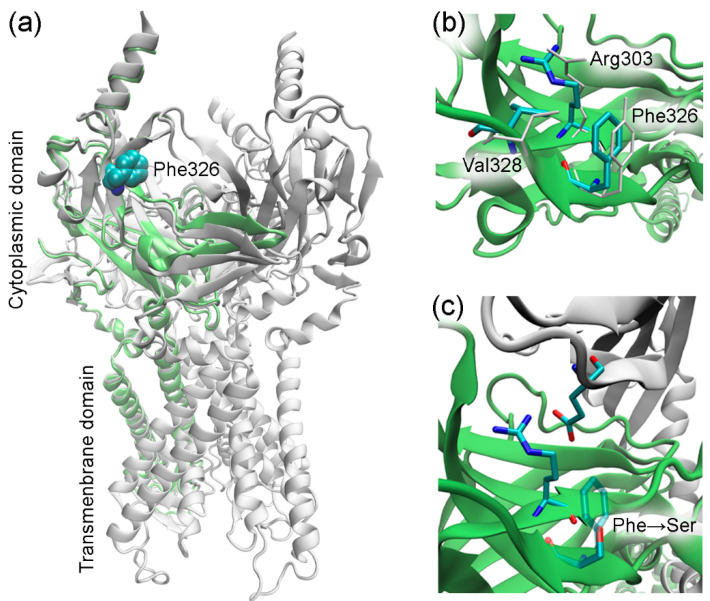
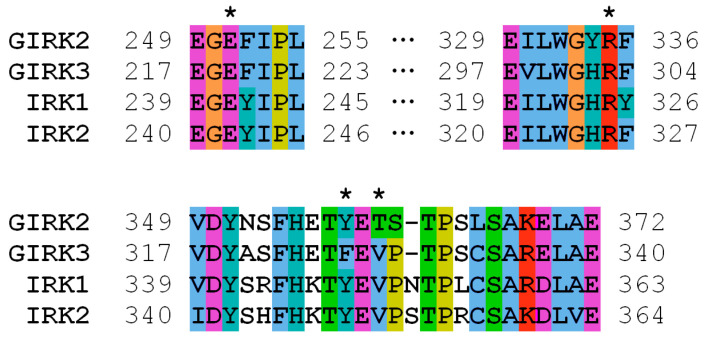
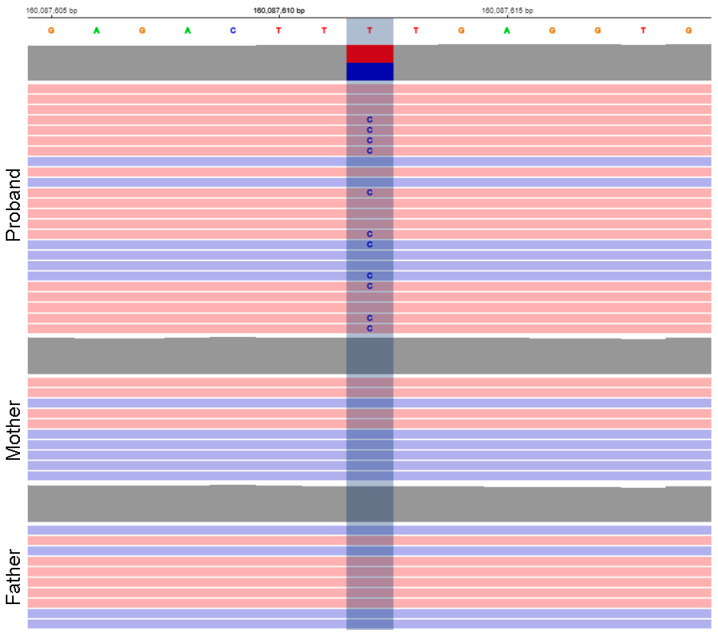
Results: A differential diagnosis was made between symptomatic (dysmetabolic, structural, infectious) neonatal seizures and benign neonatal seizures. There were no data in favor of the dysmetabolic, structural, or infectious nature of seizures. Molecular karyotyping and whole exome sequencing were not informative. Trio WES revealed a de novo variant in the KCNJ9 gene (1:160087612T > C, p.Phe326Ser, NM_004983), for which, according to the OMIM database, no association with the disease has been described to date. Three-dimensional modeling was used to predict the structure of the KCNJ9 protein using the known structure of its homologs. According to the predictions, Phe326Ser change possibly disrupts the hydrophobic contacts with the valine side chain. Destabilization of the neighboring structures may undermine the formation of GIRK2/GIRK3 tetramers necessary for their proper functioning.
Conclusions: We believe that the identified variant may be the cause of the disease in this patient but further studies, including the search for other patients with the KCNJ9 variants, are needed.
Keywords: GIRK; KCNJ9; neonatal seizure; trio; whole exome sequencing (WES).
Conflict of interest statement
The authors declare no conflict of interest. The funders had no role in the design of the study; in the collection, analyses, or interpretation of data; in the writing of the manuscript; or in the decision to publish the results.
Figures
References
-
- Bromfield E.B., Cavazos J.E., Sirven J.I., editors. An Introduction to Epilepsy. American Epilepsy Society; West Hartford, CT, USA: 2006. [(accessed on 12 October 2022)]. Chapter 1, Basic Mechanisms Underlying Seizures and Epilepsy. Available online: https://www.ncbi.nlm.nih.gov/books/NBK2510/
-
- Shellhaas R.A. Seizure classification, etiology, and management. Handb. Clin. Neurol. 2019;162:347–361. - PubMed
-
- Krawiec C., Muzio M.R. StatPearls. StatPearls Publishing; Treasure Island, FL, USA: 2022. [(accessed on 12 October 2022)]. Neonatal Seizure. Available online: https://www.ncbi.nlm.nih.gov/books/NBK554535/ - PubMed
-
- Glass H.C., Shellhaas R.A., Wusthoff C.J., Chang T., Abend N.S., Chu C.J., Cilio M.R., Glidden D.V., Bonifaccio S.L., Massey S., et al. Neonatal Seizure Registry Study Group. Contemporary Profile of Seizures in Neonates: A Prospective Cohort Study. J. Pediatr. 2016;174:98–103.e1. doi: 10.1016/j.jpeds.2016.03.035. - DOI - PMC - PubMed
Publication types
MeSH terms
Substances
Associated data
LinkOut - more resources
Full Text Sources
Medical
Molecular Biology Databases
Research Materials
Miscellaneous
