


Serum MicroRNAs as Predictors for HCV Progression and Response to Treatment in Pakistani Patients
- PMID: 36833368
- PMCID: PMC9957303
- DOI: 10.3390/genes14020441
Serum MicroRNAs as Predictors for HCV Progression and Response to Treatment in Pakistani Patients
Abstract
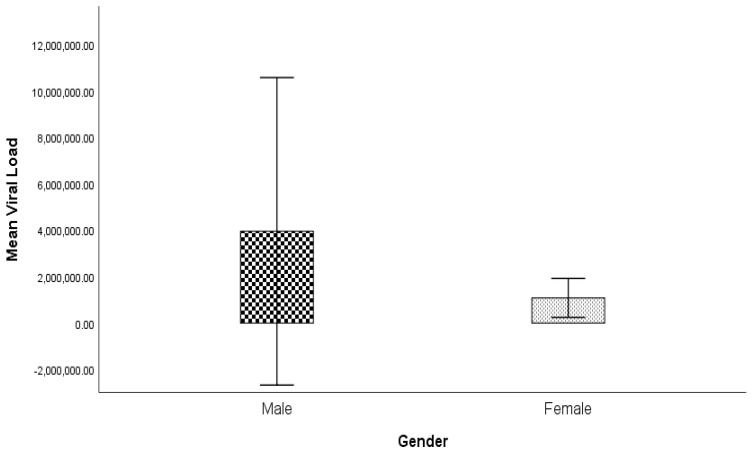
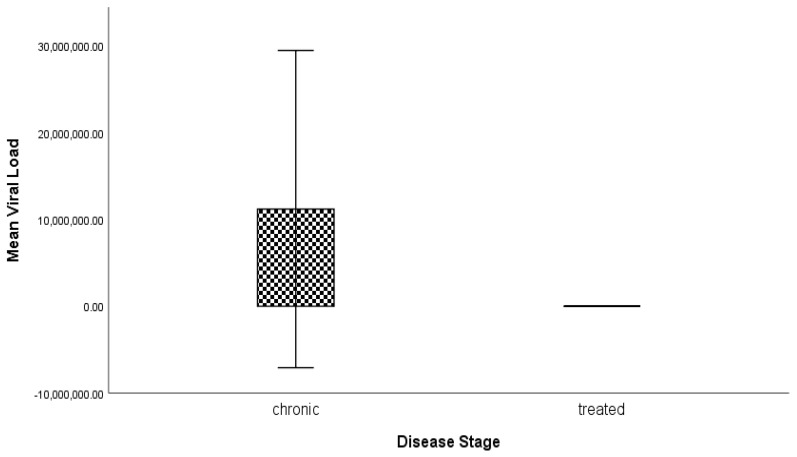
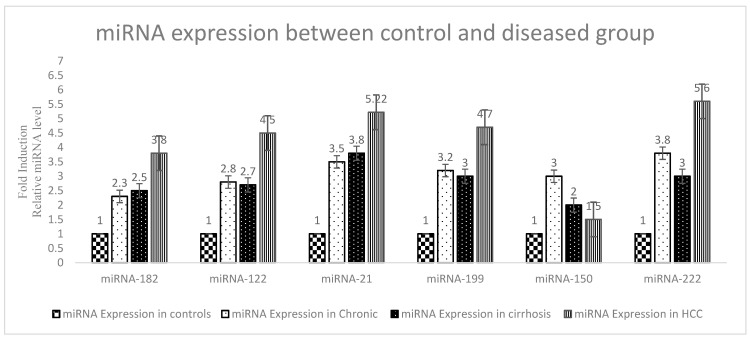
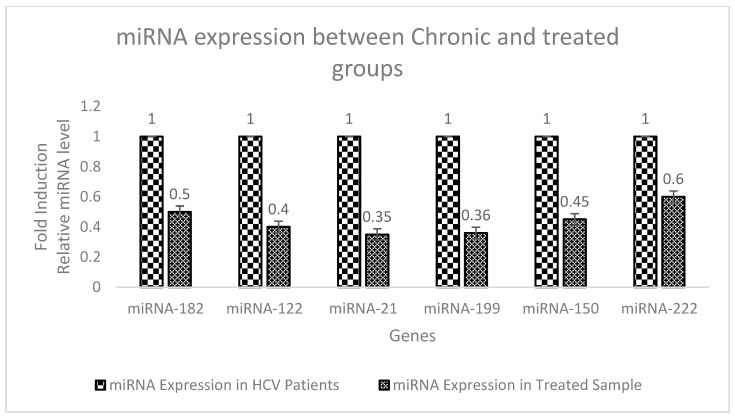
Hepatitis is one of the common liver diseases, imposing a heavy health burden worldwide. Acute hepatitis may develop into chronic hepatitis, progressing to cirrhosis and hepatocellular carcinoma. In the present study, the expression of miRNAs was quantified by real-time PCR, such as miRNA-182, 122, 21, 150, 199, and 222. Along with the control group, HCV was divided into chronic, cirrhosis, and HCC groups. The treated group was also included after the successful treatment of HCV. Biochemical parameters, such as ALT, AST, ALP, bilirubin, viral load, and AFP (HCC), were also evaluated in all of the study groups. We compared the control and diseased groups; these parameters showed significant results (p = 0.000). The viral load was high in HCV but was not detected after treatment. miRNA-182 and miRNA-21 were overexpressed with disease progression, while the expression of miRNA-122 and miRNA-199 was increased compared with the control, but decreased in the cirrhosis stage compared with chronic and HCC. The expression of miRNA-150 was increased in all of the diseased groups compared with the control, but decreased compared with the chronic group. We compared the chronic and treated groups and then all of these miRNAs were down-regulated after treatment. These microRNAs could be used as potential biomarkers for diagnosing different stages of HCV.
Keywords: HCC; biomarker; chronic; cirrhosis; hepatitis C; treatment.
Conflict of interest statement
The authors declare no conflict of interest relevant to this study.
Figures

References
MeSH terms
Substances
LinkOut - more resources
Full Text Sources
Medical
