


Genotype and Phenotype Analyses of a Novel WFS1 Variant (c.2512C>T p.(Pro838Ser)) Associated with DFNA6/14/38
- PMID: 36833385
- PMCID: PMC9957259
- DOI: 10.3390/genes14020457
Genotype and Phenotype Analyses of a Novel WFS1 Variant (c.2512C>T p.(Pro838Ser)) Associated with DFNA6/14/38
Abstract
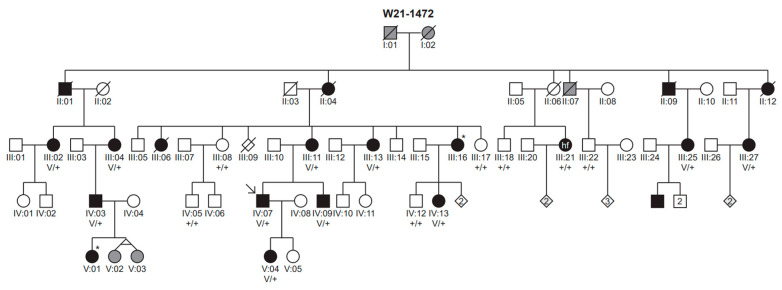
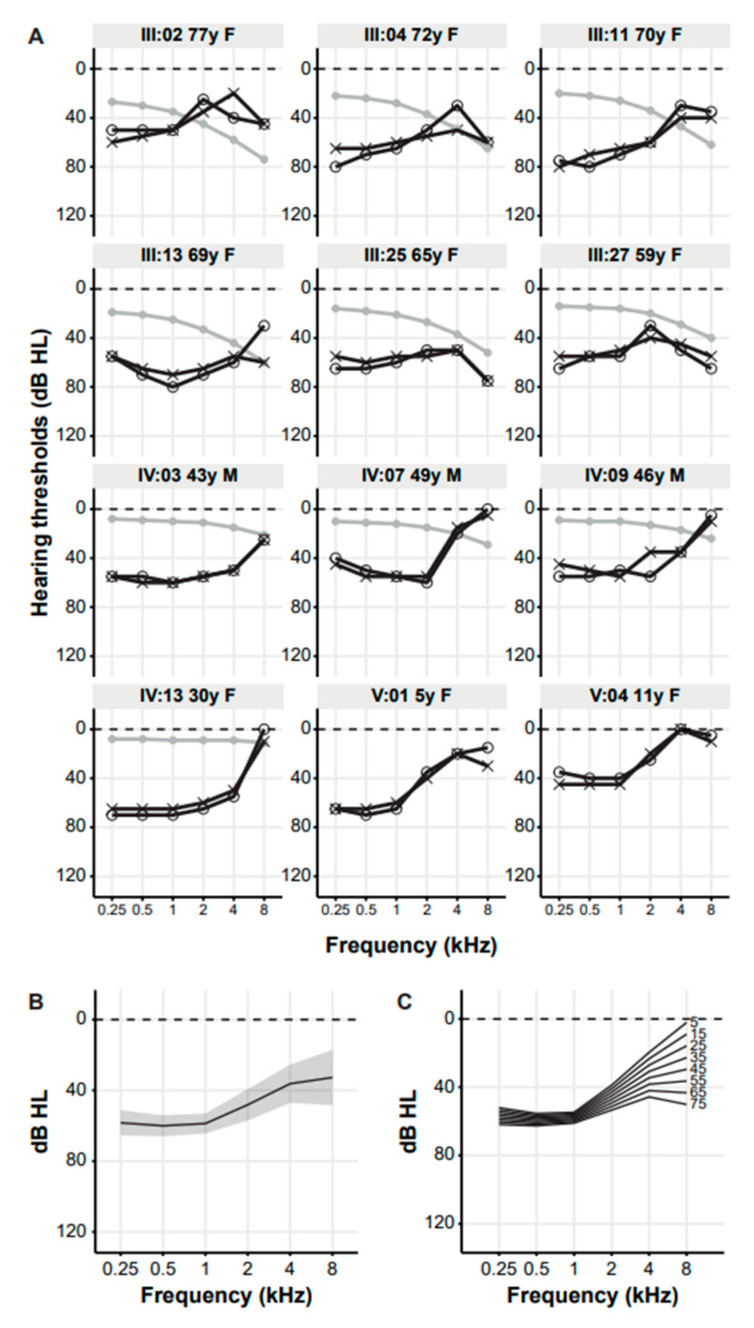
The aim of this study is to contribute to a better description of the genotypic and phenotypic spectrum of DFNA6/14/38 and aid in counseling future patients identified with this variant. Therefore, we describe the genotype and phenotype in a large Dutch-German family (W21-1472) with autosomal dominant non-syndromic, low-frequency sensorineural hearing loss (LFSNHL). Exome sequencing and targeted analysis of a hearing impairment gene panel were used to genetically screen the proband. Co-segregation of the identified variant with hearing loss was assessed by Sanger sequencing. The phenotypic evaluation consisted of anamnesis, clinical questionnaires, physical examination and examination of audiovestibular function. A novel likely pathogenic WFS1 variant (NM_006005.3:c.2512C>T p.(Pro838Ser)) was identified in the proband and found to co-segregate with LFSNHL, characteristic of DFNA6/14/38, in this family. The self-reported age of onset of hearing loss (HL) ranged from congenital to 50 years of age. In the young subjects, HL was demonstrated in early childhood. At all ages, an LFSNHL (0.25-2 kHz) of about 50-60 decibel hearing level (dB HL) was observed. HL in the higher frequencies showed inter-individual variability. The dizziness handicap inventory (DHI) was completed by eight affected subjects and indicated a moderate handicap in two of them (aged 77 and 70). Vestibular examinations (n = 4) showed abnormalities, particularly in otolith function. In conclusion, we identified a novel WFS1 variant that co-segregates with DFNA6/14/38 in this family. We found indications of mild vestibular dysfunction, although it is uncertain whether this is related to the identified WFS1 variant or is an incidental finding. We would like to emphasize that conventional neonatal hearing screening programs are not sensitive to HL in DFNA6/14/38 patients, because high-frequency hearing thresholds are initially preserved. Therefore, we suggest screening newborns in DFNA6/14/38 families with more frequency-specific methods.
Keywords: DFNA6/14/38; WFS1; autosomal dominant hearing loss; genotype; hereditary hearing loss; human genetics; likely pathogenic variant; low-frequency sensorineural hearing loss; phenotype.
Conflict of interest statement
The authors declare no conflict of interest.
Figures
References
-
- Van Camp G., Smith R.J.H. Hereditary Hearing Loss Homepage. 2018. [(accessed on 17 December 2021)]. Available online: http://hereditaryhearingloss.org.
-
- Van Camp G., Kunst H., Flothmann K., McGuirt W., Wauters J., Marres H., Verstreken M., Bespalova I.N., Burmeister M., Van de Heyning P.H., et al. A gene for autosomal dominant hearing impairment (DFNA14) maps to a region on chromosome 4p16.3 that does not overlap the DFNA6 locus. J. Med. Genet. 1999;36:532–536. doi: 10.1136/jmg.36.7.532. - DOI - PMC - PubMed
Publication types
MeSH terms
Supplementary concepts
LinkOut - more resources
Full Text Sources
Medical
Miscellaneous
