


Diet Quality Variation among Polish Older Adults: Association with Selected Metabolic Diseases, Demographic Characteristics and Socioeconomic Status
- PMID: 36833574
- PMCID: PMC9957466
- DOI: 10.3390/ijerph20042878
Diet Quality Variation among Polish Older Adults: Association with Selected Metabolic Diseases, Demographic Characteristics and Socioeconomic Status
Abstract
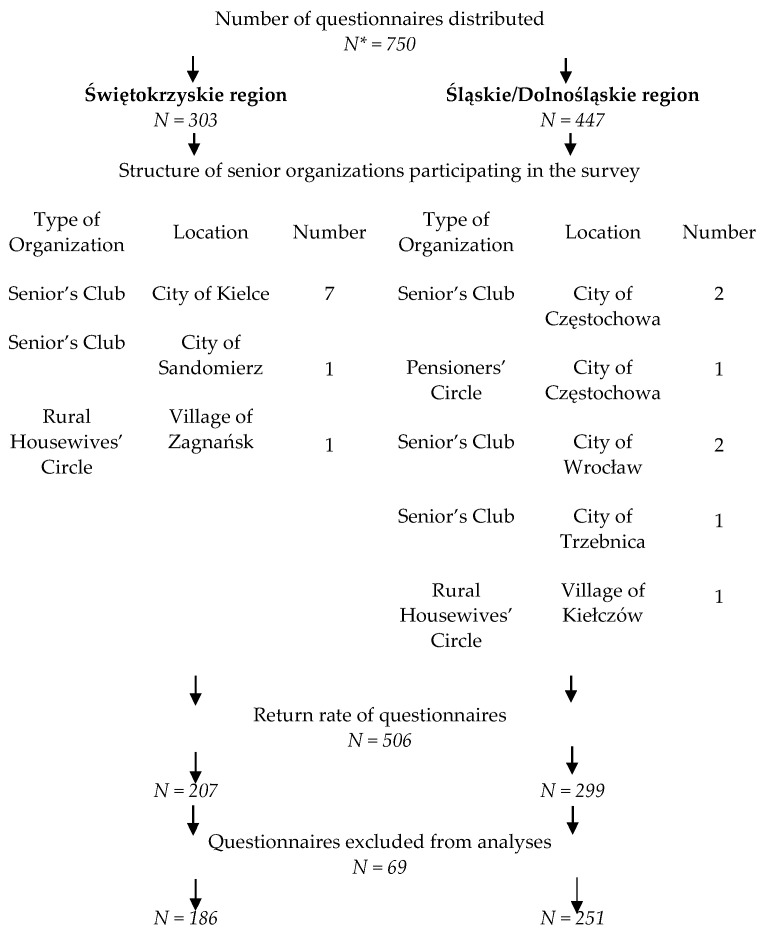
A lot of civilization diseases are related to a low-quality diet, which is often determined by environmental factors. The aim of the present study was to assess the relationship between the quality of diet and the selected metabolic diseases, as well as demographic characteristics and socioeconomic status among Polish seniors. The study was conducted on the basis of the KomPAN questionnaire (Questionnaire for Dietary Views and Habits). The research sample was chosen arbitrarily. In addition, in order to diversify the research sample, the use of the snowball method was used. The study was conducted from June to September 2019 in a group of 437 people aged 60 or more years in two regions of Poland. Two diet quality indices with a potentially beneficial (pHDI-10) and adverse impact on health (pHDI-14) were selected based on data on the frequency of consumption of 24 food groups using the KomPAN questionnaire data development procedure. Based on the intensities (low, moderate, high) and combinations of these indices, three diet quality index profiles were developed with potentially different influences on health: lower (lowest), middle (intermediate) and upper (highest). Logistic regression was used to evaluate the relationship between diet quality indices, some metabolic diseases (obesity, arterial hypertension, diabetes type 2), demographic characteristics (gender, age, place of residence), and socioeconomic status (low, moderate, high). It was shown that in the examined seniors with selected metabolic diseases, the higher quality diet was more common among women, urban inhabitants and subjects with higher socioeconomic status. In turn, among the elderly with obesity, a high-quality diet was observed more often in people aged 60-74 years and those with type II diabetes at ages 75 years or more. The relationships between diet quality, demographic characteristics and socioeconomic status were demonstrated, but it was not possible to obtain unambiguous results on the relationship of these variables with the occurrence of metabolic diseases. Further extended studies should assess the importance of diet quality in reducing the risk of metabolic diseases in the elderly, taking into account the variability resulting from the environmental characteristics of the study population.
Keywords: demographic characteristics; diet quality; metabolic diseases; older adults; socioeconomic status.
Conflict of interest statement
The authors declare no conflict of interest.
Figures
References
-
- Struktura Ludności i Starzenie Się Społeczeństwa. Eurostat Statistics Explained. 2020. [(accessed on 20 July 2021)]. Available online: https://ec.europa.eu/eurostat/statistics-explained/index.php?title=Archi....
-
- Błędowski P., Chudek J., Grodzicki T., Gruchała M., Mossakowska M., Więcek A., Zdrojewski T. Polsenior2—Badanie Poszczególnych Obszarów stanu Zdrowia Osób Starszych, w Tym Jakości Życia Związanej ze Zdrowiem. Gdański Uniwersytet Medyczny; Gdańsk, Poland: 2021. Wyzwania dla polityki zdrowotnej i społecznej. Geneza projektów badawczych PolSenior1 i PolSenior2; pp. 19–35.
-
- Rosset E. Ludzie Starzy, Studium Demograficzne. PWE; Warszawa, Poland: 1967.
-
- Ministerstwo Pracy i Polityki Socjalnej Założenia Długofalowej Polityki Senioralnej w Polsce na lata 2014–2020. [(accessed on 1 December 2022)]; Available online: https://das.mpips.gov.pl/source.
-
- Stanner S., Thompson R., Buttris J.L., editors. The Role of Nutrition and Lifestyle. Wiley-Blackwell; Oxford, UK: 2009. Healthy aging.
Publication types
MeSH terms
LinkOut - more resources
Full Text Sources
Medical
