


Anxiety and Depression Levels and Coping Strategies among Polish Healthcare Workers during the COVID-19 Pandemic
- PMID: 36834013
- PMCID: PMC9959847
- DOI: 10.3390/ijerph20043319
Anxiety and Depression Levels and Coping Strategies among Polish Healthcare Workers during the COVID-19 Pandemic
Abstract
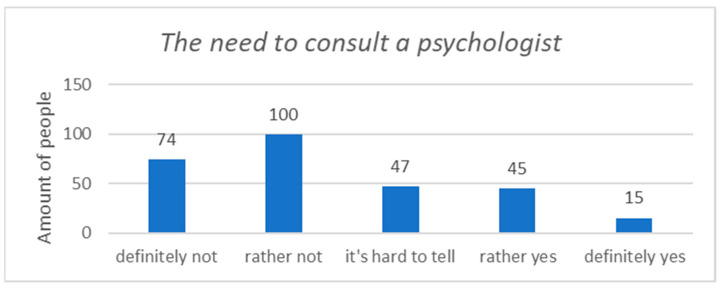
During the COVID-19 pandemic, medical staff were commonly exposed to stress, work under pressure, and long shifts, and may have experienced a fear of infecting loved ones or a fear for their own health. All of these factors may have increased the likelihood that healthcare workers will experience the symptoms of depression, anxiety, or other mental health disorders. In this cross-sectional study, a group of respondents was gathered from the employees of 78 hospitals in Poland. A questionnaire was completed electronically by 282 people, aged between 20 and 78 years. The study used the Hospital Anxiety and Depression Scale (HADS) and the MiniCOPE questionnaire to examine anxiety and depression symptoms, and coping strategies, respectively. With age, the respondents declared fewer symptoms of anxiety and tended to have milder symptoms of depression. Participants with chronic illnesses, mood disorders, or anxiety disorders also reported higher levels of anxiety and depression symptoms. More than 20% of healthcare workers felt the need to consult with a psychologist. In the entire group of healthcare professionals surveyed, the most commonly used strategies for coping with stress were "denial", "psychoactive drug and alcohol use", and "cessation of activities", while the least used strategy was "acceptance". Given the most commonly used strategies in the surveyed group of healthcare professionals, they may be predictors for a deterioration in mental state in the long run. The obtained results also suggest that it is likely that pre-existing health problems had a greater impact on the mental health of medical staff during the COVID-19 pandemic than the profession itself. Therefore, taking care of the well-being and mental health of healthcare workers should be a priority for employers.
Keywords: COVID-19; SARS-CoV-2; anxiety; coping strategies; depression symptoms; healthcare workers.
Conflict of interest statement
The authors declare no conflict of interest. The funders had no role in the design of the study; in the collection, analyses, or interpretation of data; in the writing of the manuscript; or in the decision to publish the results.
Figures

References
-
- Maunder R., Hunter J., Vincent L., Bennett J., Peladeau N., Leszcz M., Sadavoy J., Verhaeghe L.M., Steinberg R., Mazzulli T. The immediate psychological and occupational impact of the 2003 SARS outbreak in a teaching hospital. Can. Med. Assoc. J. J. De L’association Med. Can. 2003;168:1245–1251. - PMC - PubMed
-
- Sheng B., Cheng S.K., Lau K.K., Li H.L., Chan E.L. The effects of disease severity, use of corticosteroids and social factors on neuropsychiatric complaints in severe acute respiratory syndrome (SARS) patients at acute and convalescent phases. Eur. Psychiatry J. Assoc. Eur. Psychiatr. 2005;20:236–242. doi: 10.1016/j.eurpsy.2004.06.023. - DOI - PMC - PubMed
-
- Cheng S.K.W., Wong C.W. Psychological Intervention with Sufferers from Severe Acute Respiratory Syndrome (SARS): Lessons Learnt from Empirical Findings. Clin. Psychol. Psychother. 2005;12:80–86. doi: 10.1002/cpp.429. - DOI
Publication types
MeSH terms
LinkOut - more resources
Full Text Sources
Medical
Miscellaneous
