Review
. 2023 Feb 17;20(4):3596.
doi: 10.3390/ijerph20043596.

High-Fructose Diet-Induced Hyperuricemia Accompanying Metabolic Syndrome-Mechanisms and Dietary Therapy Proposals

Affiliations
Review

High-Fructose Diet-Induced Hyperuricemia Accompanying Metabolic Syndrome-Mechanisms and Dietary Therapy Proposals

Michalina Lubawy et al. Int J Environ Res Public Health. .

Abstract

Fructose is often used as a food ingredient due to its low production costs and sweetening power. In recent years, it has been noticed that people on a Western diet high in fructose have high levels of uric acid in their blood. It was recognized that the specific metabolism of fructose in the body might cause increased production of uric acid, which then may affect the intensification of lipogenesis and the development of metabolic syndrome (MetS), insulin resistance, gout, cardiovascular diseases, leptin resistance, or non-alcoholic fatty liver disease. So far, to treat hyperuricemia, it has been recommended to use a low-purine diet characterized by limiting protein-containing products. However, this recommendation often leads to an increased intake of carbohydrate-rich foods that may contain fructose. Increased fructose consumption may enhance the secretion of uric acid again and, consequently, does not have therapeutic effects. Therefore, instead of a low-purine diet, using healthy diets, such as DASH or the Mediterranean diet, which can benefit metabolic parameters, could be a better proposal. This article provides an overview of this approach, focusing on MetS and hyperuricemia among high-fructose dieters.

Keywords: diet; fructose; metabolic syndrome; uric acid.


Conflict of interest statement

The authors declare no conflict of interest.

Figures
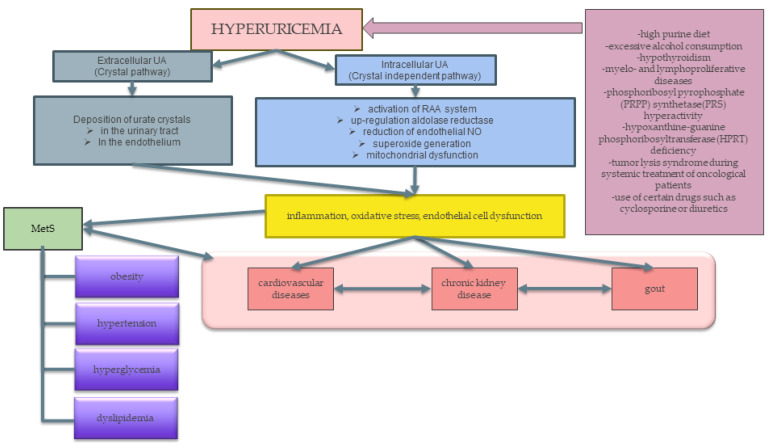
Figure 1
Figure 1
The relationship between hyperuricemia and MetS. Factors such as a high purine diet, high alcohol consumption, certain diseases, consumption of certain drugs, or metabolic disorders lead to an increase in the level of uric acid in the blood, which then causes an increase in inflammation, oxidative stress, and epithelial cell dysfunction. This leads to the development of MetS-related illnesses and diseases, gout, cardiovascular disease, and chronic nephritis. Abbreviations: MetS—metabolic syndrome; RAA—renin–angiotensin–aldosterone; NO—nitric oxide.
Figure 2
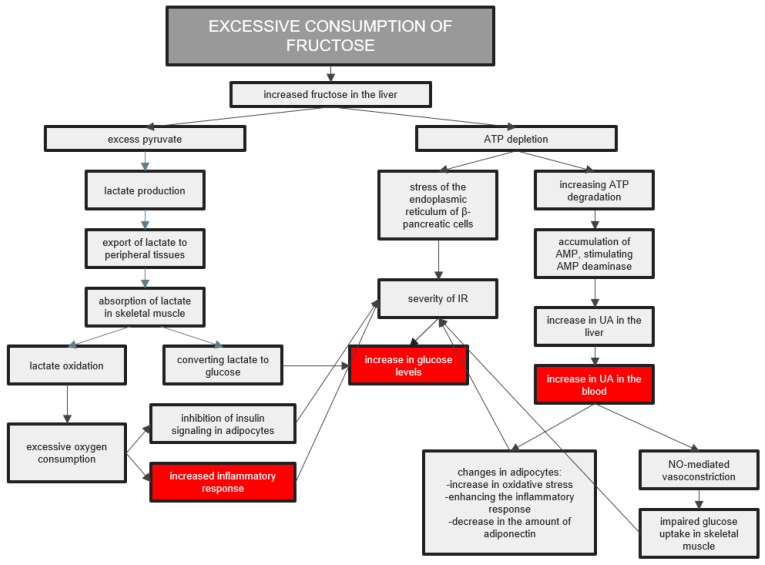
Figure 2
The body’s reactions to excessive fructose consumption. The increased amount of fructose in the liver leads to an inflammatory reaction in the body, increasing glucose and uric acid levels in the blood. Abbreviations: IR—insulin resistance; UA—uric acid.
Figure 3
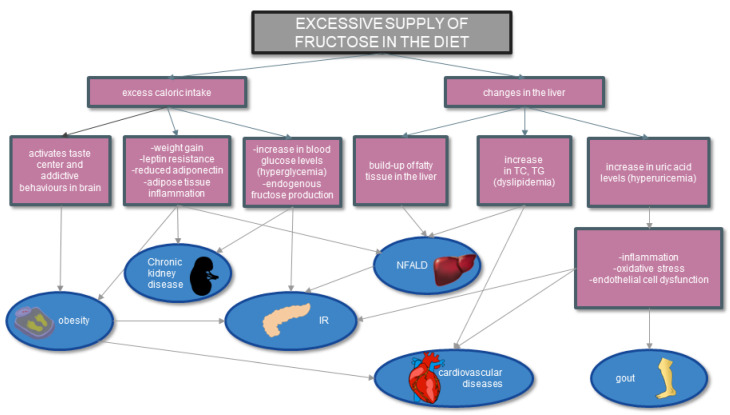
Figure 3
Effect of fructose on metabolic diseases based on [8,45,63]. Excessive consumption of fructose leads to both increased caloric intake and changes in the liver. As a result of such an incorrect diet, there are a number of changes in the body that lead to obesity, IR, NFALD, cardiovascular diseases, or gout. Abbreviations: IR—insulin resistance; TG—triglycerides; TC—total cholesterol; UA—uric acid; NFALD—nonalcoholic fatty liver disease.
Figure 4
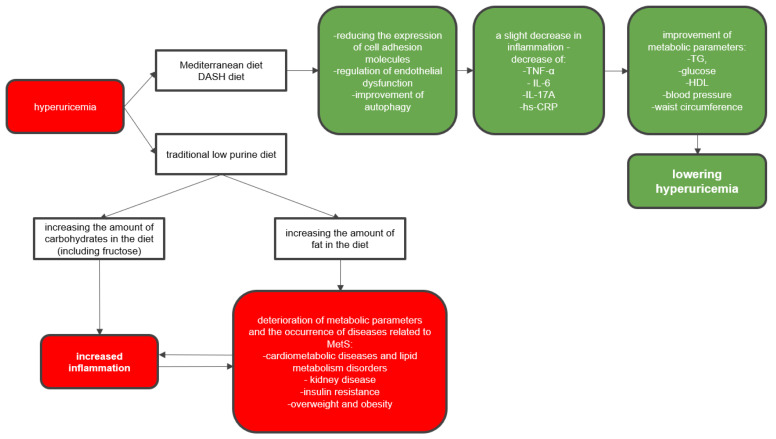
Figure 4
Consequences of improper dietary interventions in patients with hyperuricemia and MetS-related diseases. Following a low-purine diet leads to supplementation of calories with carbohydrates and fats, which may exacerbate MetS-related conditions. The use of an otherwise balanced diet (Mediterranean, DASH) may alleviate the symptoms of MetS and reduce hyperuricemia. Abbreviations: TG—triglycerides; HDL—high density lipoprotein; MetS—metabolic syndrome; TNF-α—tumor necrosis factor α; IL-6—interleukin 6; IL-17A—interleukin 17A; hs-CRP—high sensitivity C-reactive protein; DASH—Dietary Approaches to Stop Hypertension diet.

References

    1. Phillips J.A. Dietary Guidelines for Americans, 2020–2025. Workplace Health Saf. 2021;69:395. doi: 10.1177/21650799211026980. - DOI - PubMed
    1. Johnson R.J., Perez-Pozo S.E., Sautin Y.Y., Manitius J., Sanchez-Lozada L.G., Feig D.I., Shafiu M., Segal M., Glassock R.J., Shimada M., et al. Hypothesis: Could Excessive Fructose Intake and Uric Acid Cause Type 2 Diabetes? Endocr. Rev. 2009;30:96–116. doi: 10.1210/er.2008-0033. - DOI - PMC - PubMed
    1. Aoun R., Chokor F.A.Z., Taktouk M., Nasrallah M., Ismaeel H., Tamim H., Nasreddine L. Dietary Fructose and Its Association with the Metabolic Syndrome in Lebanese Healthy Adults: A Cross-Sectional Study. Diabetol. Metab. Syndr. 2022;14:29. doi: 10.1186/s13098-022-00800-5. - DOI - PMC - PubMed
    1. Caliceti C., Calabria D., Roda A., Cicero A.F.G. Fructose Intake, Serum Uric Acid, and Cardiometabolic Disorders: A Critical Review. Nutrients. 2017;9:395. doi: 10.3390/nu9040395. - DOI - PMC - PubMed
    1. Douard V., Ferraris R.P. Regulation of the Fructose Transporter GLUT5 in Health and Disease. Am. J. Physiol. Endocrinol. Metab. 2008;295:E227–E237. doi: 10.1152/ajpendo.90245.2008. - DOI - PMC - PubMed

Publication types