


Analysis of Diabetic Foot Deformation and Plantar Pressure Distribution of Women at Different Walking Speeds
- PMID: 36834384
- PMCID: PMC9965013
- DOI: 10.3390/ijerph20043688
Analysis of Diabetic Foot Deformation and Plantar Pressure Distribution of Women at Different Walking Speeds
Abstract
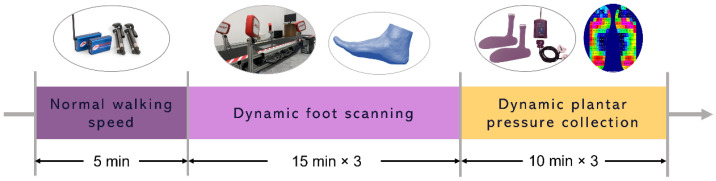
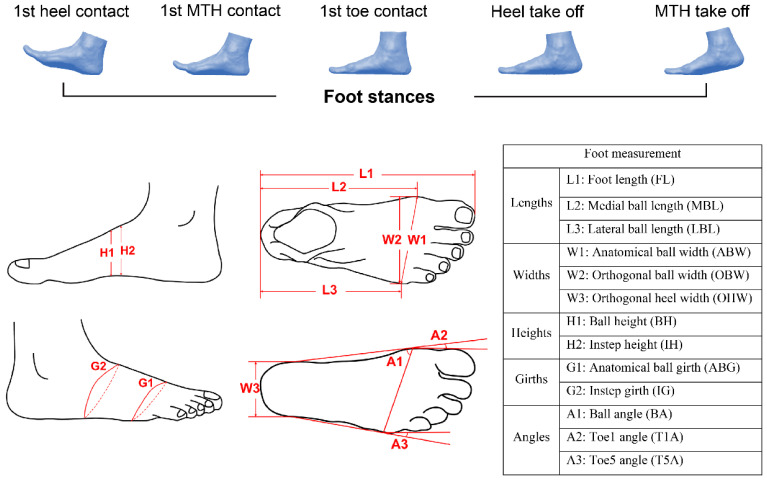
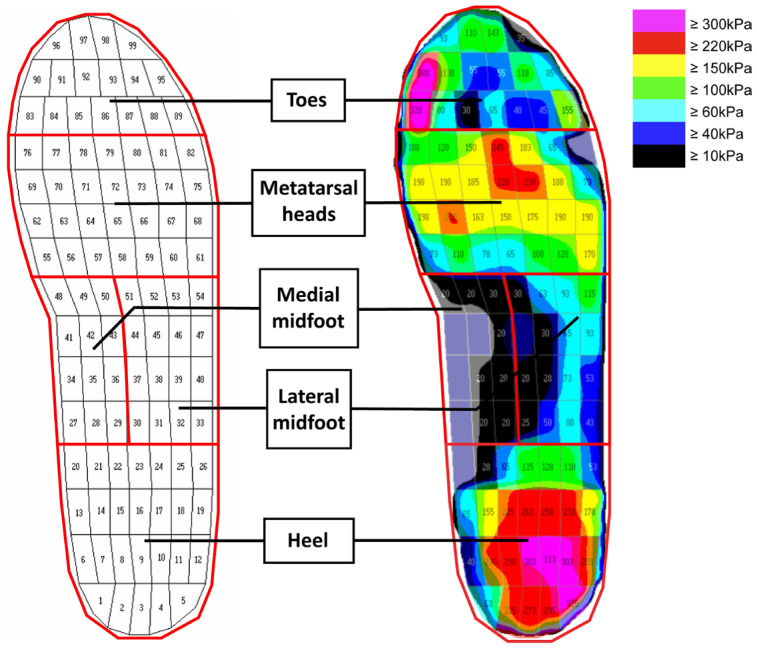
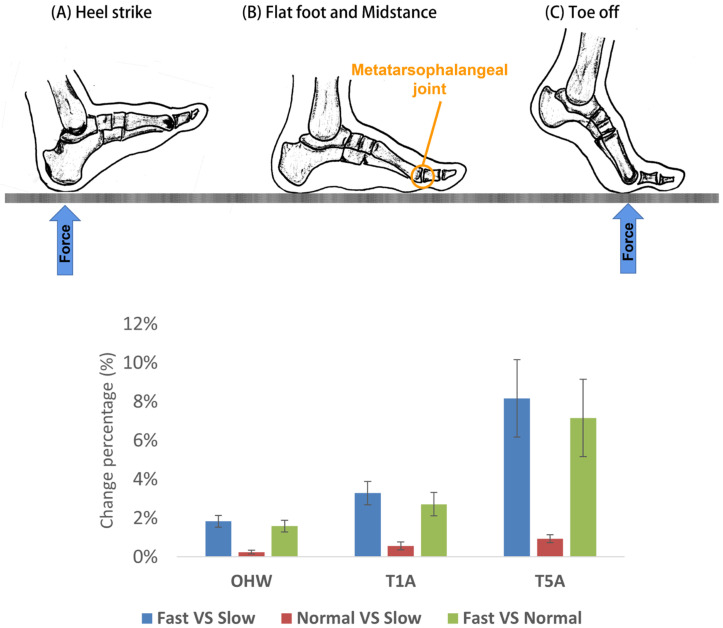
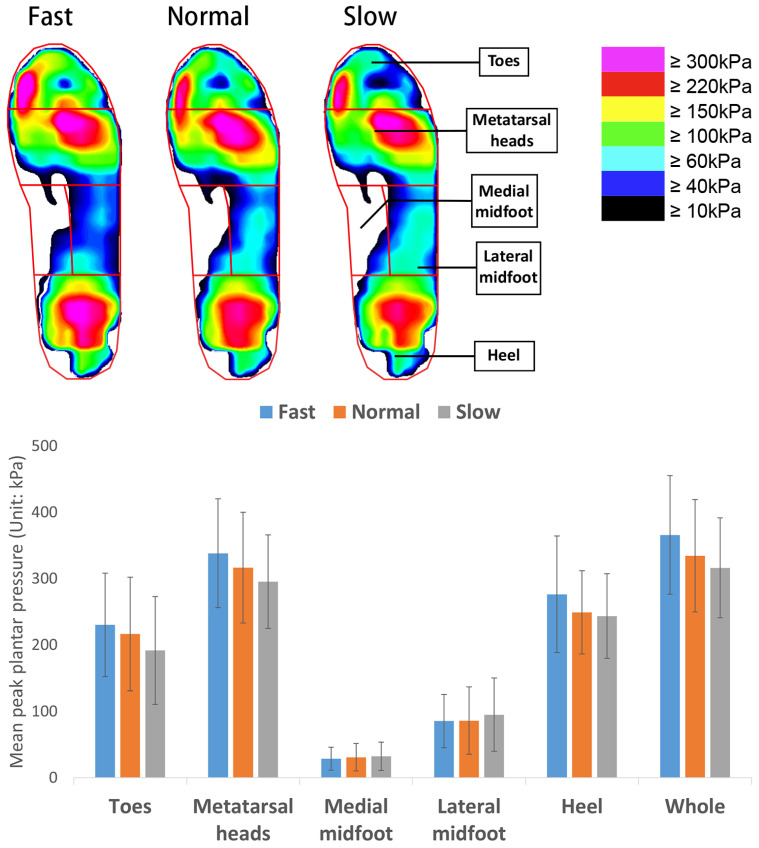
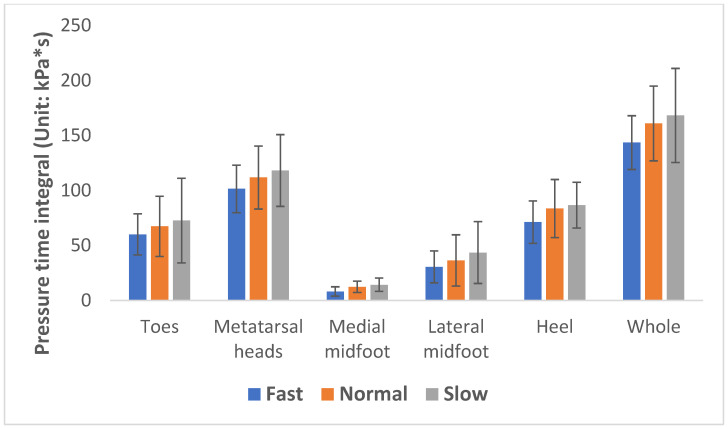
Official guidelines state that suitable physical activity is recommended for patients with diabetes mellitus. However, since walking at a rapid pace could be associated with increased plantar pressure and potential foot pain, the footwear condition is particularly important for optimal foot protection in order to reduce the risk of tissue injury and ulceration of diabetic patients. This study aims to analyze foot deformation and plantar pressure distribution at three different walking speeds (slow, normal, and fast walking) in dynamic situations. The dynamic foot shape of 19 female diabetic patients at three walking speeds is obtained by using a novel 4D foot scanning system. Their plantar pressure distributions at the three walking speeds are also measured by using the Pedar in-shoe system. The pressure changes in the toes, metatarsal heads, medial and lateral midfoot, and heel areas are systematically investigated. Although a faster walking speed shows slightly larger foot measurements than the two other walking speeds, the difference is insignificant. The foot measurement changes at the forefoot and heel areas, such as the toe angles and heel width, are found to increase more readily than the measurements at the midfoot. The mean peak plantar pressure shows a significant increase at a faster walking speed with the exception of the midfoot, especially at the forefoot and heel areas. However, the pressure time integral decreases for all of the foot regions with an increase in walking speed. Suitable offloading devices are essential for diabetic patients, particularly during brisk walking. Design features such as medial arch support, wide toe box, and suitable insole material for specific area of the foot (such as polyurethane for forefoot area and ethylene-vinyl acetate for heel area) are essential for diabetic insole/footwear to provide optimal fit and offloading. The findings contribute to enhancing the understanding of foot shape deformation and plantar pressure changes during dynamic situations, thus facilitating the design of footwear/insoles with optimal fit, wear comfort, and foot protection for diabetic patients.
Keywords: 4D foot scanning; diabetes; foot deformation; plantar pressure; walking speed.
Conflict of interest statement
The authors declare no conflict of interest.
Figures
Similar articles
-
[Effect of walking speed on pressure distribution of orthopedic shoe technology].Orthopade. 2001 Mar;30(3):169-75. doi: 10.1007/s001320050591. Orthopade. 2001. PMID: 11501008 German.
-
Footwear and insole design features that reduce neuropathic plantar forefoot ulcer risk in people with diabetes: a systematic literature review.J Foot Ankle Res. 2020 Jun 4;13(1):30. doi: 10.1186/s13047-020-00400-4. J Foot Ankle Res. 2020. PMID: 32498719 Free PMC article.
-
Effects of walking speeds and durations on the plantar pressure gradient and pressure gradient angle.BMC Musculoskelet Disord. 2022 Aug 30;23(1):823. doi: 10.1186/s12891-022-05771-2. BMC Musculoskelet Disord. 2022. PMID: 36042445 Free PMC article.
-
An optimized design of in-shoe heel lifts reduces plantar pressure of healthy males.Gait Posture. 2016 Jun;47:43-7. doi: 10.1016/j.gaitpost.2016.04.003. Epub 2016 Apr 13. Gait Posture. 2016. PMID: 27264401
-
Intelligent plantar pressure offloading for the prevention of diabetic foot ulcers and amputations.Front Endocrinol (Lausanne). 2023 Jul 4;14:1166513. doi: 10.3389/fendo.2023.1166513. eCollection 2023. Front Endocrinol (Lausanne). 2023. PMID: 37469988 Free PMC article. Review.
Cited by
-
Ultra-dense Motion Capture: An exploratory full-automatic approach for dense tracking of breast motion in 4D.PLoS One. 2024 Feb 26;19(2):e0299040. doi: 10.1371/journal.pone.0299040. eCollection 2024. PLoS One. 2024. PMID: 38408041 Free PMC article.
-
Effectiveness of Using a Digital Wearable Plantar Pressure Device to Detect Muscle Fatigue: Within-Subject, Repeated Measures Experimental Design.JMIR Hum Factors. 2025 Jan 7;12:e65578. doi: 10.2196/65578. JMIR Hum Factors. 2025. PMID: 39773695 Free PMC article.
-
EfficientNetB0-Based End-to-End Diagnostic System for Diabetic Retinopathy Grading and Macular Edema Detection.Diabetes Metab Syndr Obes. 2025 Apr 26;18:1311-1321. doi: 10.2147/DMSO.S506494. eCollection 2025. Diabetes Metab Syndr Obes. 2025. PMID: 40309724 Free PMC article.
-
Recent Innovations in Footwear and the Role of Smart Footwear in Healthcare-A Survey.Sensors (Basel). 2024 Jul 2;24(13):4301. doi: 10.3390/s24134301. Sensors (Basel). 2024. PMID: 39001080 Free PMC article. Review.
-
Cushioning Performance of Specialized Running Socks for Enhanced Shock Absorption and Reduced Plantar Pressure.Materials (Basel). 2025 Jun 21;18(13):2941. doi: 10.3390/ma18132941. Materials (Basel). 2025. PMID: 40649429 Free PMC article.
References
-
- IDF Diabetes Facts & Figures. 2022. [(accessed on 11 March 2022)]. Available online: https://idf.org/aboutdiabetes/what-is-diabetes/facts-figures.html.
-
- Mariam T.G., Alemayehu A., Tesfaye E., Mequannt W., Temesgen K., Yetwale F., Limenih M.A. Prevalence of diabetic foot ulcer and associated factors among adult diabetic patients who attend the diabetic follow-up clinic at the University of Gondar Referral Hospital, North West Ethiopia, 2016: Institutional-based cross-sectional study. J. Diabetes Res. 2017;2017:2879249. doi: 10.1155/2017/2879249. - DOI - PMC - PubMed
Publication types
MeSH terms
LinkOut - more resources
Full Text Sources
Medical
