


Ejaculatory Abstinence Affects the Sperm Quality in Normozoospermic Men-How Does the Seminal Bacteriome Respond?
- PMID: 36834909
- PMCID: PMC9963725
- DOI: 10.3390/ijms24043503
Ejaculatory Abstinence Affects the Sperm Quality in Normozoospermic Men-How Does the Seminal Bacteriome Respond?
Abstract
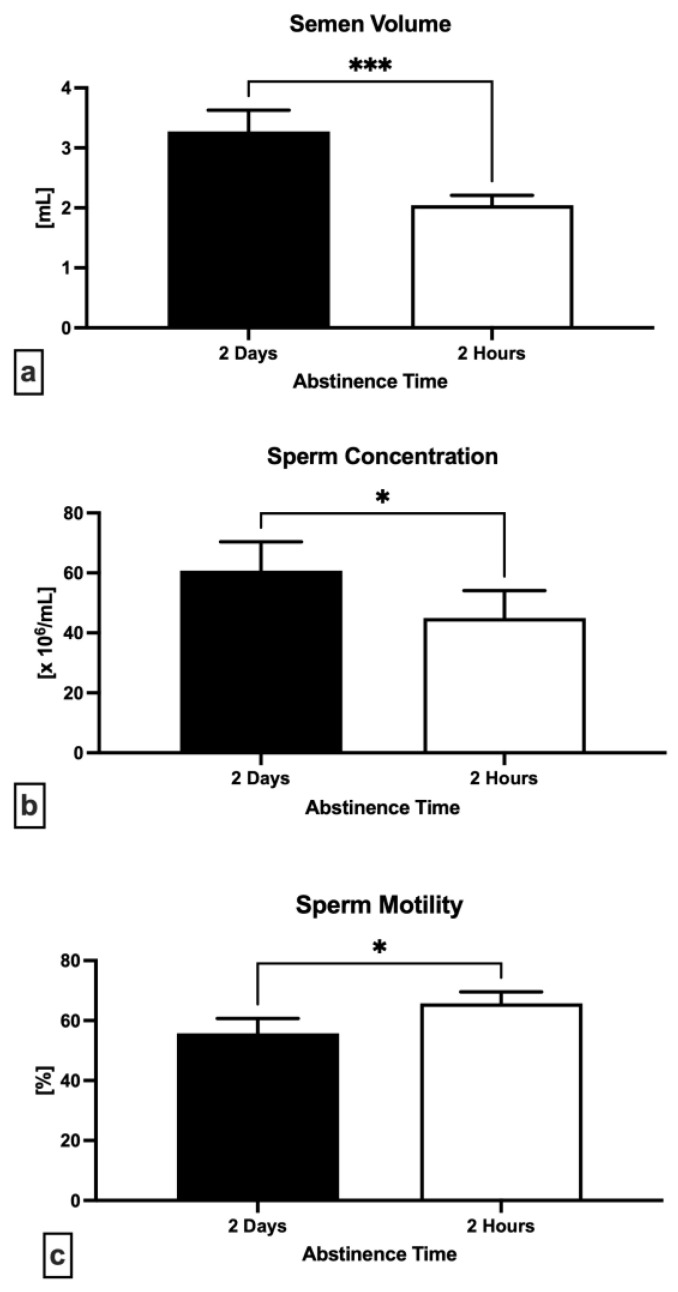
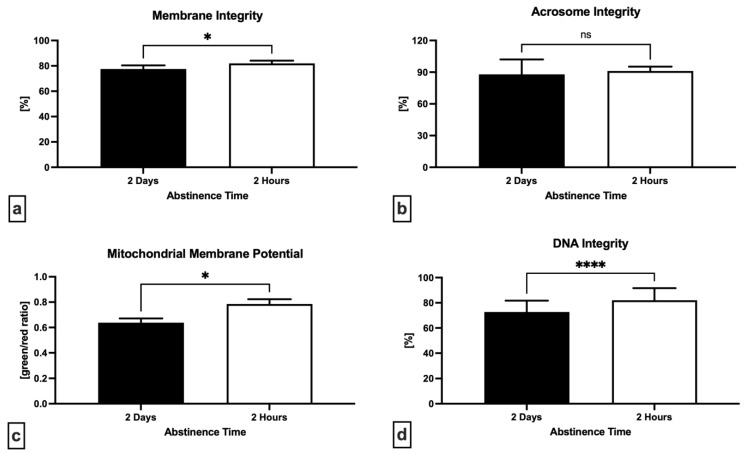
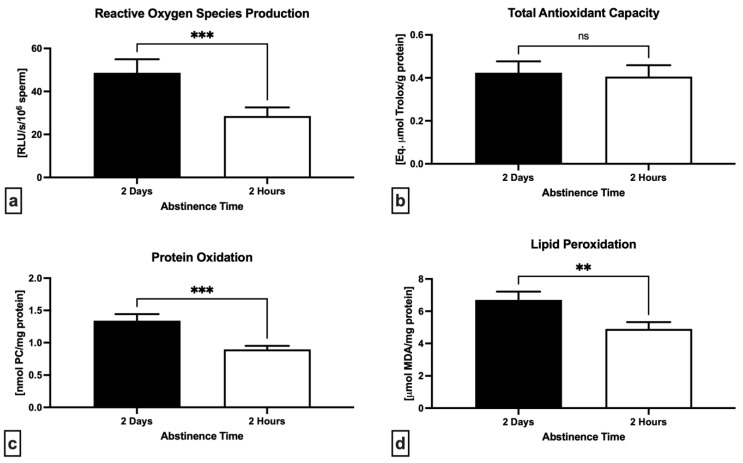
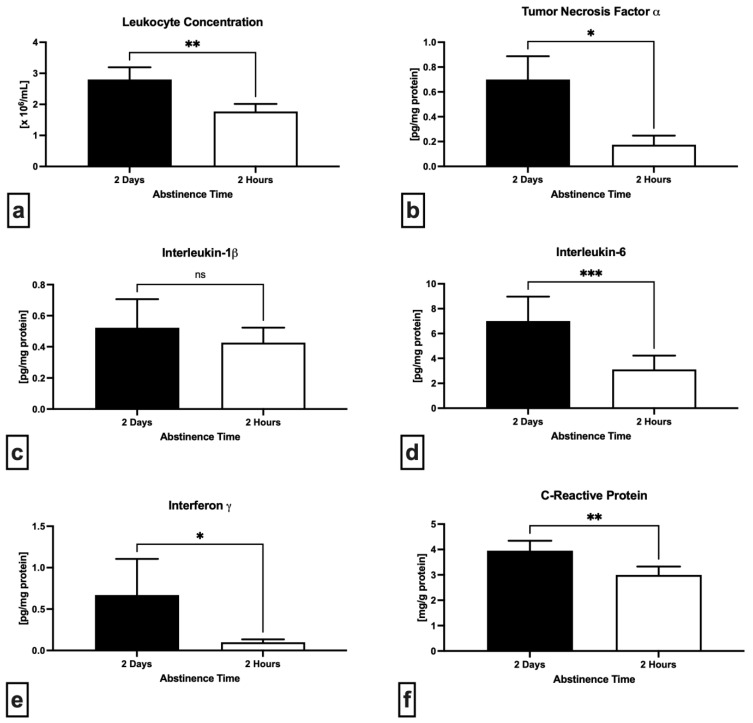
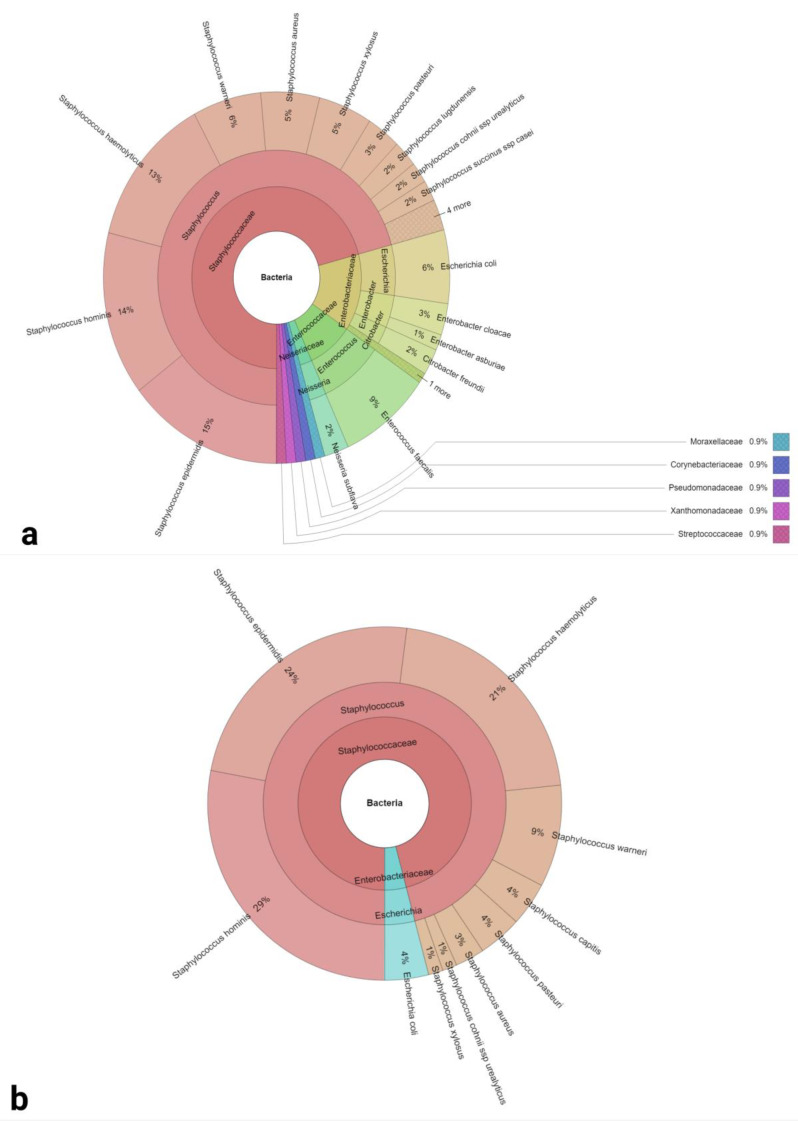
This study was designed to describe bacterial profiles of ejaculates collected following a long and short ejaculatory abstinence set in the context of changes in the conventional, oxidative, and immunological characteristics of semen. Two specimens were collected in succession from normozoospermic men (n = 51) following 2 days and 2 h, respectively. Semen samples were processed and analyzed according to the World Health Organization (WHO) 2021 guidelines. Afterwards, sperm DNA fragmentation, mitochondrial function, levels of reactive oxygen species (ROS), total antioxidant capacity, and oxidative damage to sperm lipids and proteins were evaluated in each specimen. Selected cytokine levels were quantified using the ELISA method. Bacterial identification by matrix-assisted laser desorption/ionization time-of-flight (MALDI-TOF) mass spectrometry revealed that samples collected following two days of abstinence presented with a higher bacterial load and diversity, and a greater prevalence of potentially uropathogenic bacteria including Escherichia coli, Staphylococcus aureus and Enterococcus faecalis. Only staphylococci and Escherichia coli remained present in specimens obtained after 2 h of abstinence. Whilst all samples accomplished the criteria set by WHO, a significantly higher motility (p < 0.05), membrane integrity (p < 0.05), mitochondrial membrane potential (p < 0.05), and DNA integrity (p < 0.0001) were detected following 2 h of ejaculatory abstinence. On the other hand, significantly higher ROS levels (p < 0.001), protein oxidation (p < 0.001), and lipid peroxidation (p < 0.01) accompanied by significantly higher concentrations of tumor necrosis factor alpha (p < 0.05), interleukin-6 (p < 0.01), and interferon gamma (p < 0.05) were observed in specimens collected after two days of abstinence. It may be summarized that shorter ejaculatory abstinence does not compromise sperm quality in normozoospermic men, while it contributes to a decreased occurrence of bacteria in semen which is accompanied by a lower probability of damage to spermatozoa by ROS or pro-inflammatory cytokines.
Keywords: apoptosis; bacteria; ejaculatory abstinence; inflammation; oxidative stress; semen quality.
Conflict of interest statement
The authors declare no conflict of interest. The funders had no role in the design of the study; in the collection, analyses, or interpretation of data; in the writing of the manuscript; or in the decision to publish the results.
Figures
References
-
- Milachich T., Dyulgerova-Nikolova D. The Sperm: Parameters and Evaluation. In: Sharma N., Chakrabarti S., Barak Y., Ellenbogen A., editors. Innovations in Assisted Reproduction Technology. 1st ed. IntechOpen; London, UK: 2020. pp. 1–20. - DOI
-
- World Health Organization . WHO Laboratory Manual for the Examination and Processing of Human Semen. 6th ed. WHO Press; Geneva, Switzerland: 2021. 276p
MeSH terms
Substances
Grants and funding
LinkOut - more resources
Full Text Sources
