


HSPs/STAT3 Interplay Sustains DDR and Promotes Cytokine Release by Primary Effusion Lymphoma Cells
- PMID: 36835344
- PMCID: PMC9959463
- DOI: 10.3390/ijms24043933
HSPs/STAT3 Interplay Sustains DDR and Promotes Cytokine Release by Primary Effusion Lymphoma Cells
Abstract
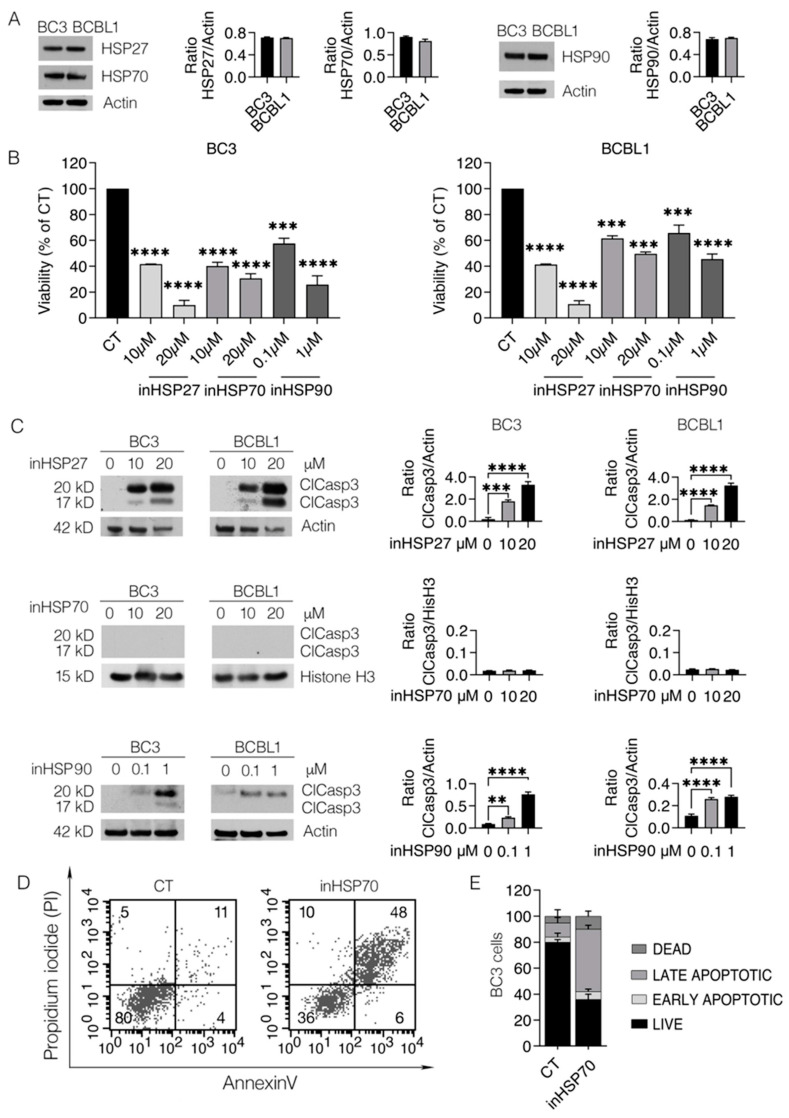
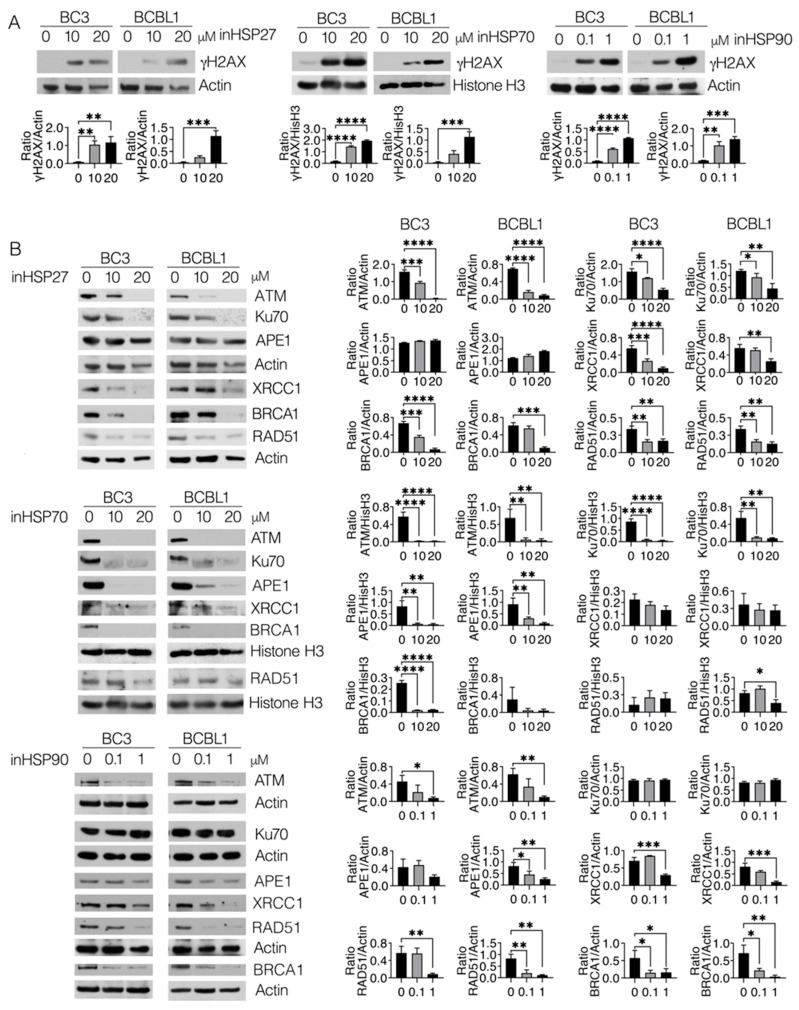
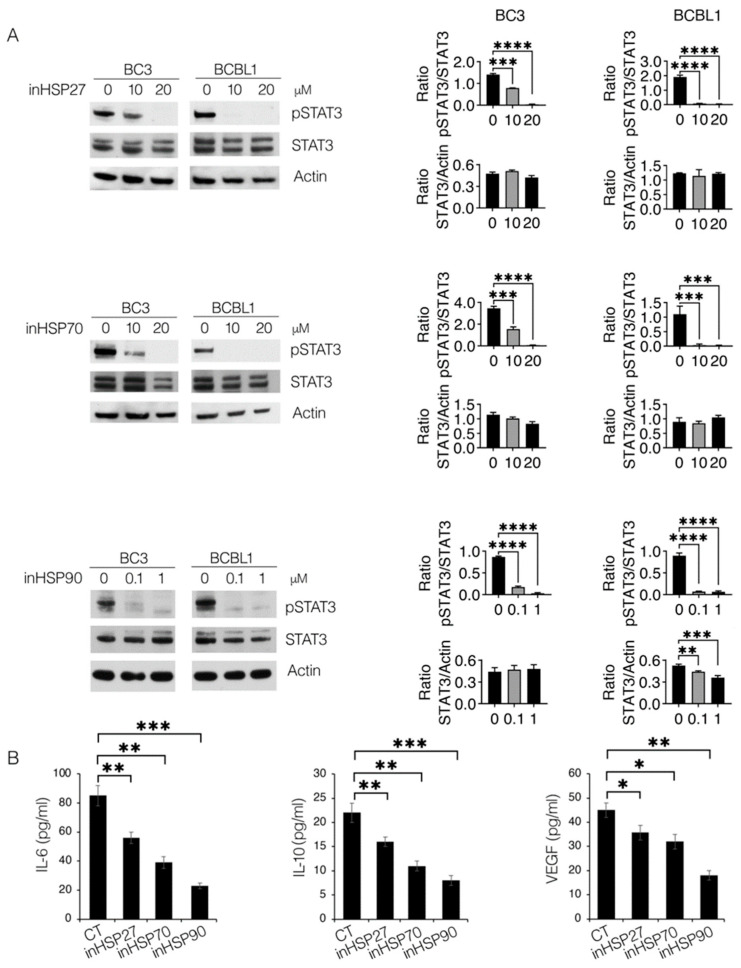
Primary effusion lymphoma (PEL) is a rare and aggressive B-cell lymphoma, against which current therapies usually fail. In the present study, we show that targeting HSPs, such as HSP27, HSP70 and HSP90, could be an efficient strategy to reduce PEL cell survival, as it induces strong DNA damage, which correlated with an impairment of DDR. Moreover, as HSP27, HSP70 and HSP90 cross talk with STAT3, their inhibition results in STAT3 de-phosphorylation and. On the other hand, the inhibition of STAT3 may downregulate these HSPs. These findings suggest that targeting HSPs has important implications in cancer therapy, as it can reduce the release of cytokines by PEL cells, which, besides affecting their own survival, could negatively influence anti-cancer immune response.
Keywords: DDR; HSP27; HSP70; HSP90; PEL; STAT3; cytokines.
Conflict of interest statement
The authors declare no conflict of interest.
Figures


References
MeSH terms
Substances
Grants and funding
LinkOut - more resources
Full Text Sources
Research Materials
Miscellaneous
