Review
. 2023 Feb 10;12(4):1402.
doi: 10.3390/jcm12041402.

Infectious Pneumonia and Lung Ultrasound: A Review

Affiliations
Review

Infectious Pneumonia and Lung Ultrasound: A Review

Andrea Boccatonda et al. J Clin Med. .

Abstract

The application of thoracic ultrasound examination has not long been developed because ultrasound's interaction with the lung does not generate an anatomical image but an artifactual one. Subsequently, the evaluation of pulmonary artifacts and their correlation to specific diseases allowed the development of ultrasound semantics. Currently, pneumonia still represents one of the main causes of hospitalization and mortality. Several studies in the literature have demonstrated the ultrasound features of pneumonia. Although ultrasound cannot be considered the diagnostic gold standard for the study of all lung diseases, it has experienced an extraordinary development and growth of interest due to the SARS-CoV-2 pandemic. This review aims to provide essential information on the application of lung ultrasound to the study of infectious pneumonia and to discuss the differential diagnosis.

Keywords: COVID-19; cancer; consolidation; heart failure; lung; pneumonia; ultrasound.


Conflict of interest statement

The authors declare no conflict of interest.

Figures
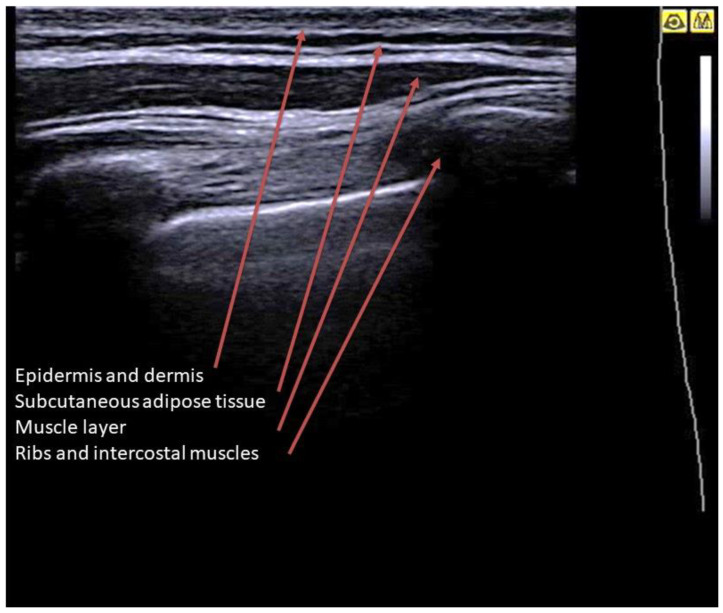
Figure 1
Figure 1
Longitudinal scan on a B-mode image of a healthy lung. Image showing from the surface to the depth: a homogeneous hyperechoic layer given by the skin (epidermis and dermis); a layer with mixed echogenicity (anechoic with hyperechoic striae) which represents the subcutaneous adipose tissue; the muscular layer, with a predominantly hypoechoic appearance; deeper layer: the ribs and intercostal muscles.
Figure 2
Figure 2
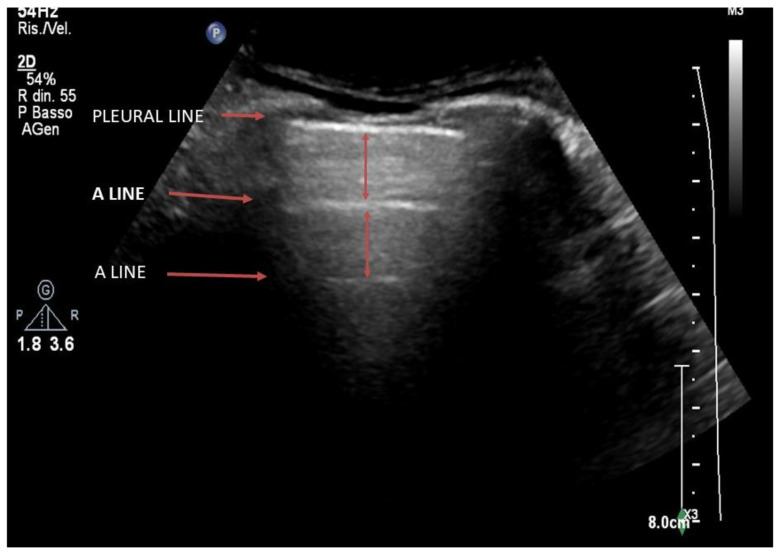
Longitudinal scan on a B-mode image of a healthy lung. Below the ribs, there is a longitudinal hyperechoic line which is called the pleural line. In-depth, horizontal reverberation artifacts are evident, defined as A-lines.
Figure 3
Figure 3
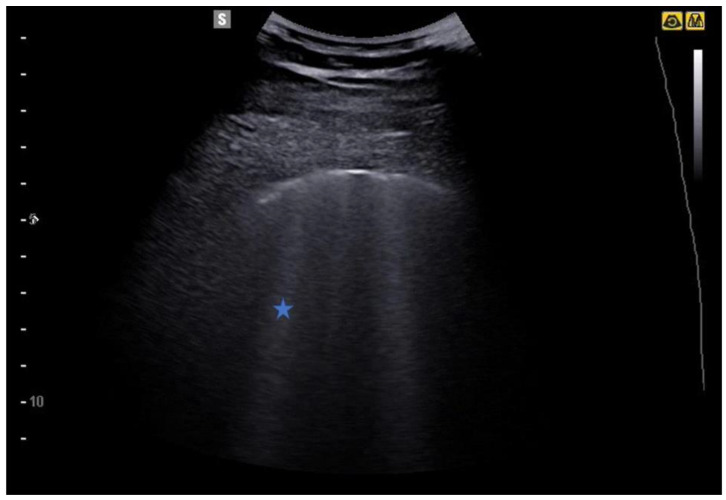
B-lines (star) are laser-like vertical hyperechoic reverberation artifacts arising from the pleural line extending to the bottom of the screen without fading and moving synchronously with lung sliding.
Figure 4
Figure 4
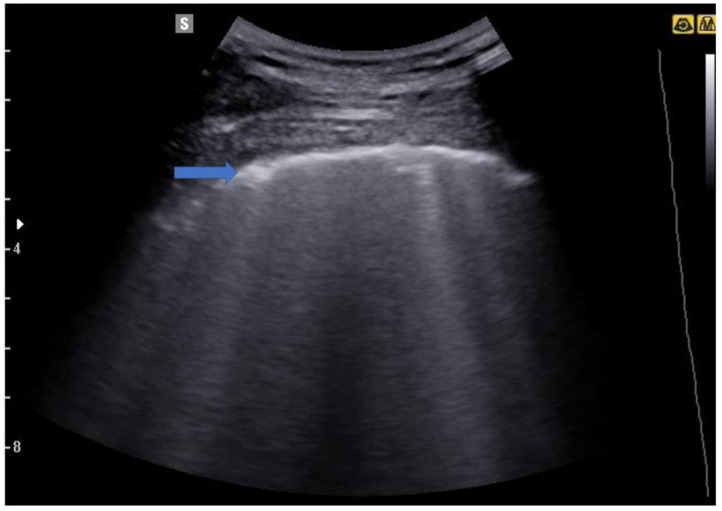
Image of a patient suffering from mild COVID-19 pneumonia. The blue arrow indicates an irregular pleural line, an early sign of covid-19 pneumonia. Some B lines are also evident in the image.
Figure 5
Figure 5
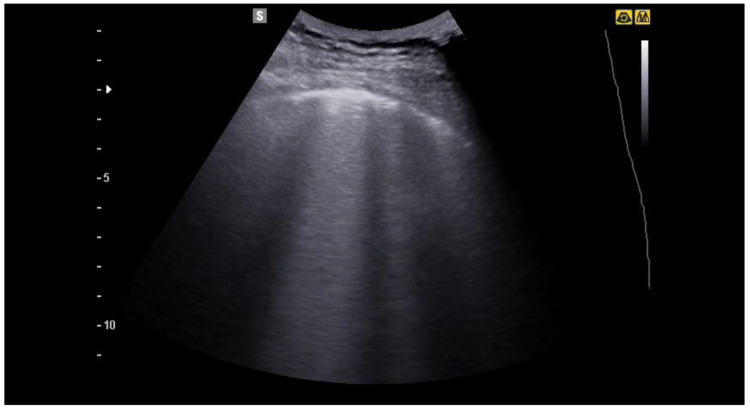
In the image the irregularity of the pleural line and some B lines are evident, which in the middle part of the image merge to form a larger artefact.
Figure 6
Figure 6
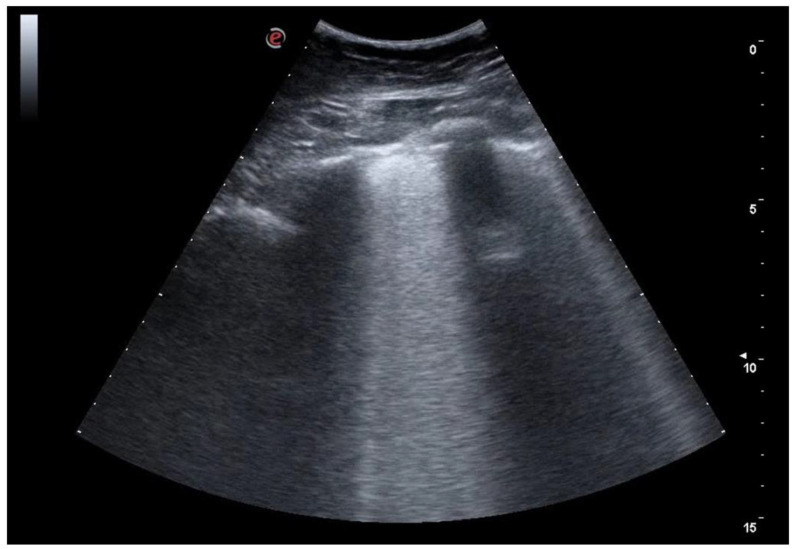
The image shows a more severe picture of interstitial disease than the previous ones. Multiple areas of confluence of lines B are highlighted.
Figure 7
Figure 7
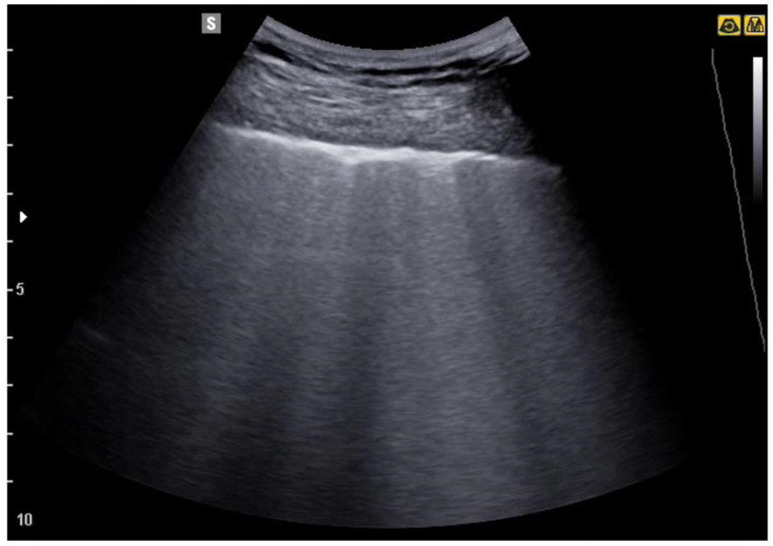
Severe interstitial disease. Many B lines are evident which merge to occupy the entire pulmonary field, to form the so-called "white lung".
Figure 8
Figure 8
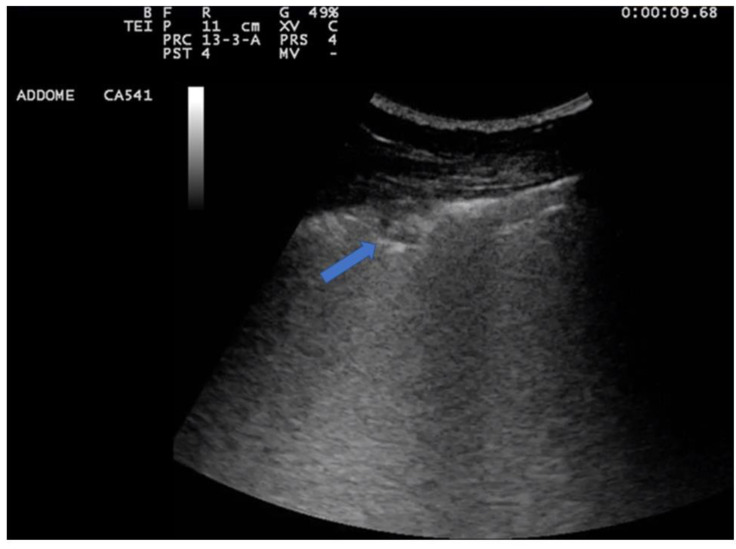
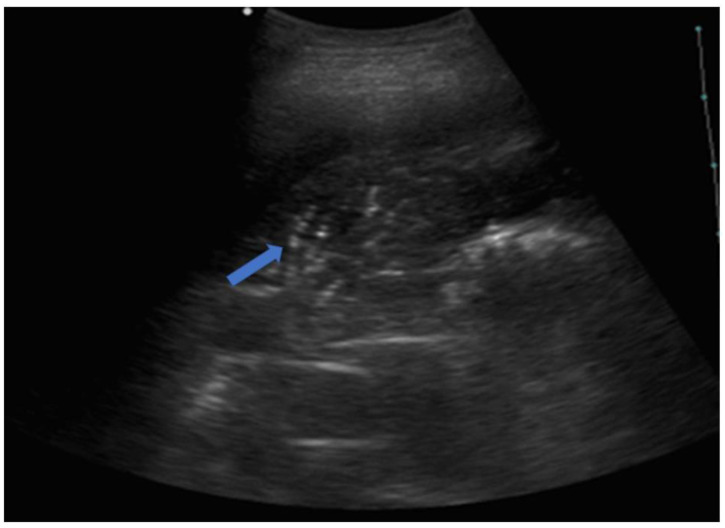
The image shows an interruption of the pleural line with a subpleural consolidation (blue arrow) with the presence of some bronchiolograms inside. That finding is typical for bronchopneumonia in a patient with fever and is clinically suggestive of ongoing infection.
Figure 9
Figure 9
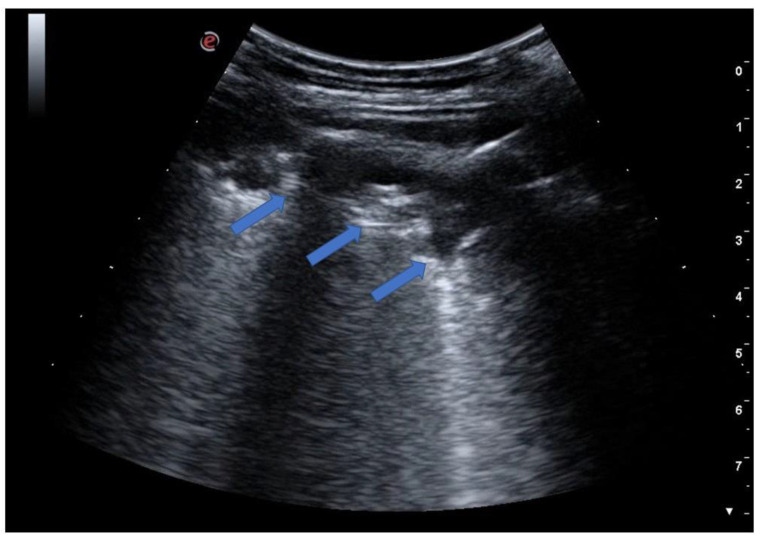
The image shows a large subpleural consolidation (blue arrows) extending over approximately two intercostal spaces with internal bronchograms. The image is typical for a picture of pneumonia with initial lobar involvement.
Figure 10
Figure 10
The image shows a complete lobar consolidation with air bronchograms (blue arrow) and minimal parapneumonic pleural effusion (lobar pneumonia). The air interface is completely lost, and the lung lobe is represented as a parenchymatous organ similar to the hepatic parenchyma (lung hepatization).

References

    1. Gargani L., Volpicelli G. How I do it: Lung ultrasound. Cardiovasc. Ultrasound. 2014;12:25. doi: 10.1186/1476-7120-12-25. - DOI - PMC - PubMed
    1. Lichtenstein D.A., Meziere G.A. Relevance of lung ultrasound in the diagnosis of acute respiratory failure: The BLUE protocol. Chest. 2008;134:117–125. doi: 10.1378/chest.07-2800. - DOI - PMC - PubMed
    1. Lichtenstein D.A. Lung ultrasound in the critically ill. Ann. Intensive Care. 2014;4:1. doi: 10.1186/2110-5820-4-1. - DOI - PMC - PubMed
    1. Lichtenstein D., Meziere G. A lung ultrasound sign allowing bedside distinction between pulmonary edema and COPD: The comet-tail artifact. Intensive Care Med. 1998;24:1331–1334. doi: 10.1007/s001340050771. - DOI - PubMed
    1. Lichtenstein D.A., Menu Y. A bedside ultrasound sign ruling out pneumothorax in the critically ill. Lung sliding. Chest. 1995;108:1345–1348. doi: 10.1378/chest.108.5.1345. - DOI - PubMed

LinkOut - more resources