Review
. 2023 Feb 11;12(4):1454.
doi: 10.3390/jcm12041454.

Polycystic Ovary Syndrome: Etiology, Current Management, and Future Therapeutics

Affiliations
Review

Polycystic Ovary Syndrome: Etiology, Current Management, and Future Therapeutics

Samradhi Singh et al. J Clin Med. .

Abstract

Polycystic ovary syndrome (PCOS) is a complex endocrine and metabolic disorder, typically characterized by anovulation, infertility, obesity, insulin resistance, and polycystic ovaries. Lifestyle or diet, environmental pollutants, genetics, gut dysbiosis, neuroendocrine alterations, and obesity are among the risk factors that predispose females to PCOS. These factors might contribute to upsurging metabolic syndrome by causing hyperinsulinemia, oxidative stress, hyperandrogenism, impaired folliculogenesis, and irregular menstrual cycles. Dysbiosis of gut microbiota may play a pathogenic role in the development of PCOS. The restoration of gut microbiota by probiotics, prebiotics, or a fecal microbiota transplant (FMT) might serve as an innovative, efficient, and noninvasive way to prevent and mitigate PCOS. This review deliberates on the variety of risk factors potentially involved in the etiology, prevalence, and modulation of PCOS, in addition to plausible therapeutic interventions, including miRNA therapy and the eubiosis of gut microbiota, that may help treat and manage PCOS.

Keywords: FMT; PCOS; gut dysbiosis; gut microbiome; hyperandrogenism; hyperinsulinemia; metabolic disorders; miRNA therapy; probiotics.


Conflict of interest statement

The authors declare no conflict of interest.

Figures
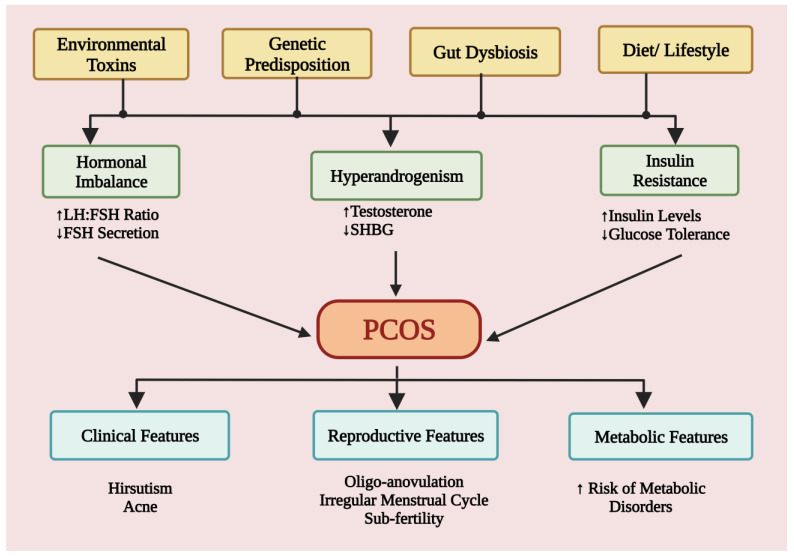
Figure 1
Figure 1
This schematic illustration shows the proposed pathophysiology and features of PCOS. The risk factors like environmental toxins, genetics, gut dysbiosis, and diet responsible for the pathophysiology of the PCOS and subsequent development of clinical, reproductive and metabolic features in PCOS patients. LH: luteinizing hormone; FSH: Follicle stimulating hormone; SHBG: Sex hormone binding globulin.
Figure 2
Figure 2
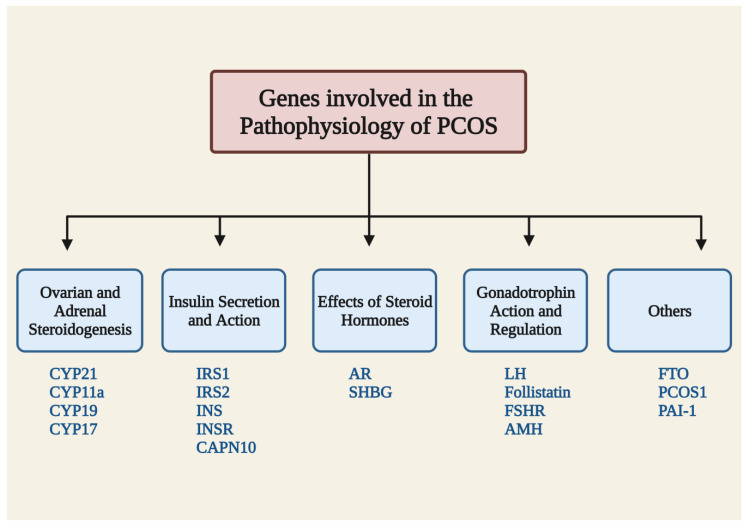
Summary of the genes involved in the pathophysiology of PCOS. CYP: cytochrome family p450; IRS: insulin receptor substrate; INS: insulin gene; INSR: insulin receptor; AR: androgen receptor gene; SHBG: sex hormone binding globulin; FSHR: follicle-stimulating hormone receptor; LH: lutein hormone; AMH: anti-Mullerian hormone; FTO: fat mass obesity; PAI-1: plasminogen activator inhibitor 1; and CAPN10: caplain-10.
Figure 3
Figure 3
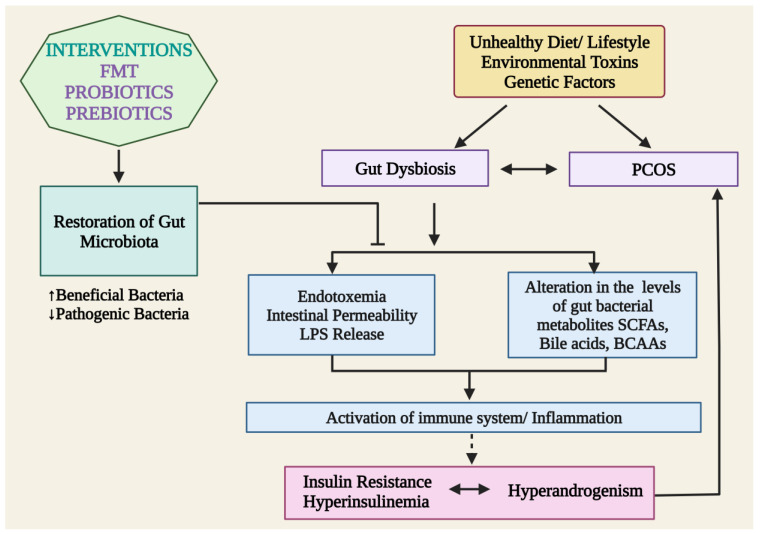
Plausible mechanisms of action of probiotics, prebiotics, and FMTs in restoring gut microbiota and alleviating PCOS. LPS: lipopolysaccharides; SCFAs: short-chain fatty acids; and BCAAs: branched-chain amino acid and FMTs: Fecal microbiota transplantation.

References

    1. El Hayek S., Bitar L., Hamdar L.H., Mirza F.G., Daoud G. Poly Cystic Ovarian Syndrome: An Updated Overview. Front. Physiol. 2016;7:124. doi: 10.3389/fphys.2016.00124. - DOI - PMC - PubMed
    1. Motlagh Asghari K., Nejadghaderi S.A., Alizadeh M., Sanaie S., Sullman M.J.M., Kolahi A.-A., Avery J., Safiri S. Burden of polycystic ovary syndrome in the Middle East and North Africa region, 1990–2019. Sci. Rep. 2022;12:7039. doi: 10.1038/s41598-022-11006-0. - DOI - PMC - PubMed
    1. Balen A.H., Tan S.L., MacDougall J., Jacobs H.S. Miscarriage rates following in-vitro fertilization are increased in women with polycystic ovaries and reduced by pituitary desensitization with buserelin. Hum. Reprod. 1993;8:959–964. doi: 10.1093/oxfordjournals.humrep.a138174. - DOI - PubMed
    1. Azziz R., Woods K.S., Reyna R., Key T.J., Knochenhauer E.S., Yildiz B.O. The prevalence and features of the polycystic ovary syndrome in an unselected population. J. Clin. Endocrinol. Metab. 2004;89:2745–2749. doi: 10.1210/jc.2003-032046. - DOI - PubMed
    1. Vidya Bharathi R., Swetha S., Neerajaa J., Varsha Madhavica J., Janani D.M., Rekha S.N., Ramya S., Usha B. An epidemiological survey: Effect of predisposing factors for PCOS in Indian urban and rural population. Middle East Fertil. Soc. J. 2017;22:313–316. doi: 10.1016/j.mefs.2017.05.007. - DOI

LinkOut - more resources