


Polycystic Ovary Syndrome: Challenges and Possible Solutions
- PMID: 36836035
- PMCID: PMC9967025
- DOI: 10.3390/jcm12041500
Polycystic Ovary Syndrome: Challenges and Possible Solutions
Abstract
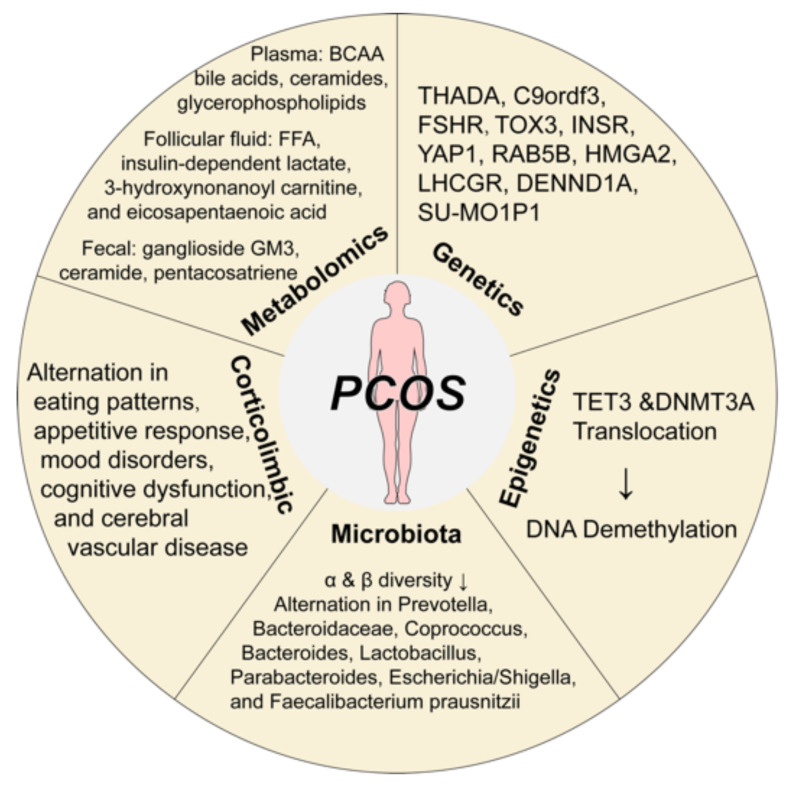
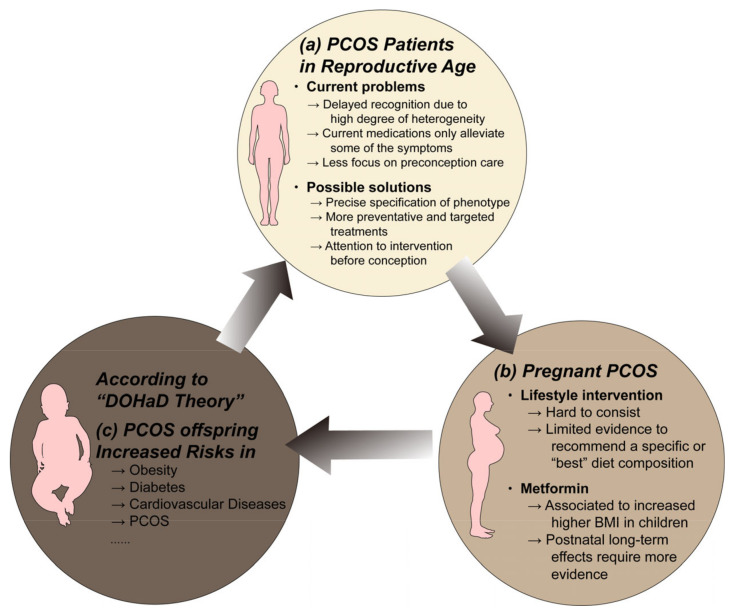
Polycystic ovary syndrome (PCOS) is one of the most common endocrine disorders in women of reproductive age. This syndrome not only impairs female fertility but also increases the risk of obesity, diabetes, dyslipidemia, cardiovascular diseases, psychological diseases, and other health problems. Additionality, because of the high clinical heterogeneity, the current pathogenesis of PCOS is still unclear. There is still a large gap in precise diagnosis and individualized treatment. We summarize the present findings concerning the genetics, epigenetics, gut microbiota, corticolimbic brain responses, and metabolomics of the PCOS pathogenesis mechanism, highlight the remaining challenges in PCOS phenotyping and potential treatment approaches, and explain the vicious circle of intergenerational transmission of PCOS, which might provide more thoughts for better PCOS management in the future.
Keywords: pathogenesis; phenotype; polycystic ovary syndrome; treatment.
Conflict of interest statement
The authors declare no conflict of interest.
Figures
References
-
- Safiri S., Noori M., Nejadghaderi S.A., Karamzad N., Carson-Chahhoud K., Sullman M.J.M., Collins G.S., Kolahi A.A., Avery J. Prevalence, incidence and years lived with disability due to polycystic ovary syndrome in 204 countries and territories, 1990–2019. Hum. Reprod. 2022;37:1919–1931. doi: 10.1093/humrep/deac091. - DOI - PubMed
LinkOut - more resources
Full Text Sources
Miscellaneous
