


Dental Luting Cements: An Updated Comprehensive Review
- PMID: 36838607
- PMCID: PMC9961919
- DOI: 10.3390/molecules28041619
Dental Luting Cements: An Updated Comprehensive Review
Abstract
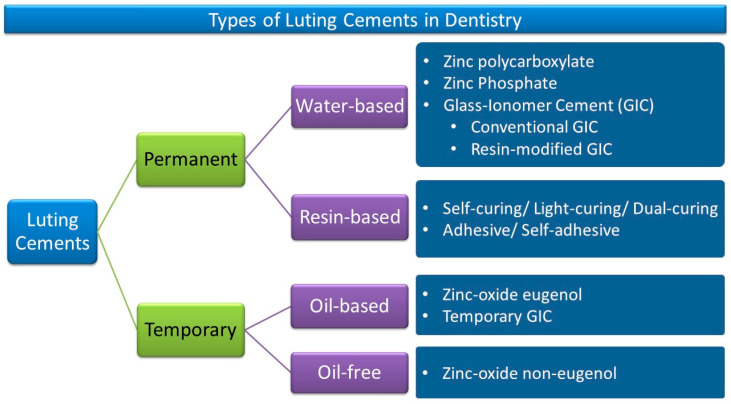
The cementation of indirect restoration is one of the most important steps in prosthetic and restorative dentistry. Cementation aims to bond the prosthetic restoration to the prepared enamel or enamel and dentine. Successful cementation protocols prevent biofilm formation at the margin between tooth and restoration and minimize mechanical and biological complications. With the advancements in dental cements, they have been modified to be versatile in terms of handling, curing, and bond strengths. This review presents updates on dental cements, focusing on the composition, properties, advantages, limitations, and indications of the various cements available. Currently, dental restorations are made from various biomaterials, and depending on each clinical case, an appropriate luting material will be selected. There is no luting material that can be universally used. Therefore, it is important to distinguish the physical, mechanical, and biological properties of luting materials in order to identify the best options for each case. Nowadays, the most commonly used dental cements are glass-ionomer and resin cement. The type, shade, thickness of resin cement and the shade of the ceramic, all together, have a tangible influence on the final restoration color. Surface treatments of the restoration increase the microtensile bond strength. Hence, the proper surface treatment protocol of both the substrate and restoration surfaces is needed before cementation. Additionally, the manufacturer's instructions for the thin cement-layer thickness are important for the long-term success of the restoration.
Keywords: dental cements; dental material; glass-ionomer cement; luting agents; resin cement.
Conflict of interest statement
The authors declare no conflict of interest.
Figures

References
Publication types
MeSH terms
Substances
LinkOut - more resources
Full Text Sources
