


The Epigenetic Effects of Coffee
- PMID: 36838754
- PMCID: PMC9958838
- DOI: 10.3390/molecules28041770
The Epigenetic Effects of Coffee
Abstract
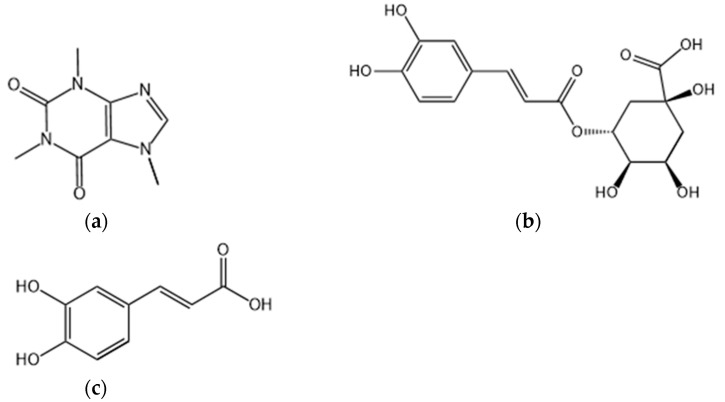
In this review, we discuss the recent knowledge regarding the epigenetic effects of coffee extract and the three essential active ingredients in coffee (caffeine, chlorogenic acid, and caffeic acid). As a popular beverage, coffee has many active ingredients which have a variety of biological functions such as insulin sensitization, improvement of sugar metabolism, antidiabetic properties, and liver protection. However, recent researches have shown that coffee is not only beneficial for human, but also bad, which may be due to its complex components. Studies suggest that coffee extract and its components can potentially impact gene expression via alteration of DNA methylation, histone modifications, and ncRNA expression; thus, exert long lasting impacts on the epigenome. More importantly, coffee consumption during pregnancy has been linked to multiple negative effects on offspring due to epigenetic modifications; on the other hand, it has also been linked to improvements in many diseases, including cancer. Therefore, understanding more about the epigenetic effects associated with coffee components is crucial to finding ways for improving human health.
Keywords: caffeic acid; caffeine; chlorogenic acid; coffee extract; diseases; epigenetic effects.
Conflict of interest statement
The authors declare no conflict of interest.
Figures
References
-
- National Coffee Association of U.S.A National Coffee Data Trends Fall 2022. Media Highlights. [(accessed on 1 November 2022)]. Available online: https://www.ncausa.org/Research-Trends/Market-Research/NCDT.
Publication types
MeSH terms
Substances
Grants and funding
- 31771582/National Natural Science Foundation of China
- 31271445/National Natural Science Foundation of China
- 2017A030313131/Guangdong Natural Science Foundation of China
- "Thousand, Hundred, and Ten" Project of the Department of Education of Guangdong Province of China
- 2017KZDXM035/Basic and Applied Research Major Projects of Guangdong Province of China
LinkOut - more resources
Full Text Sources
Research Materials
