


Epidemiology of Ebolaviruses from an Etiological Perspective
- PMID: 36839520
- PMCID: PMC9963726
- DOI: 10.3390/pathogens12020248
Epidemiology of Ebolaviruses from an Etiological Perspective
Abstract
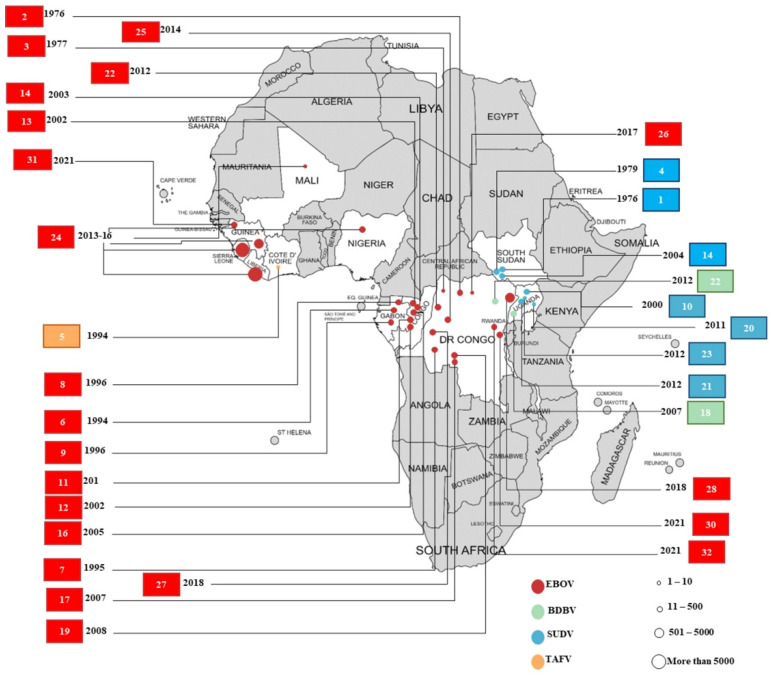
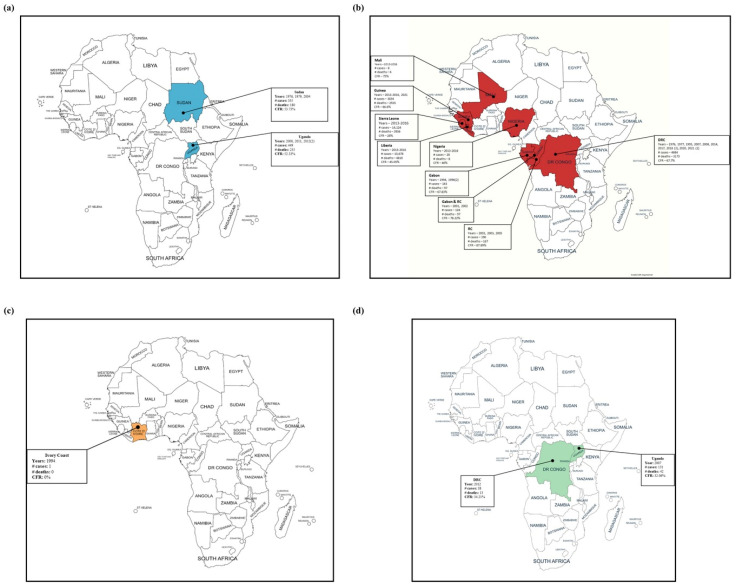
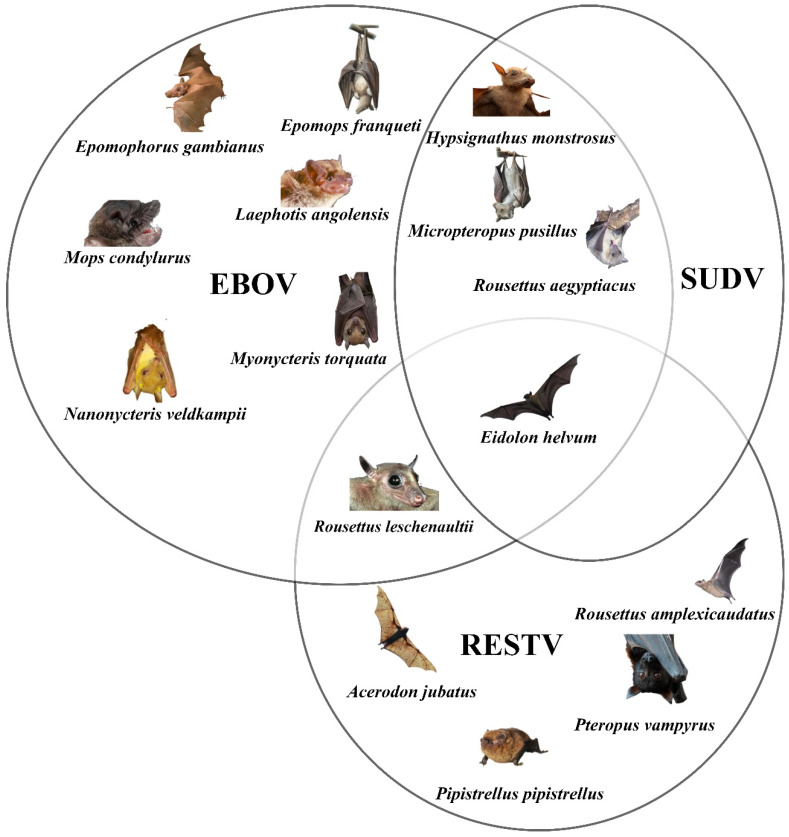
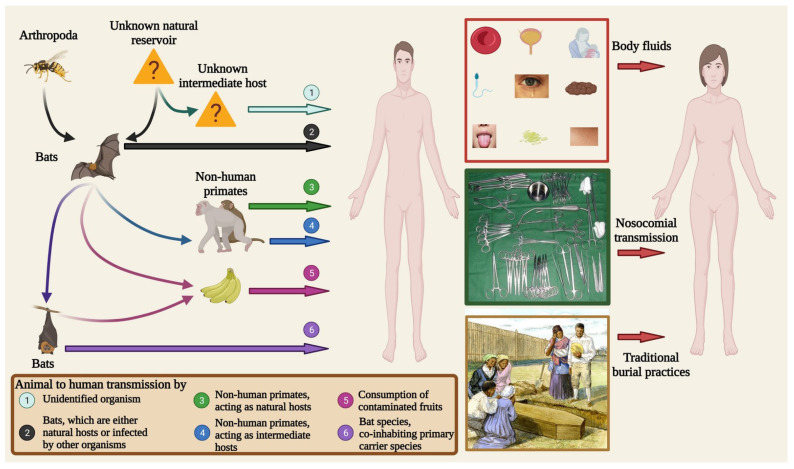
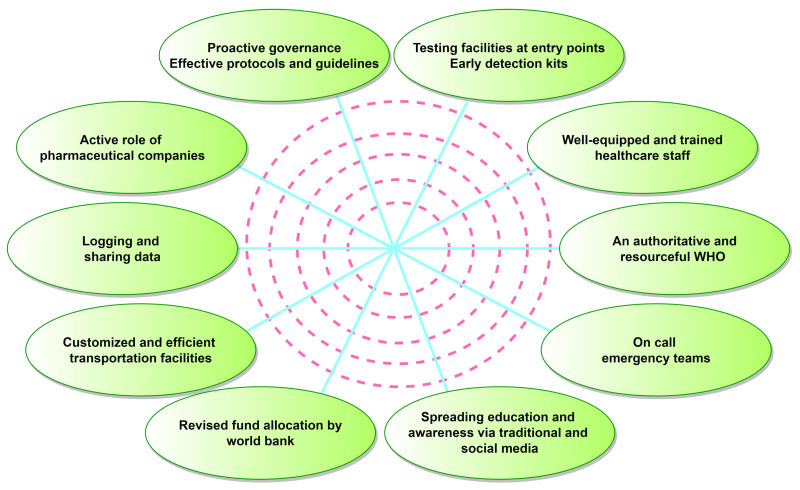
Since the inception of the ebolavirus in 1976, 32 outbreaks have resulted in nearly 15,350 deaths in more than ten countries of the African continent. In the last decade, the largest (2013-2016) and second largest (2018-2020) ebolavirus outbreaks have occurred in West Africa (mainly Guinea, Liberia, and Sierra Leone) and the Democratic Republic of the Congo, respectively. The 2013-2016 outbreak indicated an alarming geographical spread of the virus and was the first to qualify as an epidemic. Hence, it is imperative to halt ebolavirus progression and develop effective countermeasures. Despite several research efforts, ebolaviruses' natural hosts and secondary reservoirs still elude the scientific world. The primary source responsible for infecting the index case is also unknown for most outbreaks. In this review, we summarize the history of ebolavirus outbreaks with a focus on etiology, natural hosts, zoonotic reservoirs, and transmission mechanisms. We also discuss the reasons why the African continent is the most affected region and identify steps to contain this virus.
Keywords: ebolavirus in Africa; ebolavirus outbreaks; ebolavirus reservoirs; ebolavirus transmission.
Conflict of interest statement
The authors declare no conflict of interest.
Figures
References
-
- CDC Years of Ebola Virus Disease Outbreaks. [(accessed on 14 May 2022)]; Available online: https://www.cdc.gov/vhf/ebola/history/chronology.html.
-
- Gałaś A. The evolution of Ebola virus disease outbreaks. Folia Med. Crac. 2014;54:27–32. - PubMed
Publication types
LinkOut - more resources
Full Text Sources
