


Synergistic Antitumor Potency of a Self-Assembling Cyclodextrin Nanoplex for the Co-Delivery of 5-Fluorouracil and Interleukin-2 in the Treatment of Colorectal Cancer
- PMID: 36839637
- PMCID: PMC9963231
- DOI: 10.3390/pharmaceutics15020314
Synergistic Antitumor Potency of a Self-Assembling Cyclodextrin Nanoplex for the Co-Delivery of 5-Fluorouracil and Interleukin-2 in the Treatment of Colorectal Cancer
Abstract
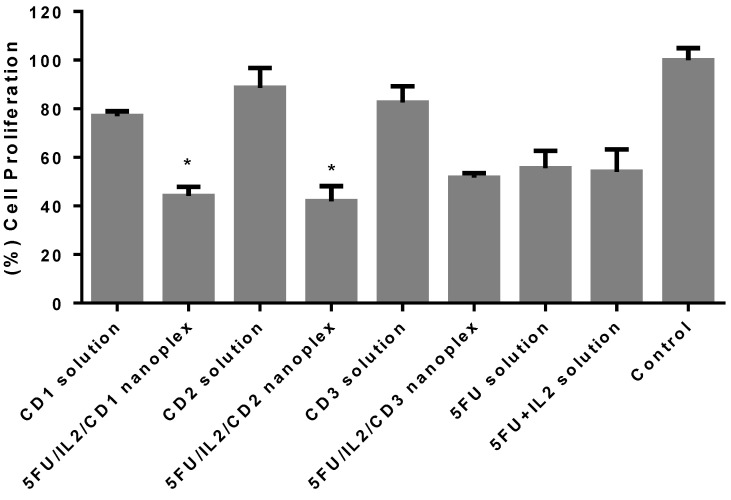
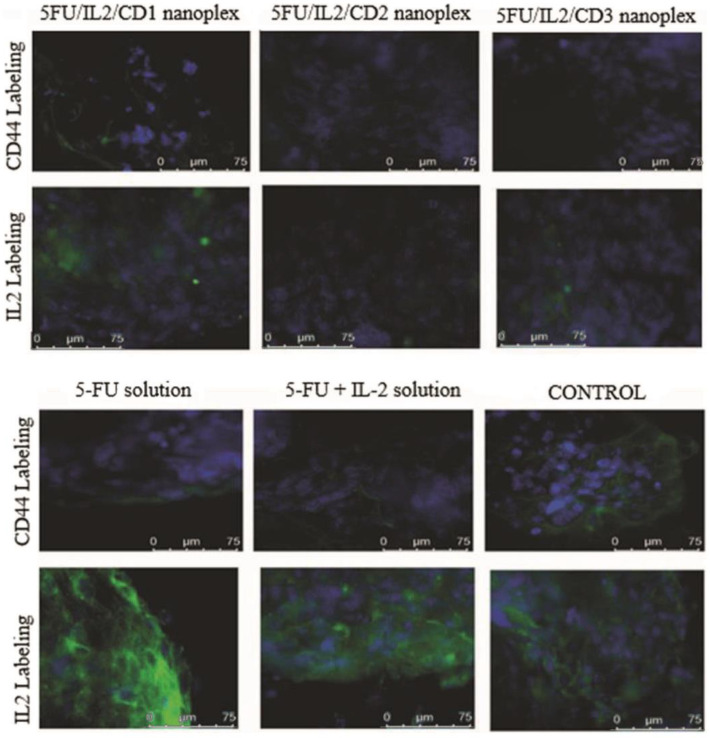
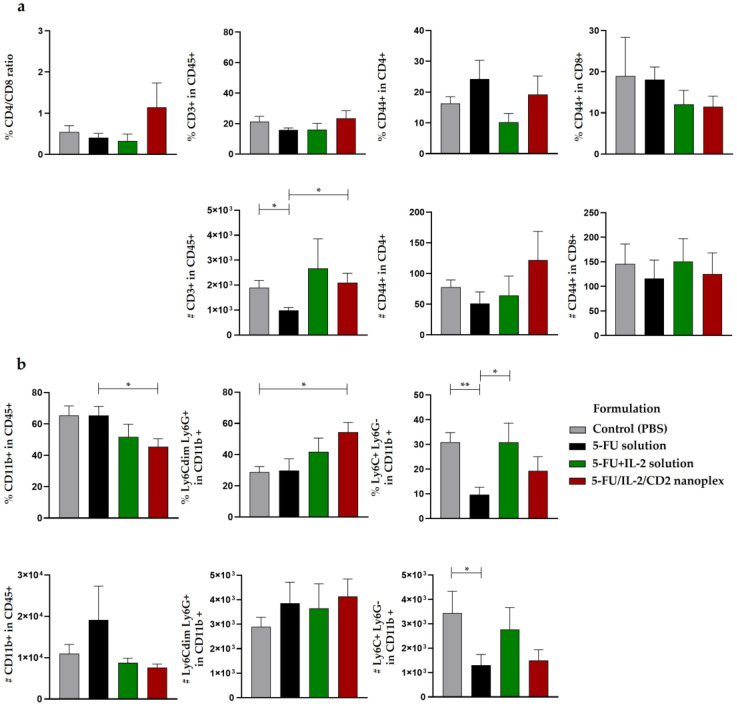
Chemotherapy is the most used method after surgery in the treatment of colon cancer. Cancer cells escape the recognition mechanism of immune system cells to survive and develop chemoresistance. Therefore, the use of immunotherapy in combination with chemotherapy can increase the effectiveness of the treatment. Nanoparticles have been used clinically to increase the accumulation of therapeutics in target tissues and reduce toxicity. In this paper, nanoplexes were formed via cationic cyclodextrin polymer, 5-Fluorouracil, and Interleukin-2 based on the opposite charge interaction of macromolecules without undergoing any structural changes or losing the biological activity of Interleukin-2. Anticancer activities of nanoplexes were determined in two-dimensional and three-dimensional cell culture setups. The dual drug-loaded cyclodextrin nanoplexes diffused deeper into the spheroids and accelerated apoptosis when compared with 5-FU solutions. In the colorectal tumor-bearing animal model, survival rate, antitumor activity, metastasis, and immune response parameters were assessed using a cyclodextrin derivative, which was found to be safe based on the ALT/AST levels in healthy mice. Histomorphometric analysis showed that the groups treated with the nanoplex formulation had significantly fewer initial tumors and lung foci when compared with the control. The dual drug-loaded nanoplex could be a promising drug delivery technique in the immunochemotherapy of colorectal cancer.
Keywords: 3D cell culture; 5-Fluorouracil; Interleukin-2; chemoimmunotherapy; colon cancer; cyclodextrin polymer; in vivo model; nanoplex.
Conflict of interest statement
The authors declare no conflict of interest. The funders had no role in the design of the study; in the collection, analyses, or interpretation of data; in the writing of the manuscript; or in the decision to publish the results.
Figures






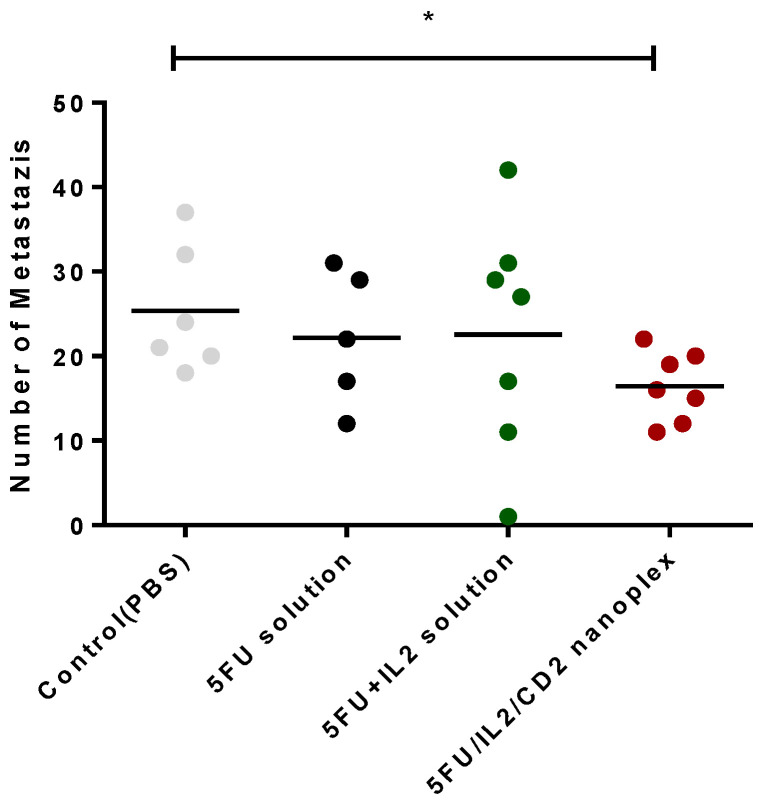
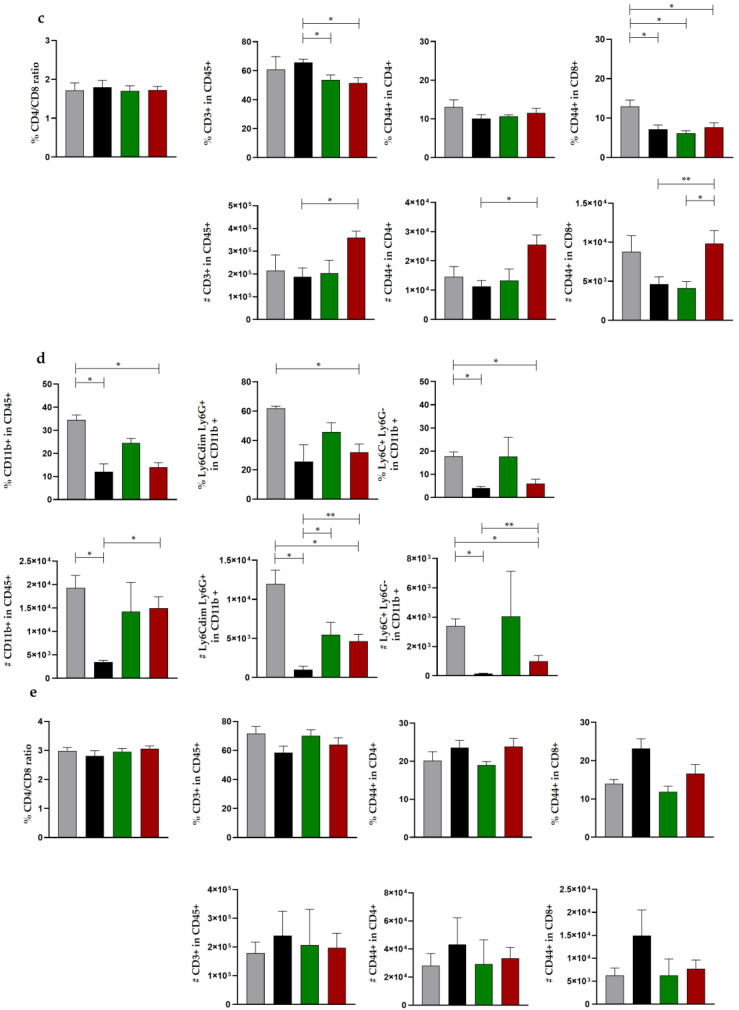


 ), and metastatic tumor tissue located in the lung parenchyma (**).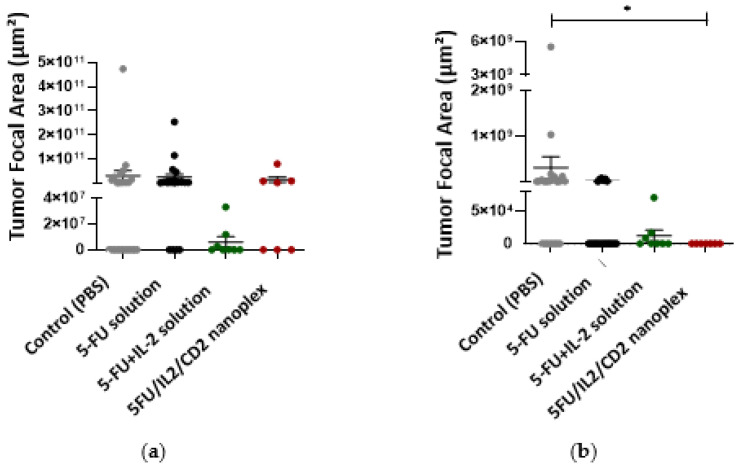
References
-
- Labadie J.D., Savas S., Harrison T.A., Banbury B., Huang Y., Buchanan D.D., Campbell P.T., Gallinger S.J., Giles G.G., Gunter M.J., et al. Genome-wide association study identifies tumor anatomical site-specific risk variants for colorectal cancer survival. Sci. Rep. 2022;12:127. doi: 10.1038/s41598-021-03945-x. - DOI - PMC - PubMed
-
- Unal S., Can Ozturk S., Bilgic E., Yanik H., Korkusuz P., Aktas Y., Benito J.M., Esendagli G., Bilensoy E. Therapeutic efficacy and gastrointestinal biodistribution of polycationic nanoparticles for oral camptothecin delivery in early and late-stage colorectal tumor-bearing animal model. Eur. J. Pharm. Biopharm. 2021;169:168–177. doi: 10.1016/j.ejpb.2021.10.010. - DOI - PubMed
LinkOut - more resources
Full Text Sources
