


Current Challenges and Opportunities of Photodynamic Therapy against Cancer
- PMID: 36839652
- PMCID: PMC9965442
- DOI: 10.3390/pharmaceutics15020330
Current Challenges and Opportunities of Photodynamic Therapy against Cancer
Abstract
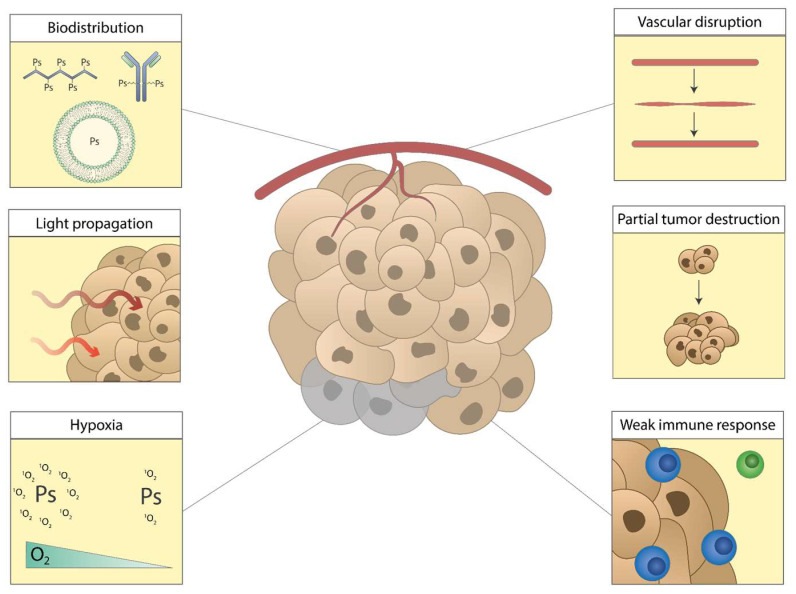
Background: Photodynamic therapy (PDT) is an established, minimally invasive treatment for specific types of cancer. During PDT, reactive oxygen species (ROS) are generated that ultimately induce cell death and disruption of the tumor area. Moreover, PDT can result in damage to the tumor vasculature and induce the release and/or exposure of damage-associated molecular patterns (DAMPs) that may initiate an antitumor immune response. However, there are currently several challenges of PDT that limit its widespread application for certain indications in the clinic.
Methods: A literature study was conducted to comprehensively discuss these challenges and to identify opportunities for improvement.
Results: The most notable challenges of PDT and opportunities to improve them have been identified and discussed.
Conclusions: The recent efforts to improve the current challenges of PDT are promising, most notably those that focus on enhancing immune responses initiated by the treatment. The application of these improvements has the potential to enhance the antitumor efficacy of PDT, thereby broadening its potential application in the clinic.
Keywords: cancer; damage-associated molecular patterns; immunogenic cell death; photodynamic therapy; photoimmunotherapy; reactive oxygen species.
Conflict of interest statement
The authors declare no conflict of interest.
Figures
References
-
- Raab O. Uber die Wirkung, fluorescirender Stoffe auf infusorien. Z. Biol. 1900;39:524–546.
-
- Tappeiner H., Jodlbauer A. Über die Wirkungen der photodynamischen (fluoreszierenden) Stoffe auf Protozoen und Enzyme. Deutsch. Arch. Klin. Med. 1904;80:427.
Publication types
Grants and funding
LinkOut - more resources
Full Text Sources
