


The Association Between Antioxidants and COVID-19 Outcomes: a Systematic Review on Observational Studies
- PMID: 36840911
- PMCID: PMC9959932
- DOI: 10.1007/s12011-023-03588-1
The Association Between Antioxidants and COVID-19 Outcomes: a Systematic Review on Observational Studies
Abstract
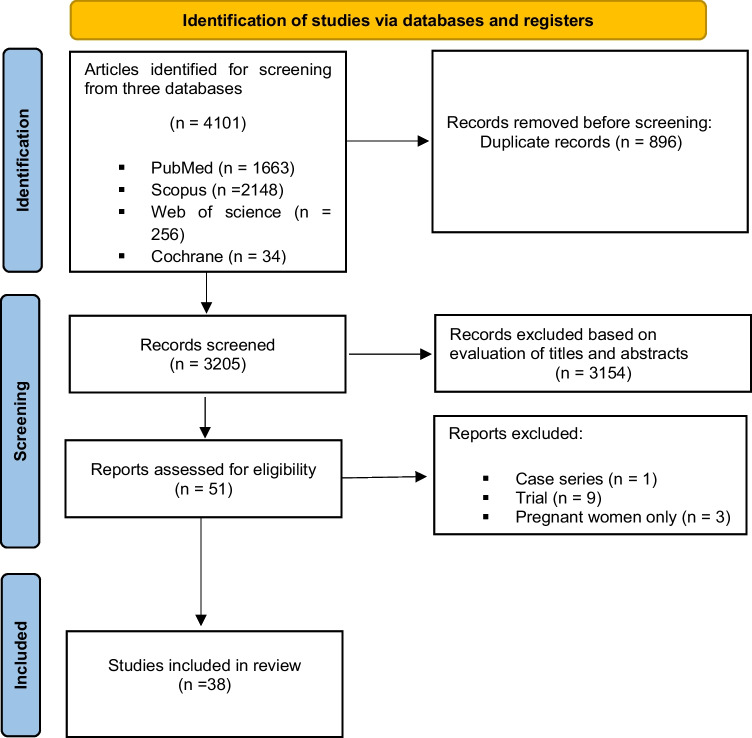
It is proven that the blood concentration of antioxidants can impress the severity of viral infections, including COVID-19. However, the lack of a comprehensive study accumulating existing data regarding COVID-19 can be perceived. Therefore, this systematic review is aimed to report the association between the blood concentration of several antioxidants and the overall health condition of COVID-19 patients. We summarized the available data surrounding the serum antioxidant level in COVID-19 patients and COVID-19 outcomes. A systematic search was performed in PubMed, Scopus, Web of Science, and Cochrane, and studies that evaluated the association between antioxidants and COVID-19 outcomes were included. Of 4101 articles that were viewed in the database search, 38 articles were included after the title, abstract, and full-text review. Twenty-nine studies indicated that lower serum antioxidants are associated with worse outcomes, and one study reported no association between serum zinc (Zn) level and COVID-19 outcomes. In most cases, antioxidant deficiency was associated with high inflammatory factors, high mortality, acute kidney injury, thrombosis, intensive care unit (ICU) admission, acute respiratory distress syndrome, cardiac injury, and the need for mechanical ventilation (MV), and there was no significant association between serum antioxidants level and ICU or hospital length of stay (LOS). It seems that higher levels of antioxidants in COVID-19 patients may be beneficial to prevent disease progression. However, clinical trials are needed to confirm this conclusion.
Keywords: Antioxidants; COVID-19; Coronavirus; Systematic review.
© 2023. The Author(s), under exclusive licence to Springer Science+Business Media, LLC, part of Springer Nature.
Conflict of interest statement
The authors declare no competing interests.
The authors declare no competing interests.
Figures
References
-
- Gonçalves TJM, Gonçalves SEAB, Guarnieri A, Risegato RC, Guimarães MP, de Freitas DC, et al. Association between low zinc levels and severity of acute respiratory distress syndrome by new coronavirus SARS-CoV-2. Nutr Clin Pract Off Publ Am Soc Parenter Enter Nutr. 2021;36(1):186–191. - PubMed
-
- Hosseini SJ, Moradi B, Marhemati M, Firouzian AA, Ildarabadi E, Abedi A, et al. Comparing serum levels of vitamin D and zinc in novel coronavirus-infected patients and healthy individuals in northeastern Iran, 2020. Infect Dis Clin Pract (Baltim Md) 2021;29(6):e390–e394. doi: 10.1097/IPC.0000000000001051. - DOI - PMC - PubMed
-
- Sulaiman A, Care C, Sulaiman K Al, Aljuhani O, Shaya AI Al, Kharbosh A, et al (2021) Evaluation of zinc sulfate as an adjunctive therapy in COVID‑19 critically ill patients: a two center propensity ‑ score matched study. Crit Care [Internet]. 1–8. Available from: 10.1186/s13054-021-03785-1 - PMC - PubMed
Publication types
MeSH terms
Substances
LinkOut - more resources
Full Text Sources
Medical
