


Quality of life during a randomized trial of a therapeutic-workplace intervention for opioid use disorder: Web-based mobile assessments reveal effects of drug abstinence and access to paid work
- PMID: 36843907
- PMCID: PMC9948824
- DOI: 10.1016/j.dadr.2021.100011
Quality of life during a randomized trial of a therapeutic-workplace intervention for opioid use disorder: Web-based mobile assessments reveal effects of drug abstinence and access to paid work
Erratum in
-
Erratum for missing footnotes regarding the peer-review statements of previously published articles.Drug Alcohol Depend Rep. 2022 Jul 12;4:100079. doi: 10.1016/j.dadr.2022.100079. eCollection 2022 Sep. Drug Alcohol Depend Rep. 2022. PMID: 36848296 Free PMC article.
Abstract
Background: Employment and improved quality of life (QOL) are, separately, valued outcomes of substance use disorder (SUD) treatment. It is also important to understand QOL changes caused by employment itself; therefore, we assessed QOL during a randomized trial of a contingency-management-based Therapeutic Workplace for people with opioid use disorder.
Methods: For 12 weeks, participants (n = 61) responded to QOL questionnaires in a mobile web app accessed with study-issued smartphones. At enrollment, participants were randomized to work in the Therapeutic Workplace immediately (immediate work group, IWG) or after a 3-week waitlist delay (delayed work group, DWG). Once both groups could work, wage-resetting contingencies were introduced for their opiate- and cocaine-urinalysis. Data were analyzed by (1) access to work with and without contingencies and (2) overall urinalysis-verified opiate- and cocaine-abstinence.
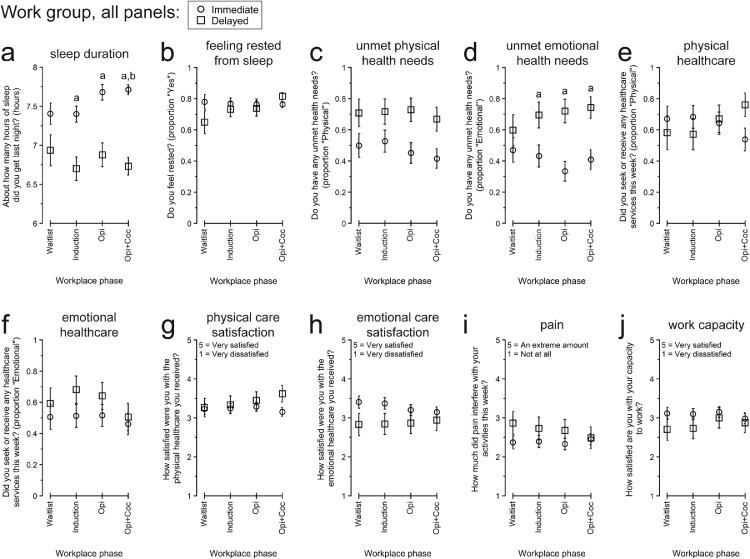
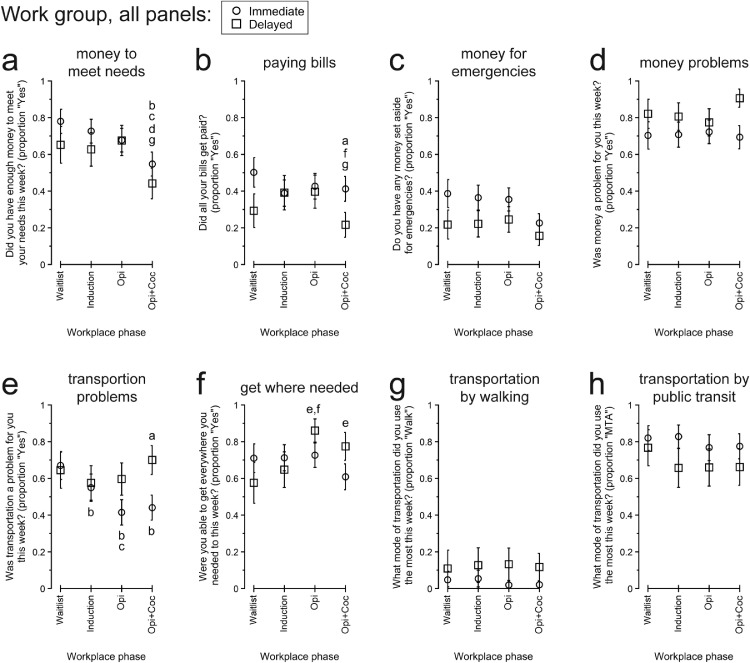
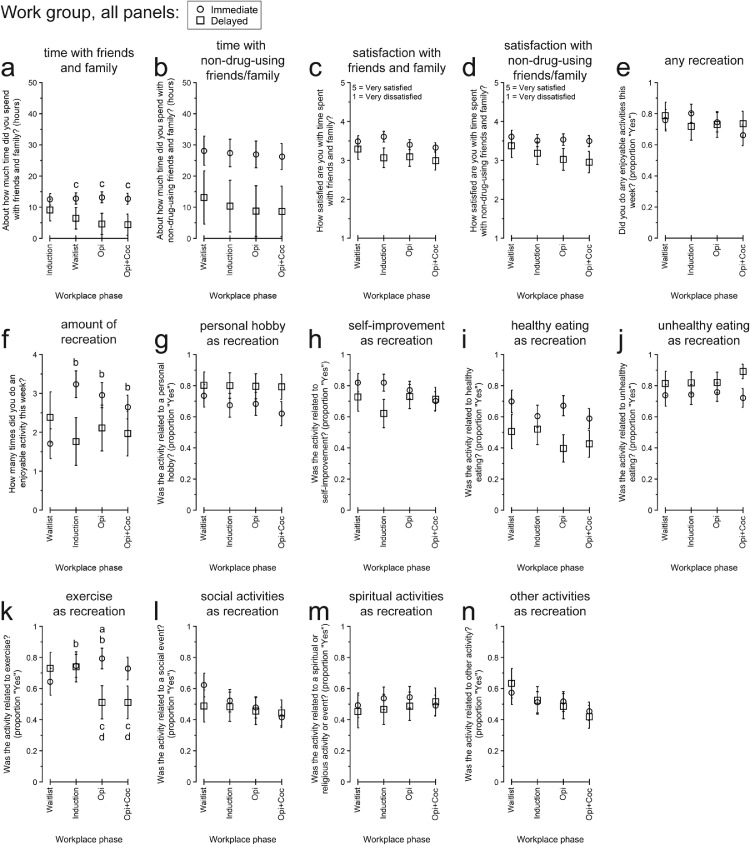
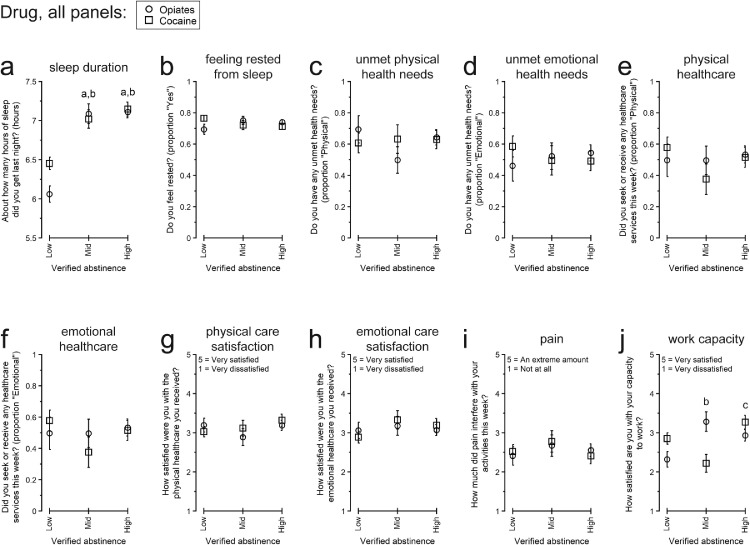
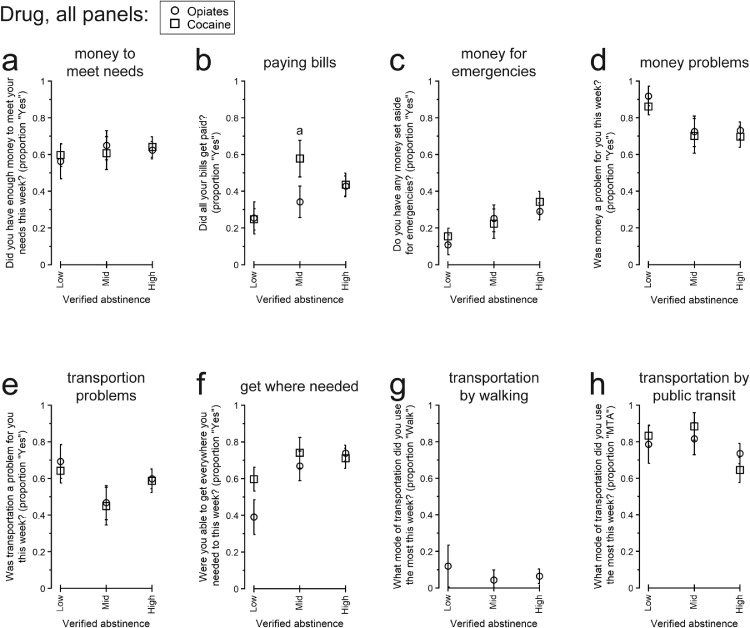
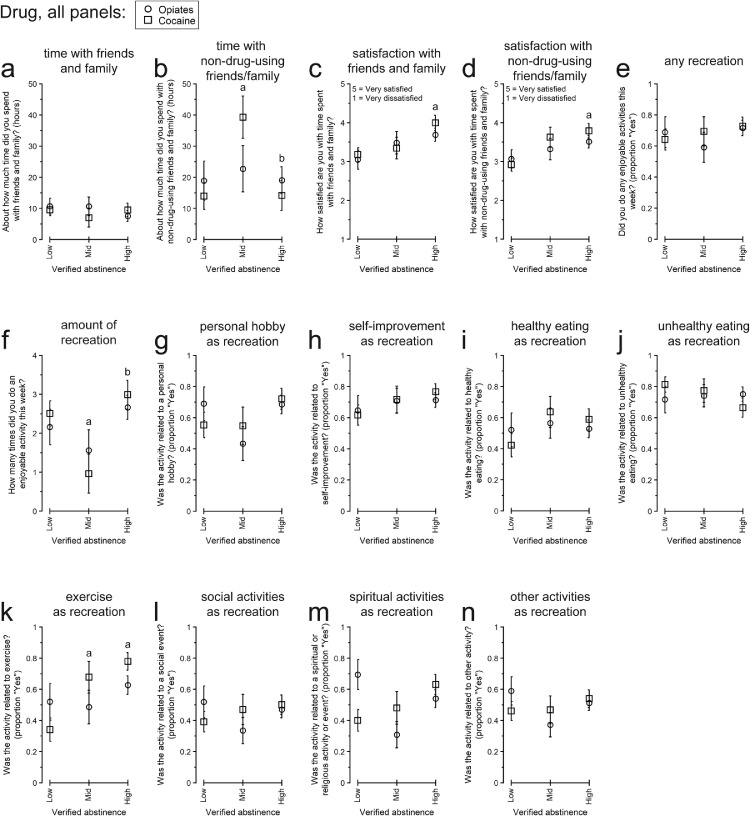
Results: DWG and/or IWG reported improvements in several QOL areas (sleep, transportation, recreation); however, they also reported increased money-related difficulties and less time spent with friends/family. These changes did not coincide with DWG's work access, but some (more sleep, money-related difficulties) coincided with the urinalysis contingencies. Greater opiate- and/or cocaine-abstinence was also associated with several improvements: sleep, paying bills, time spent with friends/family, and exercising. Surprisingly, intermediate cocaine abstinence was associated with reductions in work-capacity satisfaction and recreation.
Conclusions: Participants reported complex QOL differences during their experimental employment and associated with drug abstinence. Future work should help participants address issues that may be relevant to employment generally (e.g., time with friends/family) or contingency management specifically (e.g., money-related issues for non-abstinent participants).
Keywords: Cocaine; Contingency management; Opioid use disorder; Quality of life; Smartphone; Urinalysis.
© 2021 Published by Elsevier B.V.
Conflict of interest statement
Marie-Louise Murville and Michael Sullivan declare financial interests in Delight Me Inc.: Marie-Louise Murville is the founder & CEO of Delight Me Inc., and Michael Sullivan is Vice President of Engineering of Delight Me Inc. All other authors have no interests to declare.
Figures
References
-
- Benjamini Y., Hochberg Y. On the adaptive control of the false discovery rate in multiple testing with independent statistics. J. Educ. Behav. Stat. 2000;25(1):60–83. doi: 10.3102/10769986025001060. - DOI
LinkOut - more resources
Full Text Sources
