


Patient-reported problems filling buprenorphine prescriptions and motivations for illicit use
- PMID: 36844166
- PMCID: PMC9949336
- DOI: 10.1016/j.dadr.2022.100091
Patient-reported problems filling buprenorphine prescriptions and motivations for illicit use
Abstract
Background: While barriers to accessing buprenorphine (BUP) therapy have been well described, little is known about pharmacy-related barriers. The objective of this study was to estimate the prevalence of patient-reported problems filling BUP prescriptions and determine whether these problems were associated with illicit use of BUP. The secondary objectives included identifying motivations for illicit BUP use and the prevalence of naloxone acquisition among patients prescribed BUP.
Methods: Between July 2019 and March 2020, 139 participants receiving treatment for an opioid use disorder (OUD) at two sites within a rurally-located health system, completed an anonymous 33-item survey. A multivariable model was used to assess the association between pharmacy-related problems filling BUP prescriptions and illicit substance use.
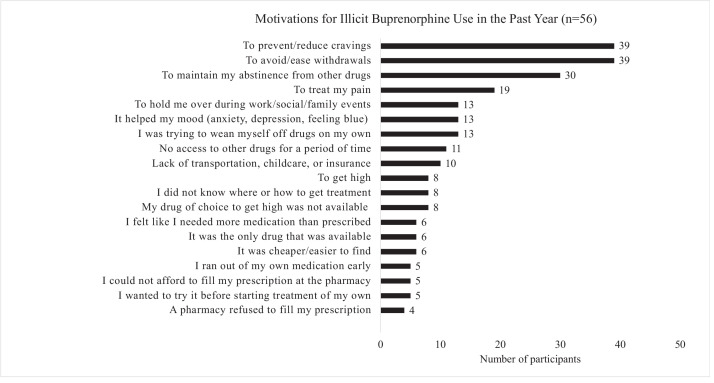
Results: More than a third of participants reported having problems filling their BUP prescription (34.1%, n = 47) with the most commonly reported problems being insufficient pharmacy stock of BUP (37.8%, n = 17), pharmacist refusal to dispense BUP (37.8%, n = 17), and insurance problems (34.0%, n = 16). Of those who reported illicit BUP use (41.5%, n = 56), the most common motivations were to avoid/ease withdrawal symptoms (n = 39), prevent/reduce cravings (n = 39), maintain abstinence (n = 30), and treat pain (n = 19). In the multivariable model, participants who reported a pharmacy-related problems were significantly more likely to use illicitly obtained BUP (OR=8.93, 95% CI: 3.12, 25.52, p < 0.0001).
Conclusion: Efforts to improve BUP access have primarily focused on increasing the number of clinicians waivered to prescribe; however, challenges persist with BUP dispensing and coordinated efforts may be needed to systematically reduce pharmacy-related barriers.
Keywords: Buprenorphine; Diversion; Naloxone; Opioid use disorder.
© 2022 The Authors. Published by Elsevier B.V.
Conflict of interest statement
No conflicts declared.
Figures
References
-
- Andrilla C.H.A., Patterson D.G. Tracking the geographic distribution and growth of clinicians with a DEA waiver to prescribe buprenorphine to treat opioid use disorder. J. Rural Health. 2022;38(1):87–92. - PubMed
-
- Bakhireva L.N., Bautista A., Cano S., Shrestha S., Bachyrycz A.M., Cruz T.H. Barriers and facilitators to dispensing of intranasal naloxone by pharmacists. Subst. Abus. 2017;39(3):331–341. - PubMed
-
- Beetham T. Buprenorphine prior authorization removal: low hanging fruit in the opioid epidemic fight. Harv. Public Health Rev. 2019;25:1–5.
LinkOut - more resources
Full Text Sources
