. 2023 Feb 8;8(7):6597-6607.
doi: 10.1021/acsomega.2c06992. eCollection 2023 Feb 21.

Acylpyrazoline-Based Third-Generation Selective Antichlamydial Compounds with Enhanced Potency

Affiliations

Acylpyrazoline-Based Third-Generation Selective Antichlamydial Compounds with Enhanced Potency

Bin Lu et al. ACS Omega. .

Abstract

Chlamydiae are obligate intracellular Gram-negative bacteria and widespread pathogens in humans and animals. Broad-spectrum antibiotics are currently used to treat chlamydial infections. However, broad-spectrum drugs also kill beneficial bacteria. Recently, two generations of benzal acylhydrazones have been shown to selectively inhibit chlamydiae without toxicity to human cells and lactobacilli, which are dominating, beneficial bacteria in the vagina of reproductive-age women. Here, we report the identification of two acylpyrazoline-based third-generation selective antichlamydials (SACs). With minimal inhibitory concentrations (MIC) and minimal bactericidal concentrations (MBC) of 10-25 μM against Chlamydia trachomatis and Chlamydia muridarum, these new antichlamydials are 2- to 5-fold more potent over the benzal acylhydrazone-based second-generation selective antichlamydial lead SF3. Both acylpyrazoline-based SACs are well tolerated by Lactobacillus, Escherichia coli, Klebsiella, and Salmonella as well as host cells. These third-generation selective antichlamydials merit further evaluation for therapeutic application.


Conflict of interest statement

The authors declare no competing financial interest.

Figures
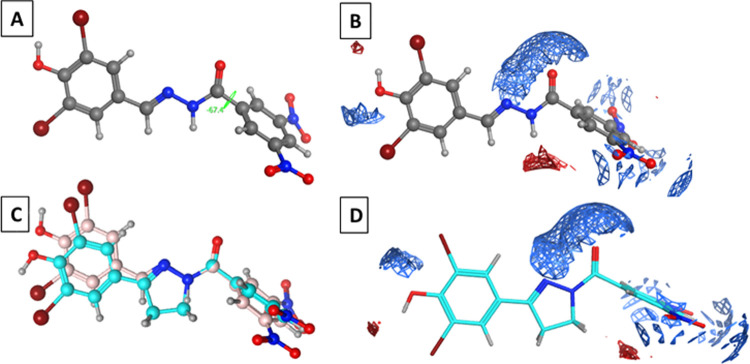
Figure 1
Figure 1
(A) Gas-phase conformation of SF3. (B) Electrostatic map of SF3. (C) Superposition of SF3 (pink) and designed compound 5 (blue). (D) Electrostatic map of compound 5.
Figure 2
Figure 2
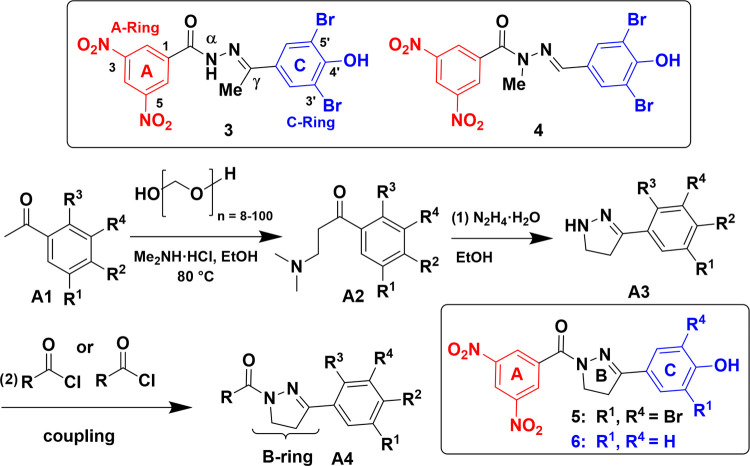
Compounds 3 and 4 and general synthesis scheme for the acyl pyrazoles, with compounds 5 and 6 being given as examples.
Figure 3
Figure 3
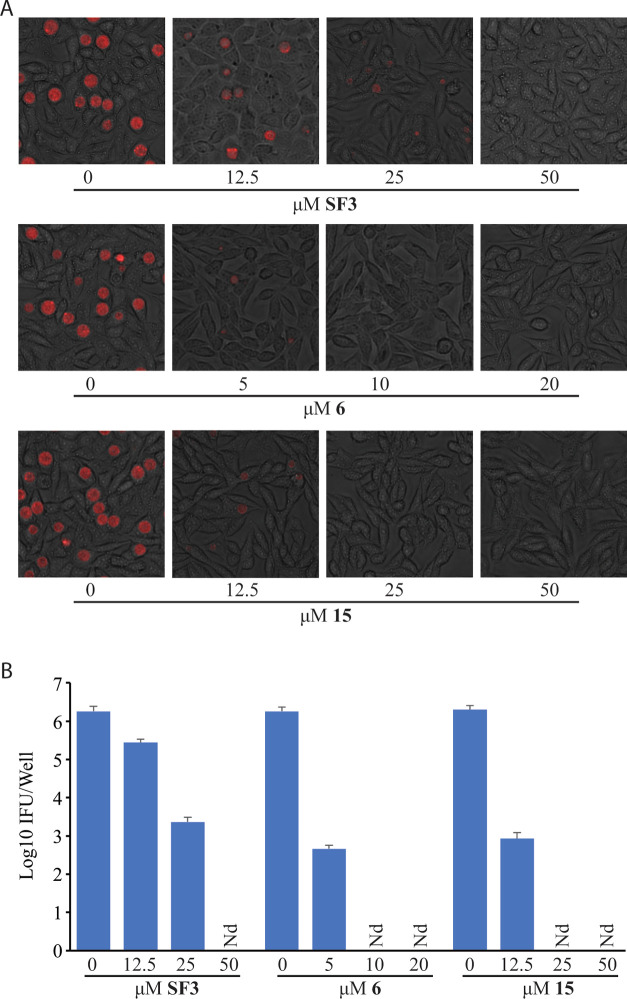
Dose-dependent inhibition of C. trachomatis L2 growth by SF3 and the newly identified lead compounds 6 and 15. L929 cells were infected with RFP/CtL2 and cultured in the presence of the indicated compound concentrations. (A) Images of chlamydial inclusions emitting red fluorescence signals and cellular images under bright light were acquired at 30 h and overlaid. (B) Progeny chlamydiae were quantified by harvesting infected cultures at 40 h, inoculating onto new L929 monolayers following limiting dilution, and scoring inclusions in the secondary cultures. Data are averages ± standard deviations of biological triplicates. Nd, none detected.
Figure 4
Figure 4
Impact of lead compounds 6 and 15 on progeny formation in C. muridarum expressing wild-type or mutant GrgA. When cultured with sublethal concentrations of the third-generation lead compounds 6 and 15, C. muridarum r8s6, which expresses R51G GrgA, forms significantly more progeny than isogenic strain r4s8, which expresses wild-type GrgA. Infected L929 cells were cultured in the presence of the indicated compound concentrations. Progeny Chlamydiae were quantified by harvesting infected cultures at 30 h postinoculation, inoculating onto new L929 monolayers following limiting dilution, and scoring inclusions in the secondary cultures following immunostaining. Data are average ± standard deviation of biological triplicates. Nd, none detected.
Figure 5
Figure 5
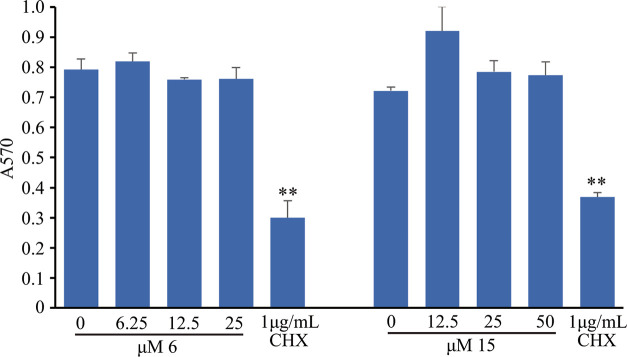
Lead compounds 6 and 15 are not toxic to mammalian cells. OK cells were seeded at 30% confluency and cultured in media containing the indicated compound concentrations. MTT assays were performed 40 h after the initiation of treatment. Cycloheximide (CHX), a eukaryotic protein synthesis inhibitor, was used as a toxicant control. Double asterisks indicate statistically significantly decreased cell viability (P < 0.01).
Figure 6
Figure 6
Lead compounds 6 and 15 do not adversely impact the growth of beneficial Lactobacillus crispatus. Growth of L. crispatus ATCC33197 was monitored by measuring the OD600 of cultures containing the indicated compounds at the indicated culture times.
Figure 7
Figure 7
Lead compounds 6 and 15 do not impact the growth of Gram-negative bacteria. E. coli 11775, K. pneumoniae ATCC13883, and S. enterica ATCC13076 were inoculated onto LB agar plates containing the indicated compound concentrations or 3% DMSO vehicle and cultured at 37 °C. Plates were photographed 16–18 h postinoculation.
Figure 8
Figure 8
Synthetic route for compounds 3, YZ3, and 4.

References

    1. Stephens R. S.; Myers G.; Eppinger M.; Bavoil P. M. Divergence without difference: phylogenetics and taxonomy of Chlamydia resolved. FEMS Immunol. Med. Microbiol. 2009, 55, 115–119. 10.1111/j.1574-695X.2008.00516.x. - DOI - PubMed
    1. Campbell L. A.; Kuo C. C.; Grayston J. T. Chlamydia pneumoniae and cardiovascular disease. Emerging Infect. Dis. 1998, 4, 571–579. 10.3201/eid0404.980407. - DOI - PMC - PubMed
    1. Balin B. J.; Little C. S.; Hammond C. J.; Appelt D. M.; Whittum-Hudson J. A.; Gerard H. C.; Hudson A. P. Chlamydophila pneumoniae and the etiology of late-onset Alzheimer’s disease. J. Alzheimer’s Dis. 2008, 13, 371–380. 10.3233/JAD-2008-13403. - DOI - PubMed
    1. Little C. S.; Hammond C. J.; MacIntyre A.; Balin B. J.; Appelt D. M. Chlamydia pneumoniae induces Alzheimer-like amyloid plaques in brains of BALB/c mice. Neurobiol. Aging 2004, 25, 419–429. 10.1016/S0197-4580(03)00127-1. - DOI - PubMed
    1. CDC, CDC fact sheet. STD trends in the United States: 2011 national data for chlamydia, gonorrhea, and syphilis. 2013.