


Social relationship satisfaction and accumulation of chronic conditions and multimorbidity: a national cohort of Australian women
- PMID: 36844964
- PMCID: PMC9950967
- DOI: 10.1136/gpsych-2022-100925
Social relationship satisfaction and accumulation of chronic conditions and multimorbidity: a national cohort of Australian women
Abstract
Background: Social relationships are associated with mortality and chronic conditions. However, little is known about the effects of social relationship satisfaction on multiple chronic conditions (multimorbidity).
Aims: To examine whether social relationship satisfaction is associated with the accumulation of multimorbidity.
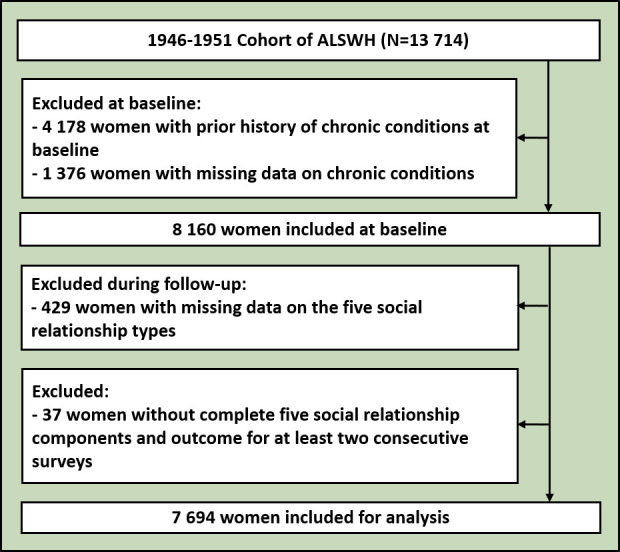
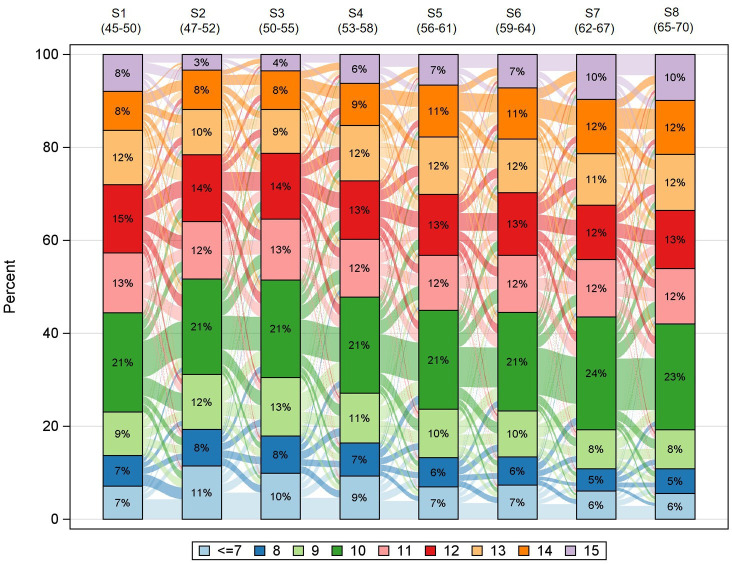
Methods: Data from 7 694 Australian women who were free from 11 chronic conditions at 45-50 years of age in 1996 were analysed. Five types of social relationship satisfaction (partner, family members, friends, work and social activities) were measured approximately every 3 years and scored from 0 (very dissatisfied) to 3 (very satisfied). Scores from each relationship type were summed to provide an overall satisfaction score (range: ≤5-15). The outcome of interest was the accumulation of multimorbidity in 11 chronic conditions.
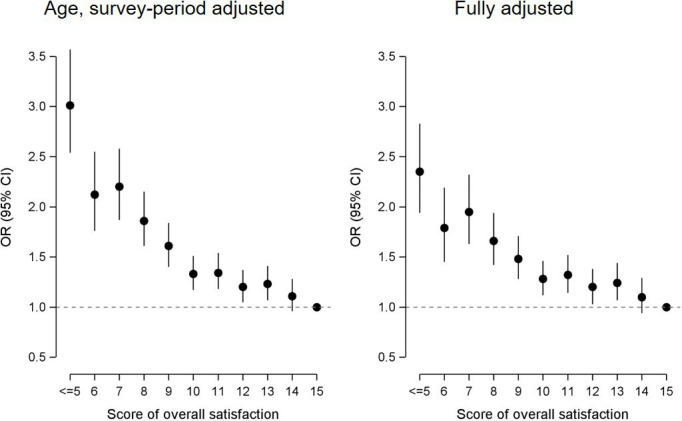
Results: Over a 20-year period, 4 484 (58.3%) women reported multimorbidities. Overall, the level of social relationship satisfaction had a dose-response relationship with the accumulation of multimorbidities. Compared with women reporting the highest satisfaction (score 15), women with the lowest satisfaction (score ≤5) had the highest odds of accumulating multimorbidity (odds ratio (OR)= 2.35, 95% confidence interval (CI): 1.94 to 2.83) in the adjusted model. Similar results were observed for each social relationship type. Other risk factors, such as socioeconomic, behavioural and menopausal status, together explained 22.72% of the association.
Conclusions: Social relationship satisfaction is associated with the accumulation of multimorbidity, and the relationship is only partly explained by socioeconomic, behavioural and reproductive factors. Social connections (eg, satisfaction with social relationships) should be considered a public health priority in chronic disease prevention and intervention.
Keywords: ageism; psychosomatic medicine; social isolation; social networking.
© Author(s) (or their employer(s)) 2023. Re-use permitted under CC BY-NC. No commercial re-use. See rights and permissions. Published by BMJ.
Conflict of interest statement
Competing interests: None declared.
Figures
References
-
- GBD 2016 Disease and Injury Incidence and Prevalence Collaborators . Global, regional, and national incidence, prevalence, and years lived with disability for 328 diseases and injuries for 195 countries, 1990-2016: a systematic analysis for the global burden of disease study 2016. Lancet 2017;390:1211–59. 10.1016/S0140-6736(17)32154-2 - DOI - PMC - PubMed
-
- Academy of Medical Sciences . Multimorbidity: a priority for global health research. London: Academy of Medical Sciences, 2018.
LinkOut - more resources
Full Text Sources
