


Immersive virtual reality for improving cognitive deficits in children with ADHD: a systematic review and meta-analysis
- PMID: 36845650
- PMCID: PMC9938513
- DOI: 10.1007/s10055-023-00768-1
Immersive virtual reality for improving cognitive deficits in children with ADHD: a systematic review and meta-analysis
Abstract
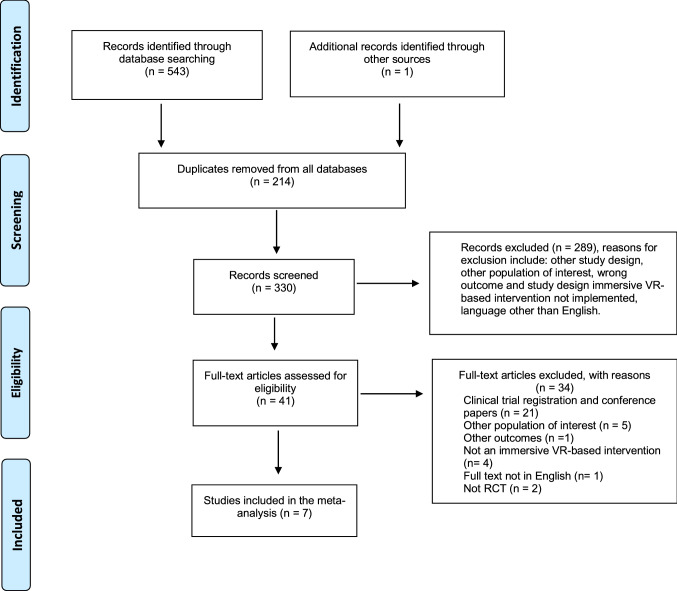
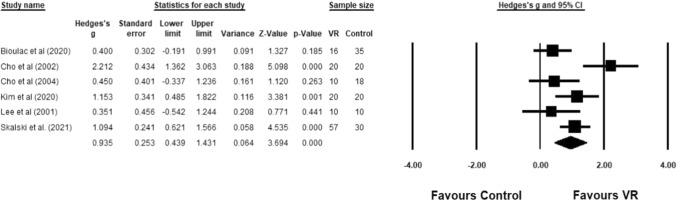
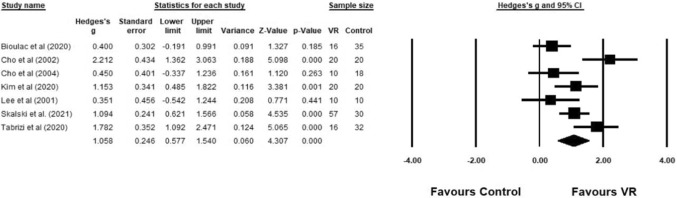
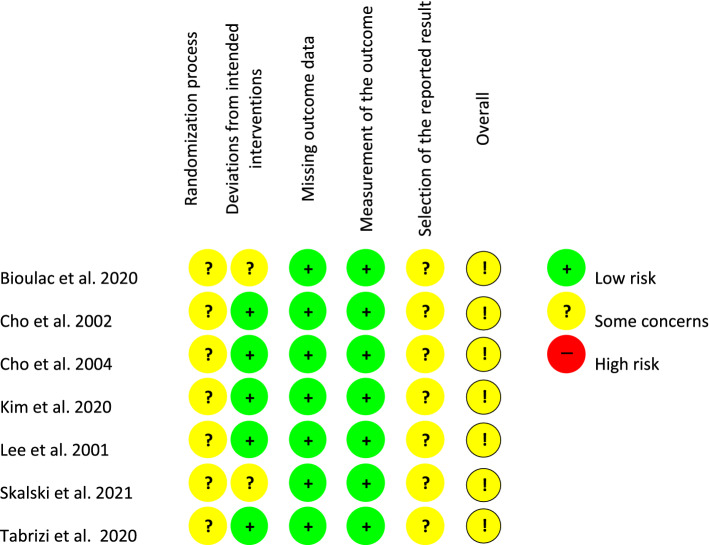
Virtual reality (VR) shows great potential in treating and managing various mental health conditions. This includes using VR for training or rehabilitation purposes. For example, VR is being used to improve cognitive functioning (e.g. attention) among children with attention/deficit-hyperactivity disorder (ADHD). The aim of the current review and meta-analysis is to evaluate the effectiveness of immersive VR-based interventions for improving cognitive deficits in children with ADHD, to investigate potential moderators of the effect size and assess treatment adherence and safety. The meta-analysis included seven randomised controlled trials (RCTs) of children with ADHD comparing immersive VR-based interventions with controls (e.g. waiting list, medication, psychotherapy, cognitive training, neurofeedback and hemoencephalographic biofeedback) on measures of cognition. Results indicated large effect sizes in favour of VR-based interventions on outcomes of global cognitive functioning, attention, and memory. Neither intervention length nor participant age moderated the effect size of global cognitive functioning. Control group type (active vs passive control group), ADHD diagnostic status (formal vs. informal) and novelty of VR technology were not significant moderators of the effect size of global cognitive functioning. Treatment adherence was similar across groups and there were no adverse effects. Results should be cautiously interpreted given the poor quality of included studies and small sample.
Keywords: Attention; Attention deficit-hyperactivity disorder (ADHD); Children; Cognition; Memory; Virtual reality.
© The Author(s) 2023.
Conflict of interest statement
Conflict of interestThere is no conflict of interest.
Figures
References
-
- Adabla S, Nabors L, Hamblin K. A scoping review of virtual reality interventions for youth with attention-deficit/hyperactivity disorder. Adv Neurodev Disord. 2021;5:304–315. doi: 10.1007/s41252-021-00207-9. - DOI
-
- American Psychiatric Association . Diagnostic and statistical manual of mental disorders. 5. Washington: American Psychiatric Association; 2013.
-
- Barba MC, Covino A, De Luca V, et al. BRAVO: a gaming environment for the treatment of ADHD. In: De Paolis LT, Bourdot P, et al., editors. Augmented reality, virtual reality, and computer graphics. Cham: Springer International Publishing; 2019. pp. 394–407.
LinkOut - more resources
Full Text Sources