


Medicaid expansion and opioid supply policies to address the opioid overdose crisis
- PMID: 36845983
- PMCID: PMC9948913
- DOI: 10.1016/j.dadr.2022.100042
Medicaid expansion and opioid supply policies to address the opioid overdose crisis
Abstract
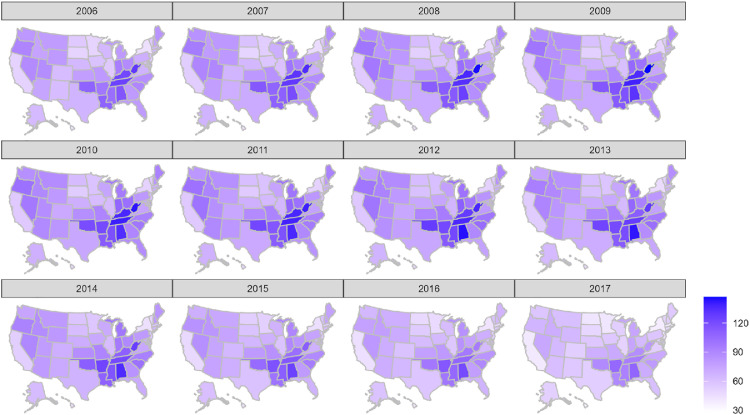
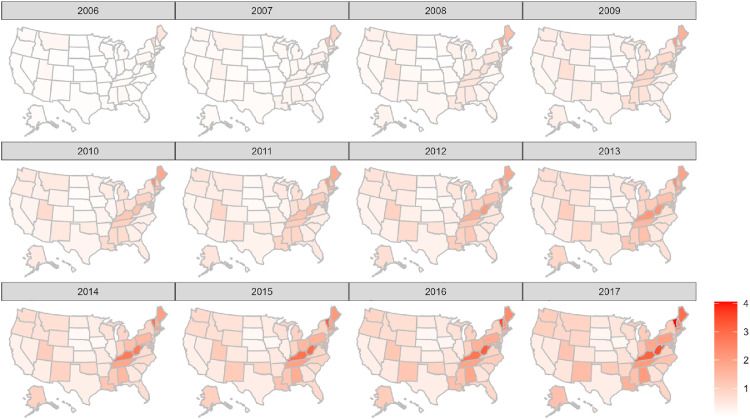
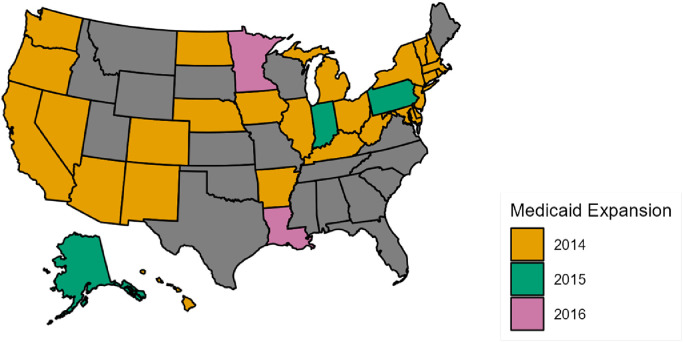
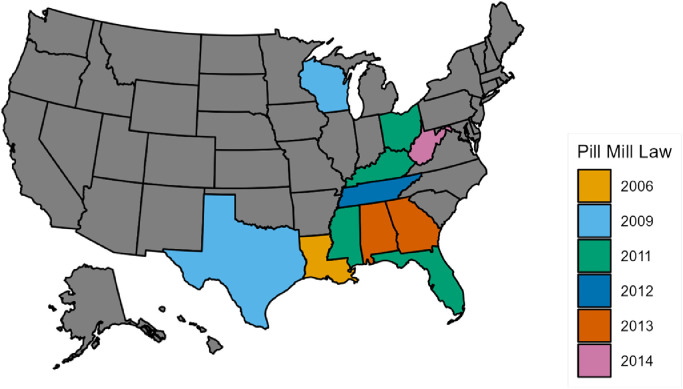
Background: The opioid overdose crisis remains of critical concern after historic increases in overdose mortality in the United States between 2020 and 2021. Improving access to buprenorphine -a partial opioid agonist and one of three FDA-approved medications for opioid use disorder (OUD) treatment- and reducing inappropriate opioid prescriptions may help curb mortality. Here, we examined the impact of Medicaid expansion and pain management clinic laws on opioid prescription rates and buprenorphine availability. Methods: We examined both retail opioid prescriptions per 100 persons in the state population using data from the Centers for Disease Control and Prevention and data on buprenorphine distributions in kilograms per 100,000 persons in the state population from the Automated Reports and Consolidated Ordering System database. We employed difference-in-difference frameworks to estimate the impact of Medicaid expansion on buprenorphine access and retail opioid prescription rates. Models considered three separate treatment variables: Medicaid expansion, pain management clinic ("pill mill") laws, and the interaction of Medicaid expansion and pain management clinic laws. Results: Findings showed that Medicaid expansion was associated with increased access to buprenorphine in expansion states that also employed more stringent supply-side policies, including pain management clinic laws, relative to states that did not implement policies targeting the over-supply of prescription opioids over the same time period. Conclusions. Together, Medicaid expansion and policies limiting inappropriate opioid prescriptions show promise for improving the accessibility of buprenorphine treatment for OUD.
Keywords: Buprenorphine; Medicaid; Opioid use disorder; Pain management clinic.
© 2022 The Author(s).
Conflict of interest statement
The authors declare that they have no known competing financial interests or personal relationships that could have appeared to influence the work reported in this paper.
Figures
References
-
- Bertrand M., Duflo E., Mullainathan S. How much should we trust differences-in-differences estimates? Q. J. Econ. 2004 doi: 10.1162/003355304772839588. - DOI
LinkOut - more resources
Full Text Sources
