


Characterization of tangeretin as an activator of nuclear factor erythroid 2-related factor 2/antioxidant response element pathway in HEK293T cells
- PMID: 36846469
- PMCID: PMC9945746
- DOI: 10.1016/j.crfs.2023.100459
Characterization of tangeretin as an activator of nuclear factor erythroid 2-related factor 2/antioxidant response element pathway in HEK293T cells
Abstract
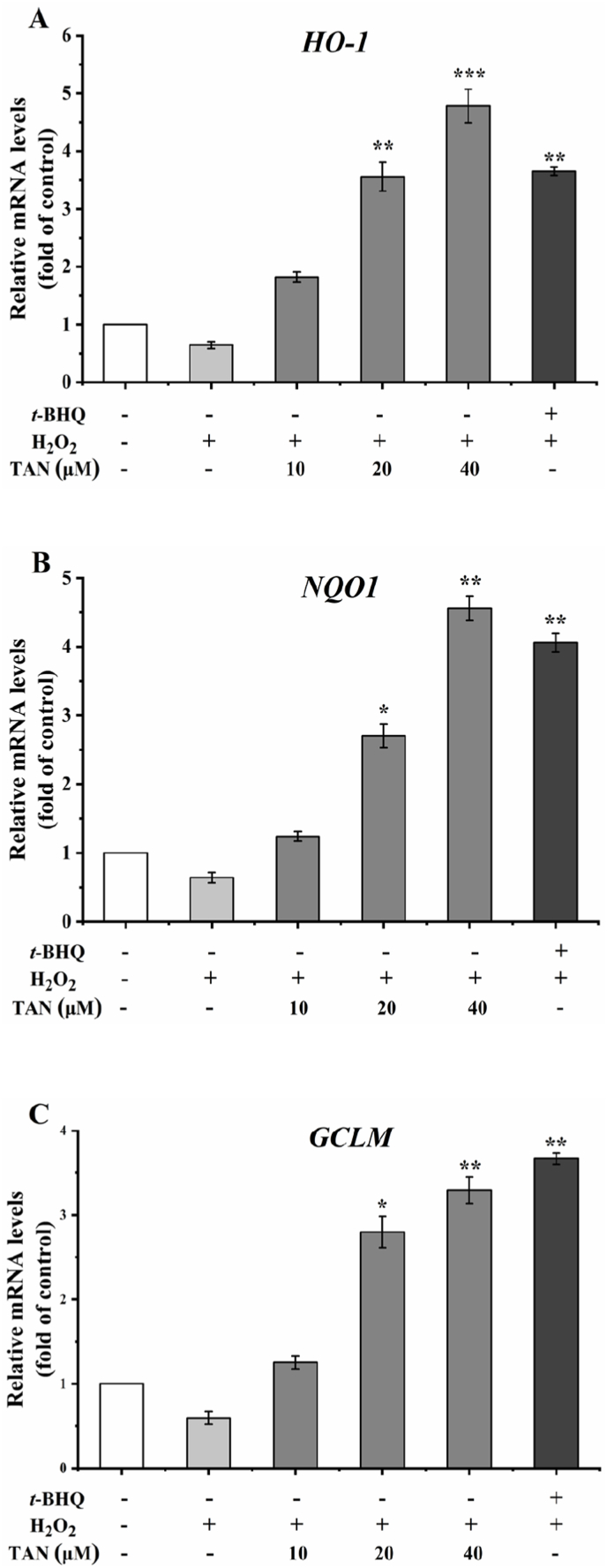
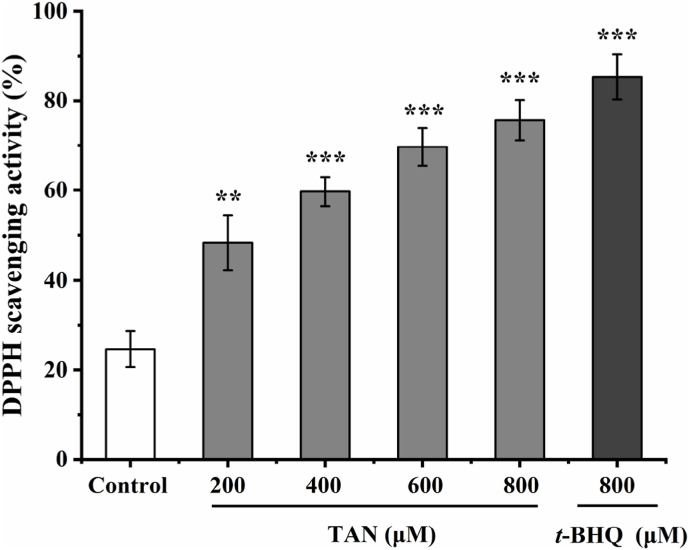
Numerous studies have reported that tangeretin is a polymethoxylated flavone with a variety of biological activates, but little research has been done on the antioxidant mechanism of tangeretin. Hence, we investigated the effect of tangeretin on the nuclear factor erythroid 2-related factor 2 (Nrf2)/antioxidant response element (ARE) pathway and its potential molecular mechanisms by in vitro and in silico research. The results of molecular docking suggested that tangeretin bound at the top of the central pore of Kelch-like ECH-associated protein 1 (Keap1) Kelch domain, and the hydrophobic and hydrogen bond interactions contributed to their stable binding. Herein, the regulation of Nrf2-ARE pathway by tangeretin was explored in the human embryonic kidney cell line HEK293T, which is relatively easy to be transfected. Upon binding to tangeretin, Nrf2 translocated to the nucleus of HEK293T cells, which in turn activated the Nrf2-ARE pathway. Luciferase reporter gene analysis showed that tangeretin significantly induced ARE-mediated transcriptional activation. Real-time PCR and Western blot assays showed that tangeretin induced the gene and protein expressions of Nrf2-mediated targets, including heme oxygenase 1 (HO-1), nicotinamide adenine dinucleotide phosphate (NADPH) quinone dehydrogenase 1 (NQO1), and glutamate-cysteine ligase (GCLM). In addition, tangeretin could effectively scavenge 1,1-diphenyl-2-picrylhydrazyl (DPPH) free radicals. In summary, tangeretin may be a potential antioxidant via activating the Nrf2-ARE pathway.
Keywords: Antioxidant response element; Molecular docking; Nuclear factor erythroid 2-related factor 2; Tangeretin.
© 2023 The Authors.
Conflict of interest statement
The authors declare that they have no known competing financial interests or personal relationships that could have appeared to influence the work reported in this paper.
Figures



References
-
- Agrawal M., Kumar V., Singh A.K., Kashyap M.P., Khanna V.K., Siddiqui M.A., Pant A.B. trans-Resveratrol protects ischemic PC12 cells by inhibiting the hypoxia associated transcription factors and increasing the levels of antioxidant defense enzymes. ACS Chem. Neurosci. 2013;4(2):285–294. doi: 10.1021/cn300143m. - DOI - PMC - PubMed
-
- Ai G., Wu X., Dou Y., Huang R., Zhong L., Liu Y., Xian Y., Lin Z., Li Y., Su Z., Chen J., Qu C. Oxyberberine, a novel HO-1 agonist, effectively ameliorates oxidative stress and inflammatory response in LPS/D-GalN induced acute liver injury mice via coactivating erythrocyte metabolism and Nrf2 signaling pathway. Food Chem. Toxicol. 2022;166 doi: 10.1016/j.fct.2022.113215. - DOI - PubMed
-
- Arivazhagan L., Subramanian S.P. Tangeretin, a citrus flavonoid attenuates oxidative stress and protects hepatocellular architecture in rats with 7, 12- dimethylbenz(a)anthracene induced experimental mammary carcinoma. J. Funct.Foods. 2015;15:339–353. doi: 10.1016/j.jff.2015.03.041. - DOI
-
- Arredondo F., Echeverry C., Abin-Carriquiry J.A., Blasina F., Antúnez K., Jones D.P., Go Y.M., Liang Y.L., Dajas F. After cellular internalization, quercetin causes Nrf2 nuclear translocation, increases glutathione levels, and prevents neuronal death against an oxidative insult. Free Radical Biol. Med. 2010;49(5):738–747. doi: 10.1016/j.freeradbiomed.2010.05.020. - DOI - PubMed
LinkOut - more resources
Full Text Sources
Research Materials
Miscellaneous
