


Preterm birth characteristics and outcomes in Portugal, between 2010 and 2018-A cross-sectional sequential study
- PMID: 36846533
- PMCID: PMC9945543
- DOI: 10.1002/hsr2.1054
Preterm birth characteristics and outcomes in Portugal, between 2010 and 2018-A cross-sectional sequential study
Abstract
Introduction: According to the World Health Organization, 11% of all children are born prematurely, representing 15 million births annually. An extensive analysis on preterm birth, from extreme to late prematurity and associated deaths, has not been published. The authors characterize premature births in Portugal, between 2010 and 2018, according to gestational age, geographic distribution, month, multiple gestations, comorbidities, and outcomes.
Methods: A sequential, cross-sectional, observational epidemiologic study was conducted, and data were collected from the Hospital Morbidity Database, an anonymous administrative database containing information on all hospitalizations in National Health Service hospitals in Portugal, and coded according to the ICD-9-CM (International Classification of Diseases), until 2016, and ICD-10 subsequently. Data from the National Institute of Statistics was utilized to compare the Portuguese population. Data were analyzed using R software.
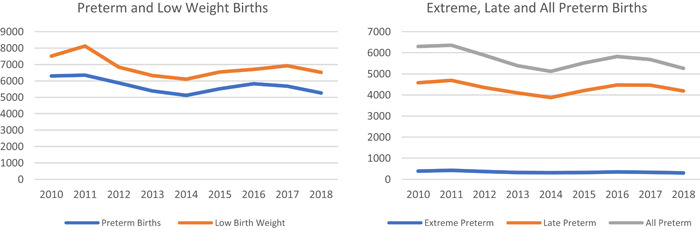
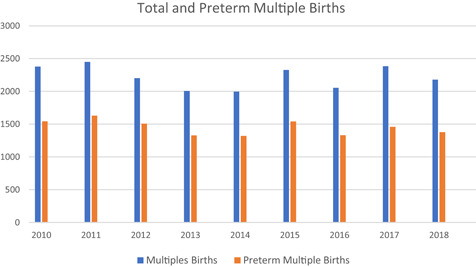
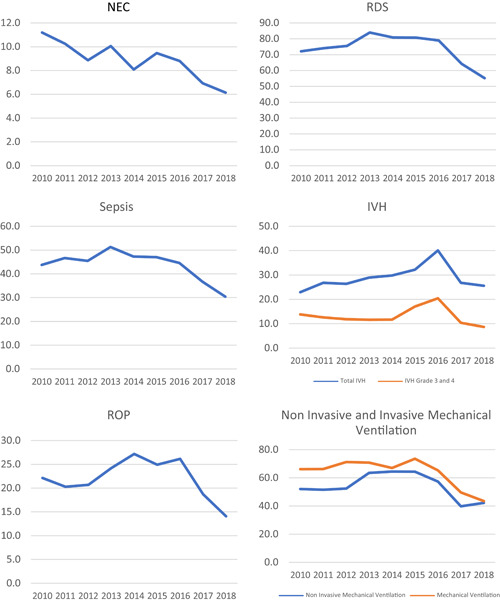
Results: In this 9-year study, 51.316 births were preterm, representing an overall prematurity rate of 7.7%. Under 29 weeks, birth rates varied between 5.5% and 7.6%, while births between 33 and 36 weeks varied between 76.9% and 81.0%. Urban districts presented the highest preterm rates. Multiple births were 8× more likely preterm and accounted for 37%-42% of all preterm births. Preterm birth rates slightly increased in February, July, August, and October. Overall, respiratory distress syndrome (RDS), sepsis, and intraventricular hemorrhage were the most common morbidities. Preterm mortality rates varied significantly with gestational age.
Conclusion: In Portugal, 1 in 13 babies was born prematurely. Prematurity was more common in predominantly urban districts, a surprise finding that warrants further studies. Seasonal preterm variation rates also require further analysis and modelling to factor in heat waves and low temperatures. A decrease in the case rate of RDS and sepsis was observed. Compared with previously published results, preterm mortality per gestational age decreased; however, further improvements are attainable in comparison with other countries.
Keywords: gestational age; morbidities; mortality; multiple; prematurity; urban–rural.
© 2023 The Authors. Health Science Reports published by Wiley Periodicals LLC.
Conflict of interest statement
The authors declare no conflict of interest.
Figures
References
-
- World Health Organization . Preterm Birth—Key Facts. World Health Organization; 2018. https://www.who.int/news-room/fact-sheets/detail/preterm-birth
LinkOut - more resources
Full Text Sources
