Review
. 2023 Mar 7;12(5):e028132.
doi: 10.1161/JAHA.122.028132. Epub 2023 Feb 27.

Women's Reproductive Milestones and Cardiovascular Disease Risk: A Review of Reports and Opportunities From the CARDIA Study

Affiliations
Review

Women's Reproductive Milestones and Cardiovascular Disease Risk: A Review of Reports and Opportunities From the CARDIA Study

Catherine Kim et al. J Am Heart Assoc. .

Abstract

In 1985 to 1986, the CARDIA (Coronary Artery Risk Development in Young Adults) study enrolled 5115 Black or White participants, including 2788 women, aged 18 to 30 years. Over the following 35 years, the CARDIA study amassed extensive longitudinal data on women's reproductive milestones, spanning menarche to menopause. Although not initially conceived as a study of women's health, >75 CARDIA study publications address relationships between reproductive factors and events with cardiovascular and metabolic risk factors, subclinical and clinical cardiovascular disease, and social determinants of health. The CARDIA study was one of the earliest population-based reports to note Black-White differences in age at menarche and associations with cardiovascular risk factors. Adverse pregnancy outcomes, particularly gestational diabetes and preterm birth, have been assessed along with postpartum behaviors, such as lactation. Existing studies have examined risk factors for adverse pregnancy outcomes and lactation, as well as their relationship to future cardiovascular and metabolic risk factors, diagnoses, and subclinical atherosclerosis. Ancillary studies examining components of polycystic ovary syndrome and ovarian biomarkers, such as anti-Müllerian hormone, have facilitated examination of reproductive health in a population-based cohort of young adult women. As the cohort transitioned through menopause, examination of the importance of premenopausal cardiovascular risk factors along with menopause has improved our understanding of shared mechanisms. The cohort is now aged in the 50s to mid-60s, and women will begin to experience a greater number of cardiovascular events as well as other conditions, such as cognitive impairment. Thus, in the next decade, the CARDIA study will provide a unique resource for understanding how the women's reproductive life course epidemiology informs cardiovascular risk, as well as reproductive and chronological aging.

Keywords: fertility; lactation; menarche; menopause; polycystic ovary syndrome; pregnancy.


Figures
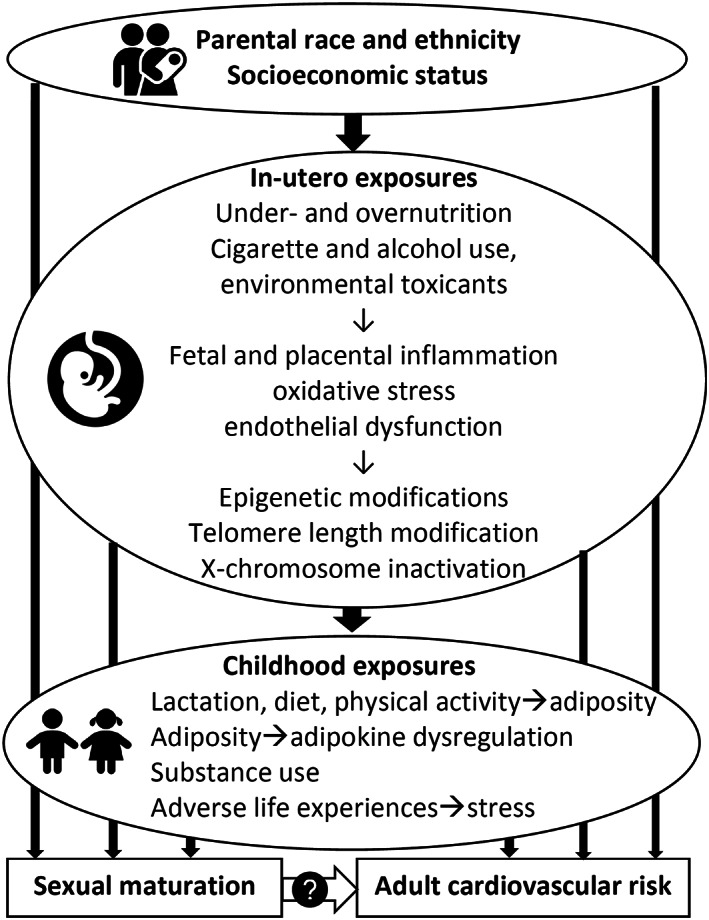
Figure 1
Figure 1. Potential shared mechanisms between sexual maturation and cardiovascular risk.
Figure 2
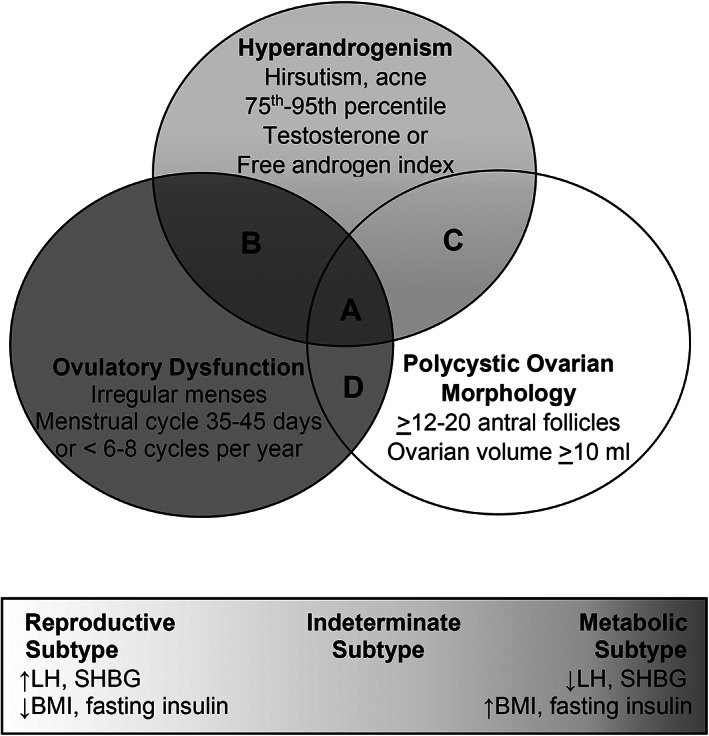
Figure 2. Polycystic ovary syndrome (PCOS) classification schemes.
Top panel: Phenotype “A” consists of hyperandrogenism, ovulatory dysfunction, and polycystic ovarian morphology. Phenotype “B” consists of hyperandrogenism and ovulatory dysfunction. Phenotype “C” consists of hyperandrogenism and polycystic ovarian morphology. Phenotype “D” consists of ovulatory dysfunction and polycystic ovarian morphology. Bottom panel: PCOS subtypes include a reproductive subtype, a metabolic subtype, and an indeterminate subtype distinguished by levels of luteinizing hormone (LH), sex hormone–binding globulin (SHBG), body mass index (BMI), and fasting insulin. (Levels of testosterone were elevated compared with controls but did not distinguish between PCOS subtypes.)
Figure 3
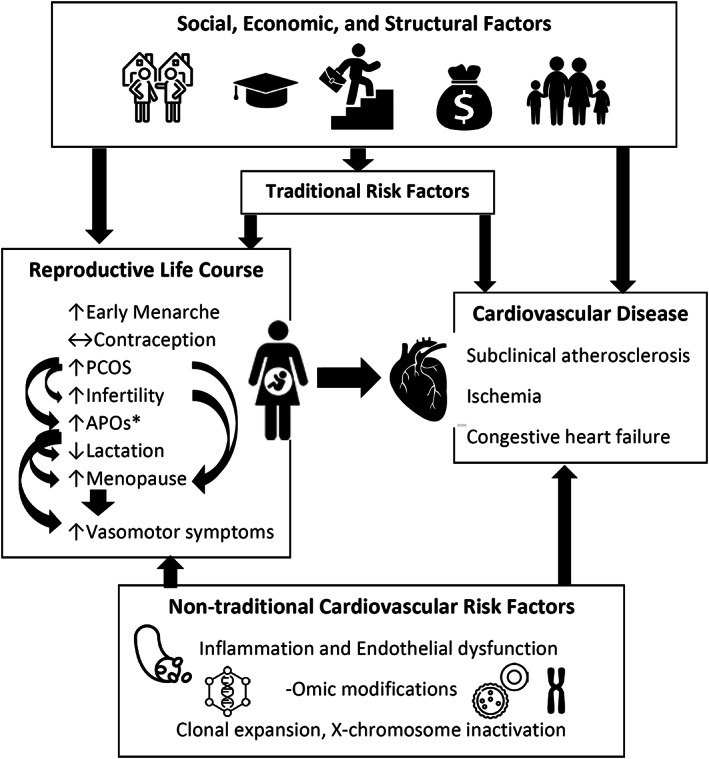
Figure 3. Reproductive life course events may be associated with each other and share precursors with cardiovascular disease (CVD) and jointly contribute to CVD.
Upward arrows indicate higher associated CVD risk, and downward arrows indicate lower associated CVD risk. *Adverse pregnancy outcomes (APOs) include gestational diabetes, hypertensive disorders of pregnancy, and preterm birth. PCOS indicates polycystic ovary syndrome.

References

    1. Wuest J Jr, Dry T, Edwards J. The degree of coronary atherosclerosis in bilaterally oophorectomized women. Circulation. 1953;7:801–809. doi: 10.1161/01.cir.7.6.801 - DOI - PubMed
    1. Winkelstein W Jr, Stenchever M, Lilienfeld A. Occurrence of pregnancy, abortion, and artificial menopause among women with coronary artery disease: a preliminary study. J Chronic Dis. 1958;7:273–286. doi: 10.1016/0021-9681(58)90085-7 - DOI - PubMed
    1. Colditz G, Willett W, Stampfer M, Rosner B, Speizer F, Hennekens C. Menopause and the risk of coronary heart disease in women. N Engl J Med. 1987;316:1105–1110. doi: 10.1056/NEJM198704303161801 - DOI - PubMed
    1. Colditz G, Willett W, Stampfer M, Rosner B, Speizer F, Hennekens C. A prospective study of age at menarche, parity, age at first birth, and coronary heart disease in women. Am J Epidemiol. 1987;126:861–870. doi: 10.1093/oxfordjournals.aje.a114723 - DOI - PubMed
    1. Cutter G, Burke G, Dyer A, Friedman G, Hilner J, Hughes G, Hulley S, Jacobs D Jr, Liu K, Manolio T. Cardiovascular risk factors in young adults: the CARDIA baseline monograph. Control Clin Trials. 1991;12:1S–77S. doi: 10.1016/0197-2456(91)90002-4 - DOI - PubMed

Publication types