


Discrete Choice Experiment to Understand Japanese Patients' and Physicians' Preferences for Preventive Treatments for Migraine
- PMID: 36848008
- PMCID: PMC10043145
- DOI: 10.1007/s40120-023-00453-0
Discrete Choice Experiment to Understand Japanese Patients' and Physicians' Preferences for Preventive Treatments for Migraine
Abstract
Introduction: Self-injectable calcitonin gene-related peptide (CGRP) monoclonal antibody (mAb) auto-injectors and non-CGRP oral medications are currently available for migraine prevention in Japan. This study elicited the preferences for self-injectable CGRP mAbs and non-CGRP oral medications and determined differences in the relative importance of auto-injector attributes for patients and physicians in Japan.
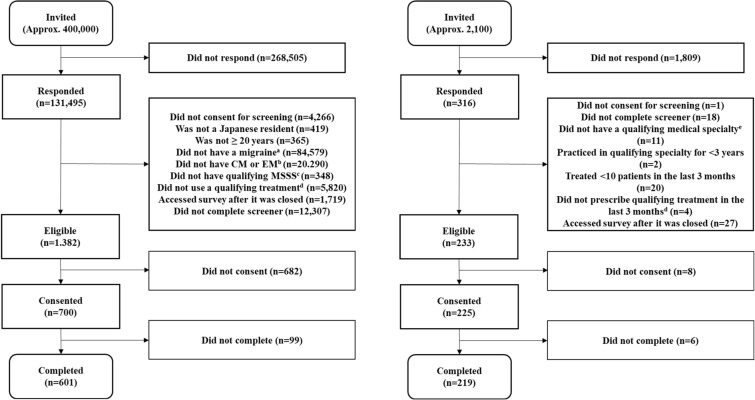
Methods: Japanese adults with episodic (EM) or chronic (CM) migraine and physicians who treat migraine completed an online discrete choice experiment (DCE), asking participants to choose a hypothetical treatment they preferred between two self-injectable CGRP mAb auto-injectors and a non-CGRP oral medication. The treatments were described by seven treatment attributes, with attribute levels varying between questions. DCE data were analyzed using a random-constant logit model to estimate relative attribution importance (RAI) scores and predicted choice probabilities (PCP) of CGRP mAb profiles.
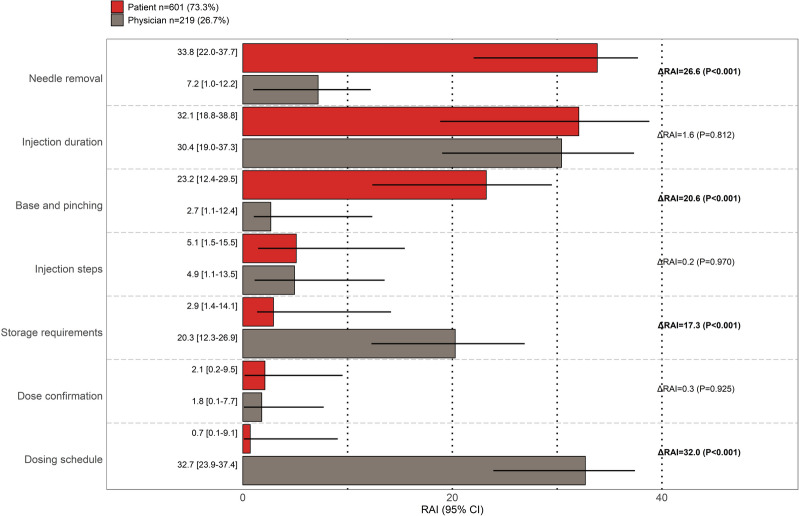
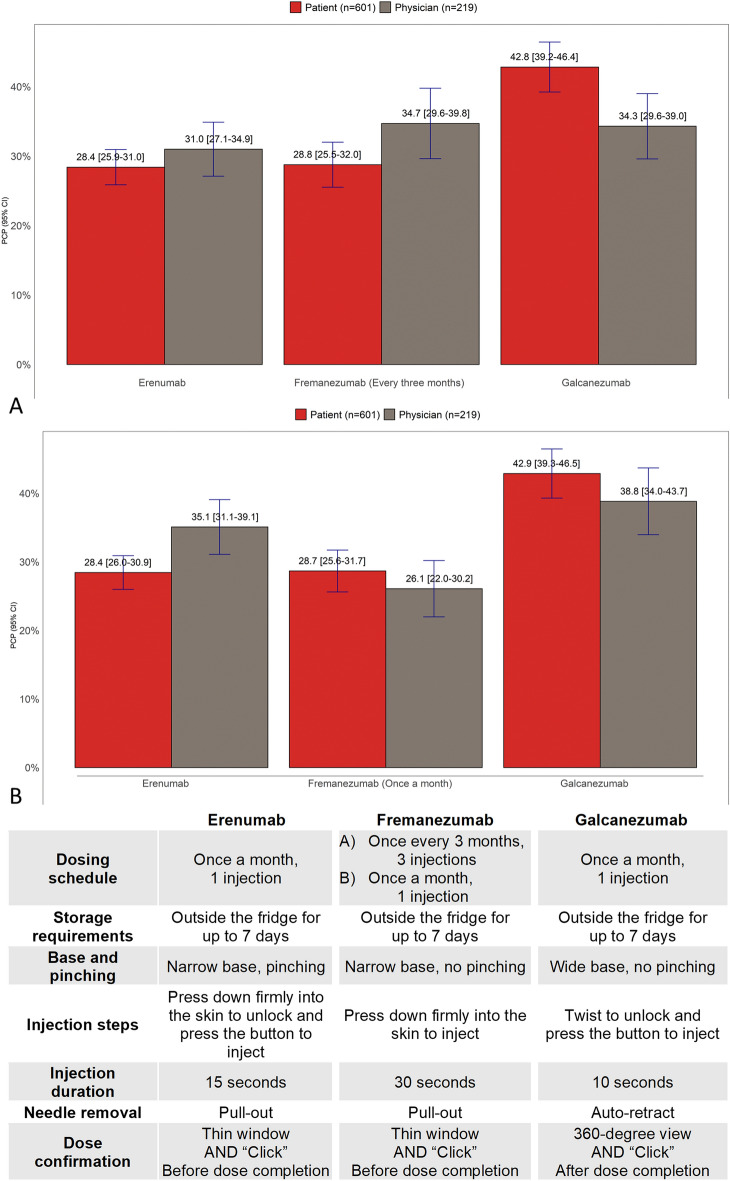
Results: A total of 601 patients (79.2% with EM, 60.1% female, mean age: 40.3 years) and 219 physicians (mean length of practice: 18.3 years) completed the DCE. About half (50.5%) of patients favored CGRP mAb auto-injectors, while others were skeptical of (20.2%) or averse (29.3%) to them. Patients most valued needle removal (RAI = 33.8%), shorter injection duration (RAI = 32.1%), and auto-injector base shape and need for skin pinching (RAI = 23.2%). Most physicians (87.8%) favored auto-injectors over non-CGRP oral medications. Physicians most valued less-frequent dosing RAI = 32.7%), shorter injection duration (30.4%), and longer storage outside the fridge (RAI = 20.3%). A profile comparable to galcanezumab showed a higher likelihood of being chosen by patients (PCP = 42.8%) than profiles comparable to erenumab (PCP = 28.4%) and fremanezumab (PCP = 28.8%). The PCPs of the three profiles were similar among physicians.
Conclusion: Many patients and physicians preferred CGRP mAb auto-injectors over non-CGRP oral medications and preferred a treatment profile similar to galcanezumab. Our results may encourage physicians in Japan to consider patient preferences when recommending migraine preventive treatments.
Keywords: CGRP monoclonal antibody; Discrete choice experiment; Migraine prevention; Patient and physician preferences.
© 2023. The Author(s).
Figures

References
-
- Hirata K, Ueda K, Komori M, et al. Comprehensive population-based survey of migraine in Japan: results of the ObserVational Survey of the Epidemiology, tReatment, and Care Of MigrainE (OVERCOME [Japan]) study. Curr Med Res Opin. 2021;37(11):1945–1955. doi: 10.1080/03007995.2021.1971179. - DOI - PubMed
LinkOut - more resources
Full Text Sources
Research Materials
