


The Oregon ADHD-1000: A new longitudinal data resource enriched for clinical cases and multiple levels of analysis
- PMID: 36848718
- PMCID: PMC9984785
- DOI: 10.1016/j.dcn.2023.101222
The Oregon ADHD-1000: A new longitudinal data resource enriched for clinical cases and multiple levels of analysis
Abstract
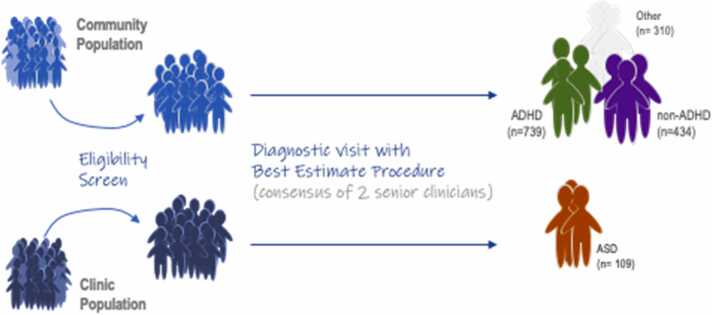
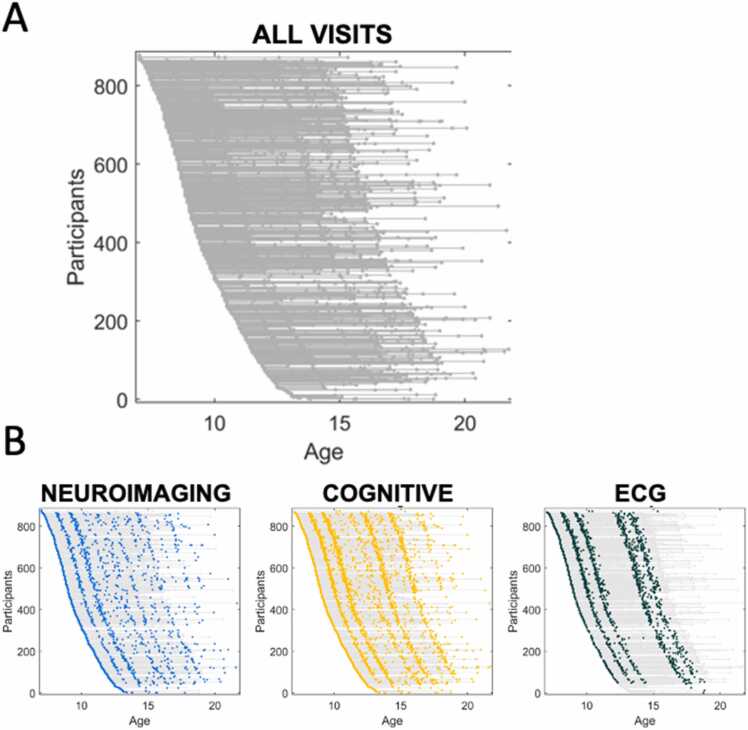
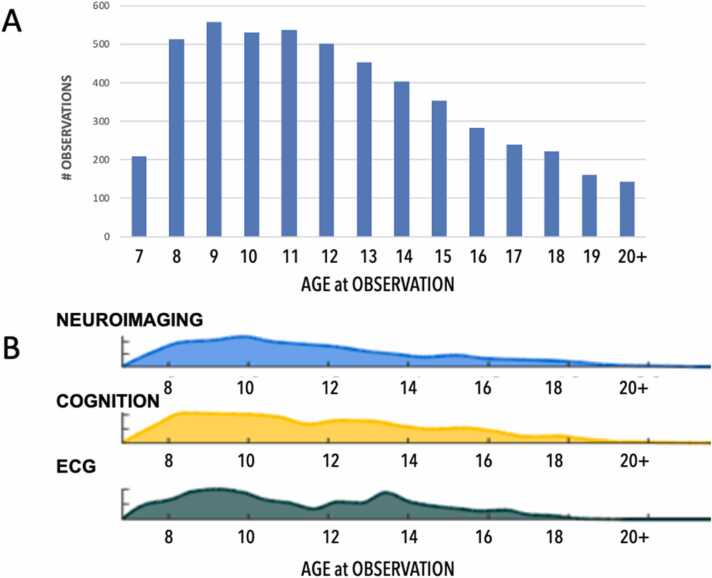
The fields of developmental psychopathology, developmental neuroscience, and behavioral genetics are increasingly moving toward a data sharing model to improve reproducibility, robustness, and generalizability of findings. This approach is particularly critical for understanding attention-deficit/hyperactivity disorder (ADHD), which has unique public health importance given its early onset, high prevalence, individual variability, and causal association with co-occurring and later developing problems. A further priority concerns multi-disciplinary/multi-method datasets that can span different units of analysis. Here, we describe a public dataset using a case-control design for ADHD that includes: multi-method, multi-measure, multi-informant, multi-trait data, and multi-clinician evaluation and phenotyping. It spans > 12 years of annual follow-up with a lag longitudinal design allowing age-based analyses spanning age 7-19 + years with a full age range from 7 to 21. Measures span genetic and epigenetic (DNA methylation) array data; EEG, functional and structural MRI neuroimaging; and psychophysiological, psychosocial, clinical and functional outcomes data. The resource also benefits from an autism spectrum disorder add-on cohort and a cross sectional case-control ADHD cohort from a different geographical region for replication and generalizability. Datasets allowing for integration from genes to nervous system to behavior represent the "next generation" of researchable cohorts for ADHD and developmental psychopathology.
Keywords: Attention-deficit/hyperactivity disorder; Case-control longitudinal; Design; Genetic and epigenetic array; Neuroimaging; Public dataset; Pyschophysiological.
Copyright © 2023 The Authors. Published by Elsevier Ltd.. All rights reserved.
Conflict of interest statement
Declaration of Competing Interest The authors declare the following financial interests/personal relationships which may be considered as potential competing interests. Damien A. Fair reports a relationship with NOUS Imaging Inc that includes: board membership and equity or stocks.
Figures
References
-
- Antshel K.M., Russo N. Autism spectrum disorders and ADHD: overlapping phenomenology, diagnostic issues, and treatment considerations. Curr. Psychiatry Rep. 2019;21:34. - PubMed
-
- Asherson P., Agnew-Blais J. Annual research review: does late-onset attention-deficit/hyperactivity disorder exist? J. Child Psychol. Psychiatry. 2019;60:333–352. - PubMed
Publication types
MeSH terms
Grants and funding
LinkOut - more resources
Full Text Sources
Medical
