Aortic Root Surgery in Adults: An Unsolved Problem
- PMID: 36848909
- PMCID: PMC9970757
- DOI: 10.1055/s-0042-1757949
Aortic Root Surgery in Adults: An Unsolved Problem
Abstract
Nowadays, despite the rapid advancements in interventional cardiology, open surgery still deals with aortic root diseases, to assure the best "ad hoc" treatment. In case of middle-aged adult patients, the optimal operation still represents a matter of debate. A review of the last 10-year literature was conducted, focusing on patients below 65 to 70 years of age. Because of the small sample and the heterogeneity of the papers, no metanalysis was possible. Bentall-de Bono procedure, valve sparing, and Ross operations are the surgical options currently available. The main issues in the Bentall - de Bono operation are lifelong anticoagulation therapy and cavitation in case of mechanical prosthesis implantation and structural valve degeneration in case of biological Bentall. As transcatheter procedures are currently performed as valve in valve, biological prosthesis may be preferable, if the diameter may prevent postoperative high gradients. Conservative techniques, such as remodeling and reimplantation, preferred in the young, guarantee physiologic aortic root dynamics and impose surgical analysis of the aortic root structures to get a durable result. The Ross operation, which shows excellent performance, involves autologous pulmonary valve implantation and is performed only in experienced and high-volume centers. Due to its technical difficulty, it requires a steep learning curve and presents some limitations in specific aortic valve diseases. All three have advantages and downsides, and no ideal solution has still been reported.
The Author(s). This is an open access article published by Thieme under the terms of the Creative Commons Attribution-NonDerivative-NonCommercial License, permitting copying and reproduction so long as the original work is given appropriate credit. Contents may not be used for commercial purposes, or adapted, remixed, transformed or built upon. (https://creativecommons.org/licenses/by-nc-nd/4.0/).
Conflict of interest statement
A.A. is consultant for Livanova, for NeoChord Inc., and Proctor for JOMDD Inc.
Figures
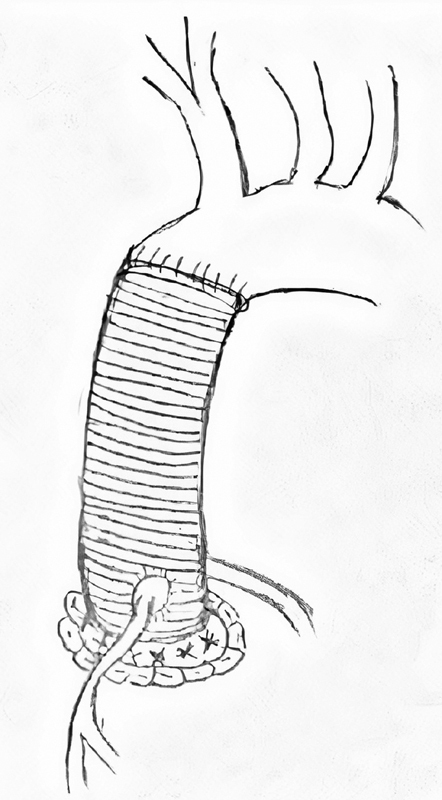


References
-
- Ozaki S, Kawase I, Yamashita H, Uchida S, Takatoh M, Kiyohara N. Midterm outcomes after aortic valve neocuspidization with glutaraldehyde-treated autologous pericardium. J Thorac Cardiovasc Surg. 2018;155(06):2379–2387. - PubMed
-
- Seese L, Yoon P, Morell V O, Chu D. Aortic root replacement with autologous pericardium valved conduit. Ann Thorac Surg. 2022;113(03):e227–e229. - PubMed
-
- Writing Committee Members . Otto C M, Nishimura R A, Bonow R O. 2020 ACC/AHA Guideline for the Management of Patients With Valvular Heart Disease: a report of the American College of Cardiology/American Heart Association Joint Committee on Clinical Practice Guidelines. J Am Coll Cardiol. 2021;77(04):e25–e197. - PubMed
-
- Loewen P, Dahri K. Risk of bleeding with oral anticoagulants: an updated systematic review and performance analysis of clinical prediction rules. Ann Hematol. 2011;90(10):1191–1200. - PubMed
-
- Vriz O, Arshi F, Ahmed M. Cavitation phenomenon in mechanical prosthetic valves: not only microbubbles. Echocardiography. 2020;37(06):876–882. - PubMed
LinkOut - more resources
Full Text Sources
Research Materials