


Detection and Characterization of an H9N2 Influenza A Virus in the Egyptian Rousette Bat in Limpopo, South Africa
- PMID: 36851712
- PMCID: PMC9958621
- DOI: 10.3390/v15020498
Detection and Characterization of an H9N2 Influenza A Virus in the Egyptian Rousette Bat in Limpopo, South Africa
Abstract
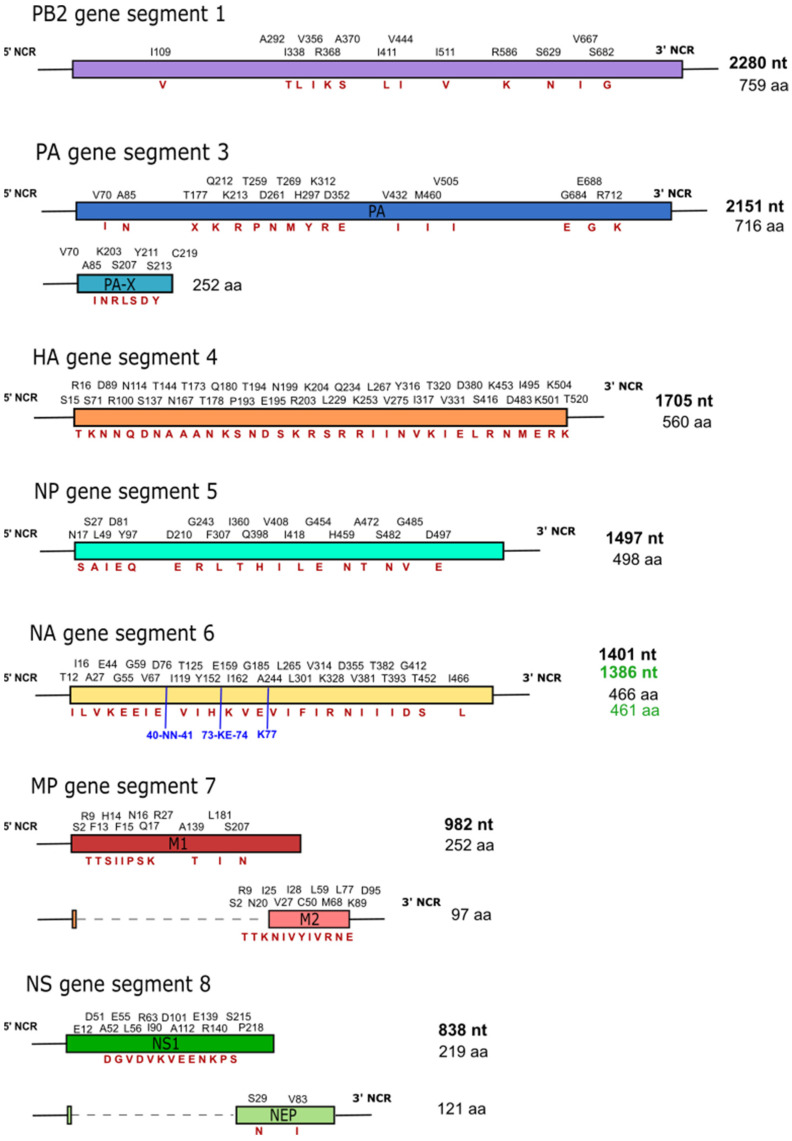
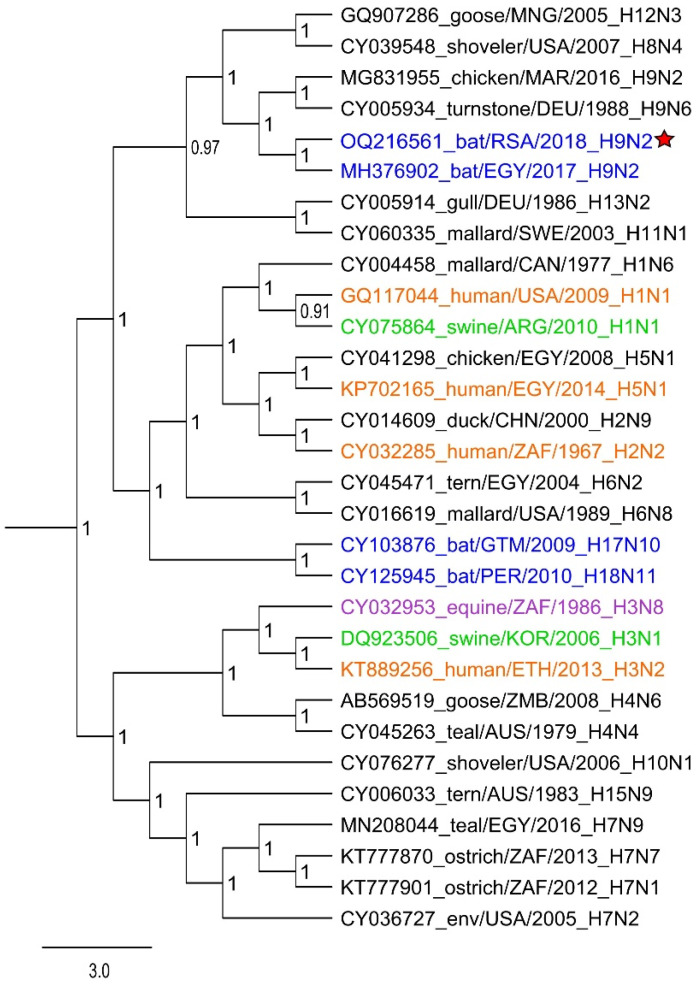
In recent years, bats have been shown to host various novel bat-specific influenza viruses, including H17N10 and H18N11 in the Americas and the H9N2 subtype from Africa. Rousettus aegyptiacus (Egyptian Rousette bat) is recognized as a host species for diverse viral agents. This study focused on the molecular surveillance of a maternal colony in Limpopo, South Africa, between 2017-2018. A pan-influenza hemi-nested RT-PCR assay targeting the PB1 gene was established, and influenza A virus RNA was identified from one fecal sample out of 860 samples. Genome segments were recovered using segment-specific amplification combined with standard Sanger sequencing and Illumina unbiased sequencing. The identified influenza A virus was closely related to the H9N2 bat-influenza virus, confirming the circulation of this subtype among Egyptian fruit bat populations in Southern Africa. This bat H9N2 subtype contained amino acid residues associated with transmission and virulence in either mammalian or avian hosts, though it will likely require additional adaptations before spillover.
Keywords: Egyptian Rousette bat; H9N2; South Africa; influenza A virus; surveillance.
Conflict of interest statement
The authors declare no conflict of interest. The funders had no role in the design of the study; in the collection, analyses, or interpretation of data; in the writing of the manuscript, or in the decision to publish the results.
Figures
References
-
- Uyeki T.M., Bernstein H.H., Bradley J.S., Englund J.A., File T.M., Jr., Fry A.M., Gravenstein S., Hayden F.G., Harper S.A., Hirshon J.M. Clinical practice guidelines by the Infectious Diseases Society of America: 2018 update on diagnosis, treatment, chemoprophylaxis, and institutional outbreak management of seasonal influenza. Clin. Infect. Dis. 2019;68:e1–e47. doi: 10.1093/cid/ciy866. - DOI - PMC - PubMed
-
- ICTV Family: Orthomyxoviridae. [(accessed on 12 December 2022)]. Available online: https://ictv.global/report_9th/RNAneg/Orthomyxoviridae.
-
- Yoon S.-W., Webby R.J., Webster R.G. Evolution and Ecology of Influenza A Viruses. Influenza Pathog. Control. 2014;I:359–375. - PubMed
Publication types
MeSH terms
Substances
Grants and funding
LinkOut - more resources
Full Text Sources
Medical
Miscellaneous
