


Efficient control of the fungal pathogens Colletotrichum gloeosporioides and Penicillium digitatum infecting citrus fruits by native soilborne Bacillus velezensis strains
- PMID: 36852059
- PMCID: PMC9958435
- DOI: 10.1016/j.heliyon.2023.e13663
Efficient control of the fungal pathogens Colletotrichum gloeosporioides and Penicillium digitatum infecting citrus fruits by native soilborne Bacillus velezensis strains
Abstract
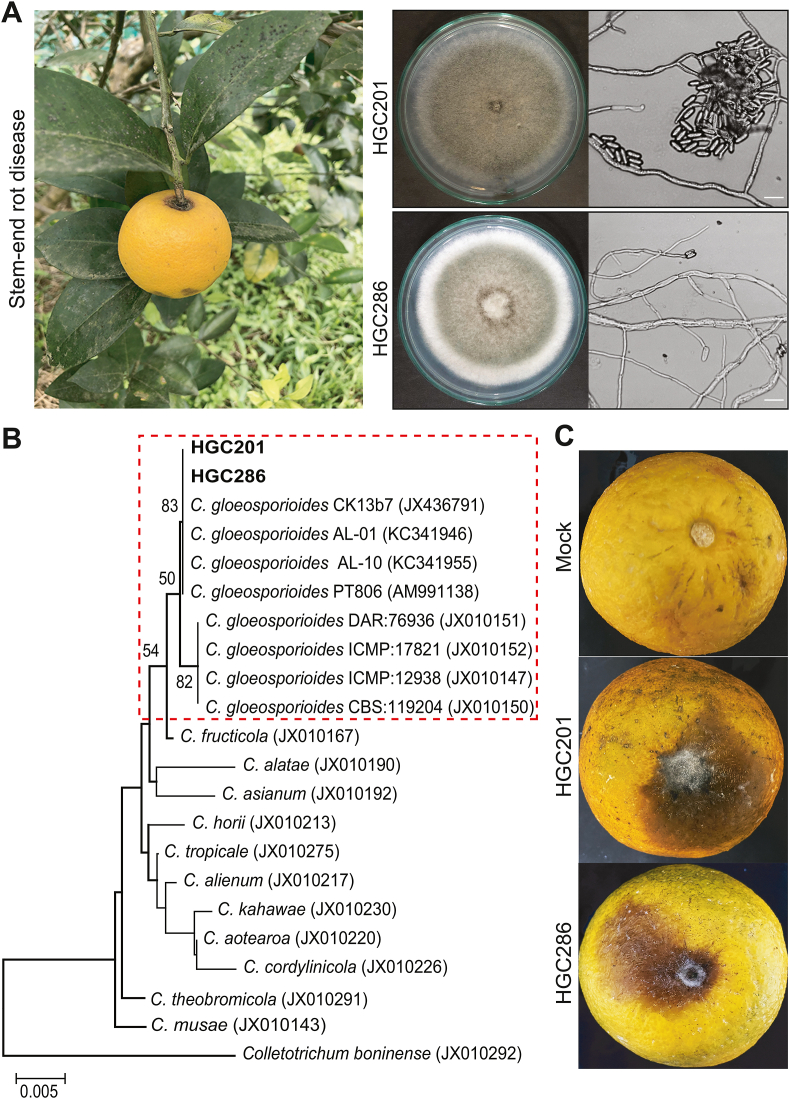
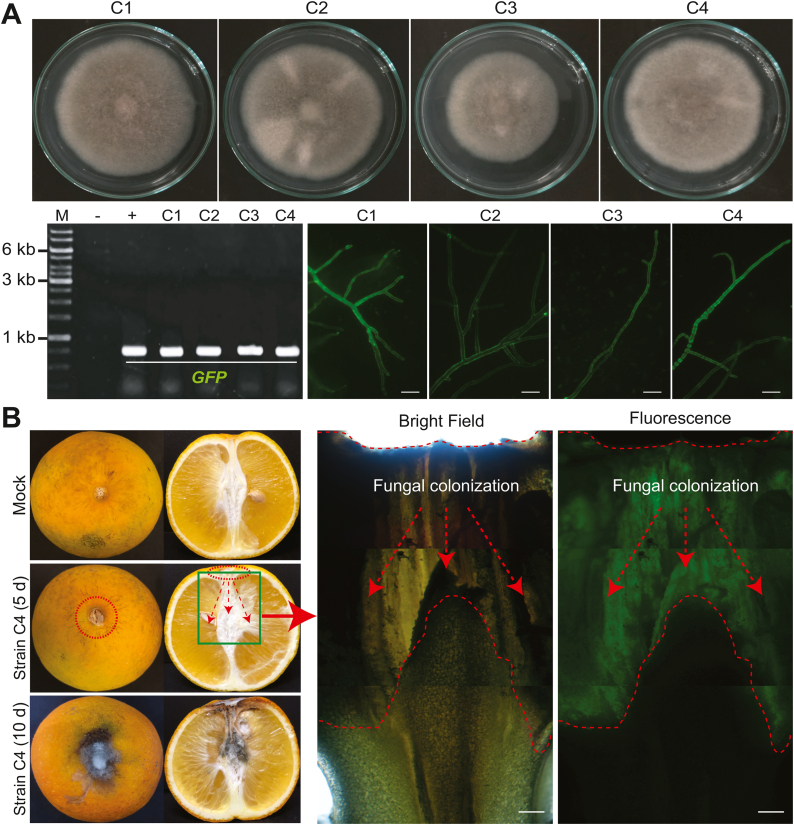
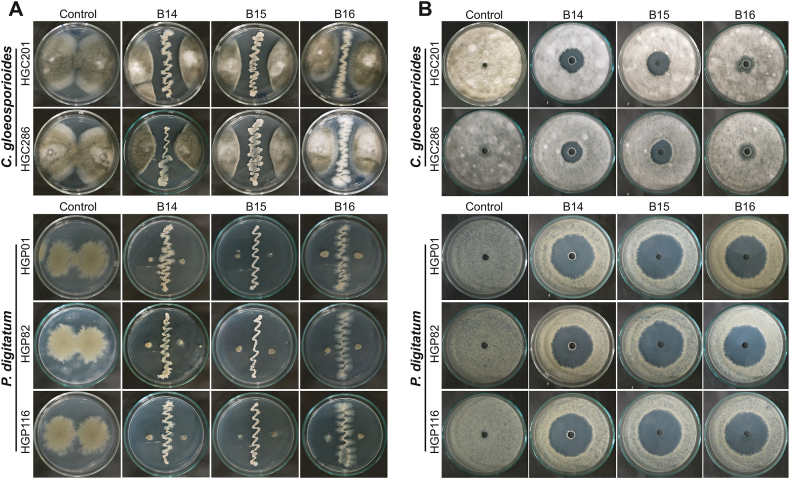
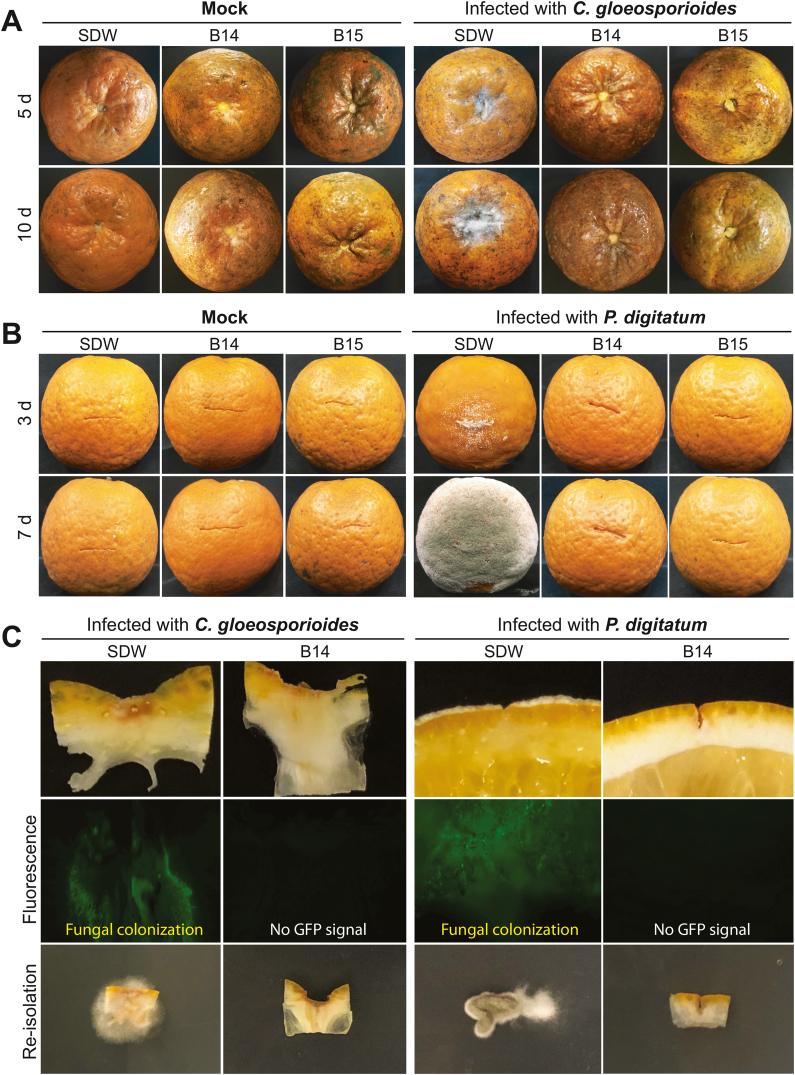
Destruction of citrus fruits by fungal pathogens during preharvest and postharvest stages can result in severe losses for the citrus industry. Antagonistic microorganisms used as biological agents to control citrus pathogens are considered alternatives to synthetic fungicides. In this study, we aimed to identify fungal pathogens causing dominant diseases on citrus fruits in a specialized citrus cultivation region of Vietnam and inspect soilborne Bacillus isolates with antifungal activity against these pathogens. Two fungal pathogens were characterized as Colletotrichum gloeosporioides and Penicillium digitatum based on morphological characteristics and ribosomal DNA internal transcribed spacer sequence analyses. Reinfection assays of orange fruits confirmed that C. gloeosporioides causes stem-end rot, and P. digitatum triggers green mold disease. By the heterologous expression of the green fluorescent protein (GFP) in C. gloeosporioides using Agrobacterium tumefaciens-mediated transformation, we could observe the fungal infection process of the citrus fruit stem-end rot caused by C. gloeosporioides for the first time. Furthermore, we isolated and selected two soilborne Bacillus strains with strong antagonistic activity for preventing the decay of citrus fruits by these pathogens. Molecular analyses of 16 S rRNA and gyrB genes showed that both isolates belong to B. velezensis. Antifungal activity assays indicated that bacterial culture suspensions could strongly inhibit C. gloeosporioides and P. digitatum, and shield orange fruits from the invasion of the pathogens. Our work provides a highly effective Bacillus-based preservative solution for combating the fungal pathogens C. gloeosporioides and P. digitatum to protect citrus fruits at the postharvest stages.
Keywords: Antifungal activity; Bacillus velezensis; Citrus fruits; Colletotrichum gloeosporioides; GFP tagging; Host colonization; Penicillium digitatum; Postharvest pathogens.
© 2023 The Authors.
Conflict of interest statement
The authors declare no conflict of interest.
Figures
References
-
- FAO . Rome; 2021. Citrus Fruit Statistical Compendium 2020.http://www.fao.org/3/cb6492en/cb6492en.pdf
-
- Dowling M., Peres N., Villani S., Schnabel G. Managing Colletotrichum on fruit crops: a “complex” challenge. Plant Dis. 2020;104:2301–2316. - PubMed
-
- Lima W.G., Spósito M.B., Amorim L., Gonçalves F.P., de Filho P.A.M. Colletotrichum gloeosporioides, a new causal agent of citrus post-bloom fruit drop. Eur. J. Plant Pathol. 2011;131:157–165.
-
- Zakaria L. Diversity of Colletotrichum species associated with anthracnose disease in tropical fruit crops − A review. Agriculture. 2021;11:297.
LinkOut - more resources
Full Text Sources
