


Dietary supplement and complementary and alternative medicine use among older adults in Australia and the United States
- PMID: 36852896
- PMCID: PMC10460828
- DOI: 10.1111/jgs.18305
Dietary supplement and complementary and alternative medicine use among older adults in Australia and the United States
Abstract
Background: Dietary supplement and complementary and alternative medication (CAM) use can contribute to drug interactions, polypharmacy, nonadherence with prescription medications, and healthcare expenses, whereas evidence supporting benefits of using these products is sparse. There is a lack of current published literature describing the patterns or predictors of their use in community-dwelling older adults.
Materials and methods: We performed a cross-sectional analysis of community-dwelling adults from Australia and the US, aged 70 years and older (65 years for US minorities), enrolled in the ASPirin in Reducing Events in the Elderly (ASPREE) study. At study enrollment, eligible participants were required to be without concurrent 5-year life-limiting illness and free of documented evidence of cardiovascular disease, dementia, or significant physical disability. During the final study visit, a questionnaire was administered to collect information about supplement/CAM use. Data from 15,729 participants who completed this questionnaire between January 2017 and January 2018 were analyzed. Descriptive statistics were used to report the prevalence and types of products used. Factors associated with use were determined using multivariate regression.
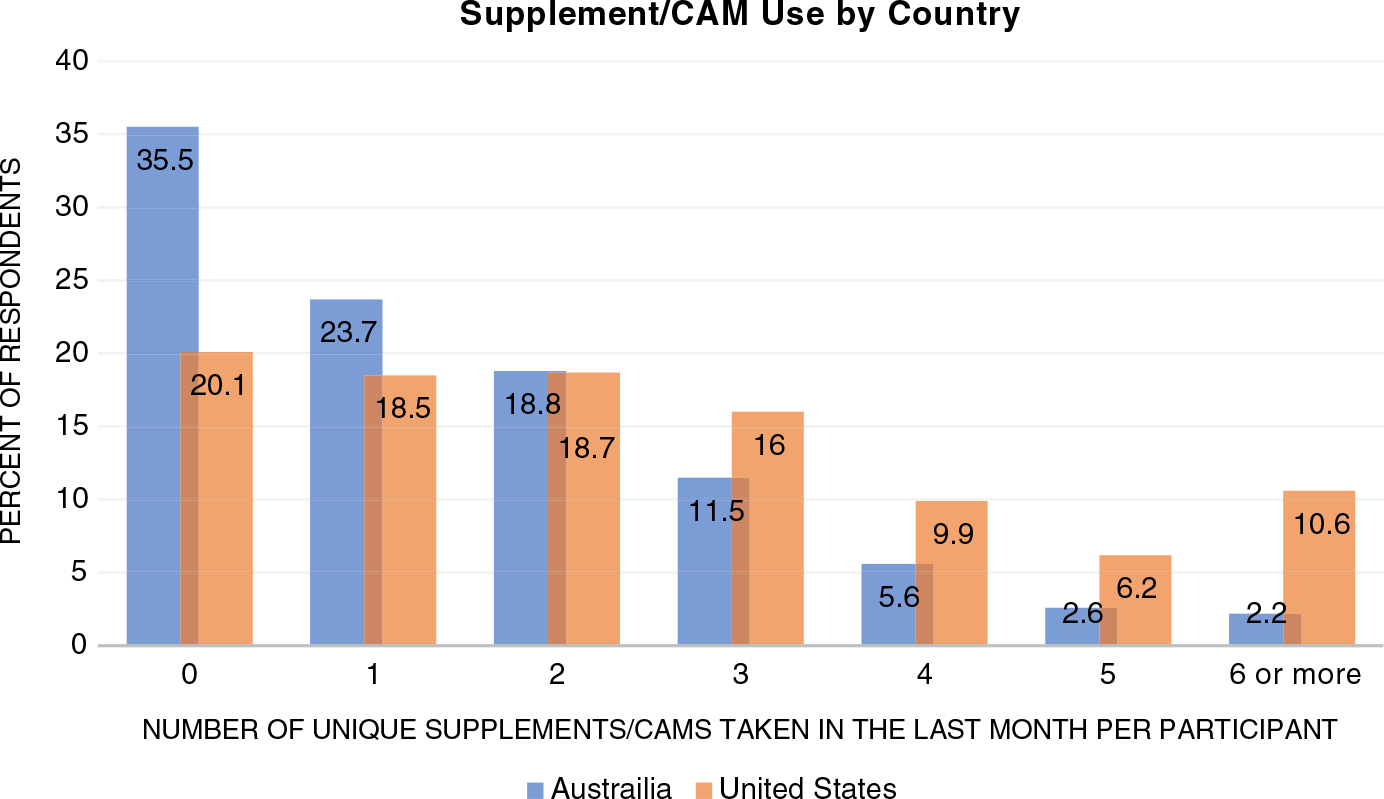
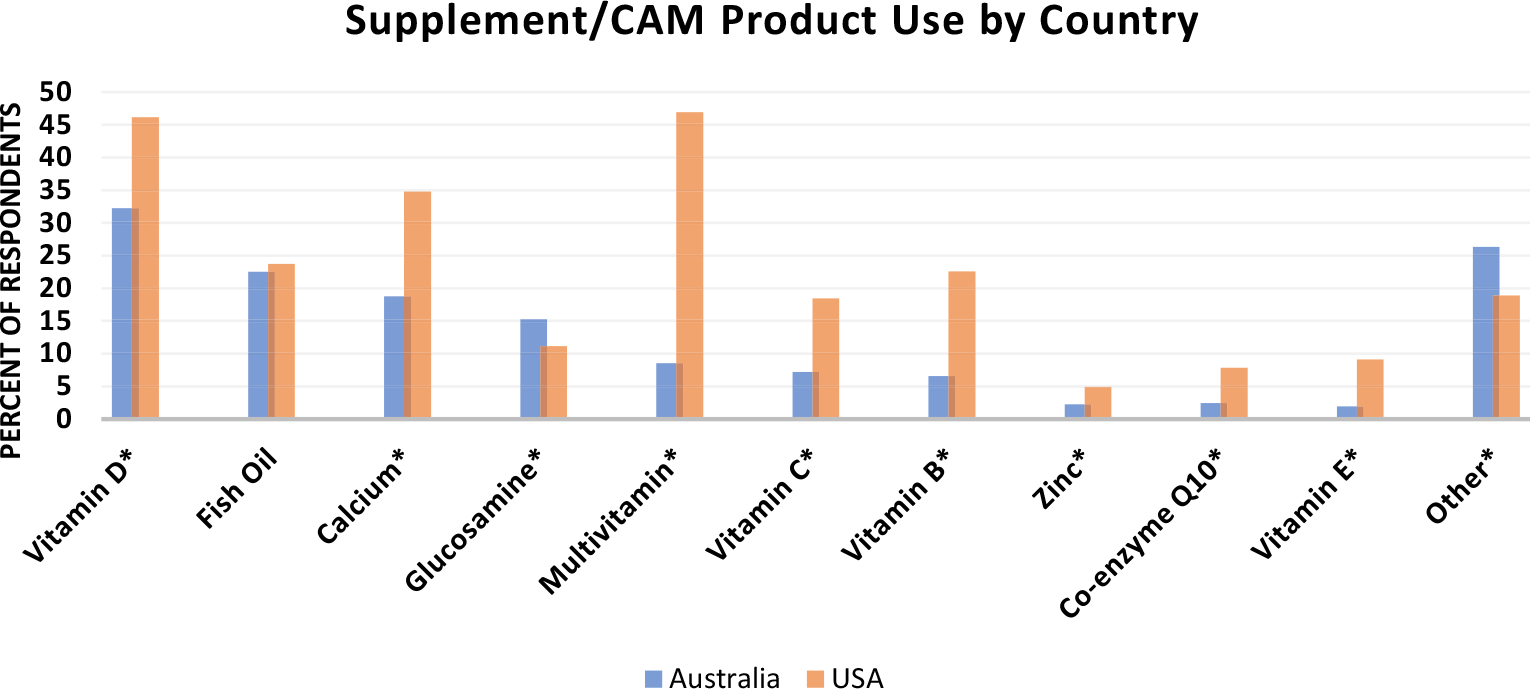
Results: Mean age of respondents was 79.6 years; 56.4% were female, 88.8% were from Australia, 56.5% reported 12 years of education or less, and 98.7% were living at home. Two-thirds (66.2%) of participants reported use of one or more supplement/CAM in the previous month. Products most commonly used included vitamin D (33.8% of participants), fish oil (22.7%), calcium (20.6%), glucosamine (14.8%), and multivitamin (12.9%). Female sex, US residency, higher education, polypharmacy (prescription medications), and frailty (in women) were significantly associated with higher use of supplements/CAMs.
Conclusions: Dietary supplement and CAM use is common among community-dwelling older adults in the United States and Australia. Given the high prevalence of use, collaboration between healthcare providers and older adult patients is important to insure safe and optimal use of these products.
Keywords: complementary and alternative medications; dietary supplements; nontraditional medicine.
© 2023 The Authors. Journal of the American Geriatrics Society published by Wiley Periodicals LLC on behalf of The American Geriatrics Society.
Conflict of interest statement
CONFLICT OF INTEREST
All the authors declare that they have no conflicts of interest with regard to this manuscript.
Figures
References
-
- Dietary Supplement Use Among Adults: United States, 2017–2018. National Health and Nutrition Examination Survey. Accessed June 13, 2022. https://www.cdc.gov/nchs/products/databriefs/db399.htm.
-
- Gahche J, Bailey R, Burt V, et al. Dietary Supplement Use among U.S. Adults Has Increased since NHANES III (1988–1994). NCHS Data Brief, no 61. National Center for Health Statistics; 2011. - PubMed
Publication types
MeSH terms
Substances
Grants and funding
LinkOut - more resources
Full Text Sources
Medical
