


CAR-T Therapies in Solid Tumors: Opportunities and Challenges
- PMID: 36853475
- PMCID: PMC10110629
- DOI: 10.1007/s11912-023-01380-x
CAR-T Therapies in Solid Tumors: Opportunities and Challenges
Abstract
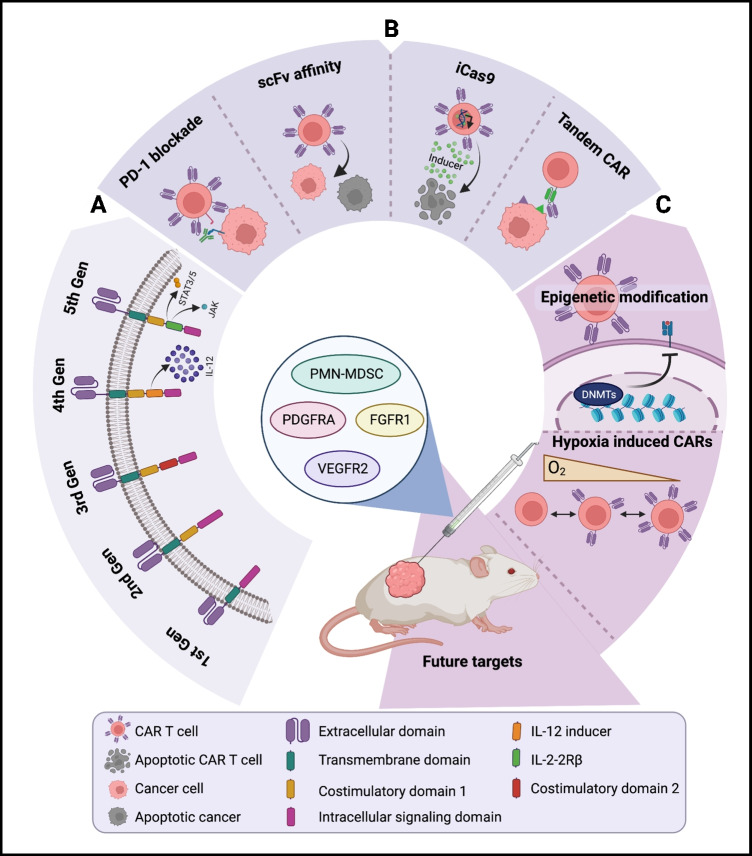
Purpose of review: This review will discuss the challenges facing chimeric antigen receptor (CAR)-T cell application for solid tumors and opportunities to overcome these obstacles. In addition, this review will examine therapies that are in development for pediatric solid tumors.
Recent findings: The similar success of CAR-T cell treatment for hematological malignancies has not been observed in solid tumors because of the hostile tumor microenvironment and tumor heterogeneity. Most strategies developed to combat these limitations emphasize combinatorial techniques that still require further testing. Preliminary results of multiple clinical trials, including GD2- and HER2-CAR-T cells, are encouraging but must be reproduced and validated on a larger scale. CAR-T cell application in solid tumors remains challenging, and most research is in development. Several clinical trials are ongoing for pediatric solid tumors. Early results are promising but demonstrate the need for CAR-T cell modification to prevent tumor recurrence.
Keywords: Chimeric antigen receptor T cell; Immunotherapy; Pediatric solid tumors.
© 2023. The Author(s).
Conflict of interest statement
The authors declare no competing interests.
Figures
References
Publication types
MeSH terms
Substances
Grants and funding
LinkOut - more resources
Full Text Sources
Other Literature Sources
Medical
Research Materials
Miscellaneous
