


Therapeutic utility of engineered myeloid cells in the tumor microenvironment
- PMID: 36854896
- PMCID: PMC10353932
- DOI: 10.1038/s41417-023-00600-7
Therapeutic utility of engineered myeloid cells in the tumor microenvironment
Abstract
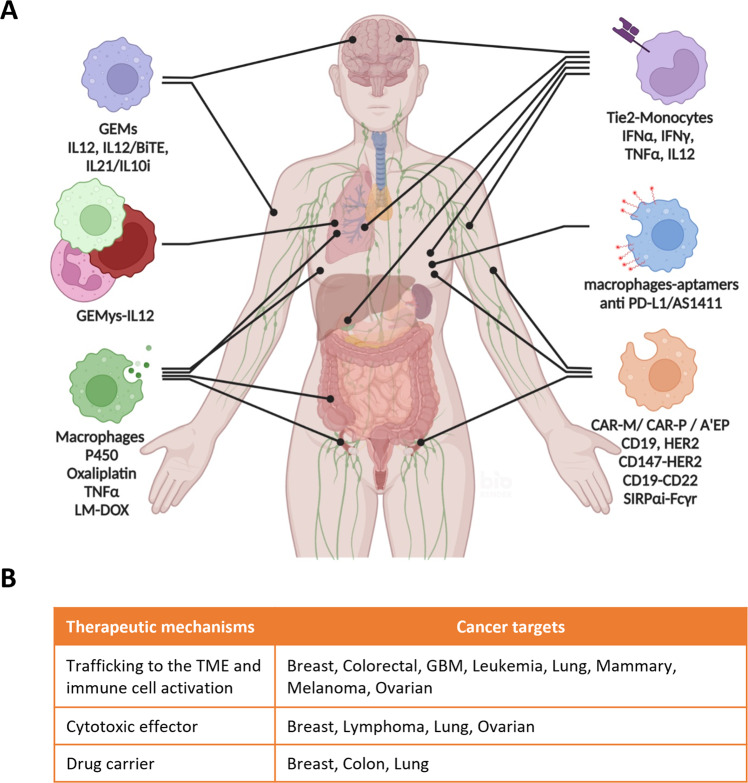
Despite promising results shown in hematologic tumors, immunotherapies for the treatment of solid tumors have mostly failed so far. The immunosuppressive tumor microenvironment and phenotype of tumor infiltrating macrophages are among the more prevalent reasons for this failure. Tumor associated macrophages (TAMs, M2-macrophages) are circulating myeloid cells recruited to the local tumor microenvironment, and together with regulatory T cells (T-regs), are reprogrammed to become immune suppressive. This results in the inactivation or hampered recruitment of cytotoxic CD8 + T and Natural Killer (NK) cells. Recently, attempts have been made to try to leverage specific myeloid functions and properties, including their ability to reach the TME and to mediate the phagocytosis of cancer cells. Additionally, myeloid cells have been used for drug delivery and reprogramming the tumor microenvironment in cancer patients. This approach, together with the advancements in genome editing, paved the way for the development of novel cell-mediated immunotherapies. This article focuses on the latest studies that detail the therapeutic properties of genetically engineered or pharmacologically modulated myeloid cells in cancer preclinical models, limitations, pitfalls, and evaluations of these approaches in patients with cancer.
© 2023. The Author(s).
Conflict of interest statement
The authors declare no competing interests.
Figures
References
-
- Eshhar Z, Waks T, Gross G, Schindler DG. Specific activation and targeting of cytotoxic lymphocytes through chimeric single chains consisting of antibody-binding domains and the gamma or zeta subunits of the immunoglobulin and T-cell receptors. Proc Natl Acad Sci USA. 1993;90:720–4. doi: 10.1073/pnas.90.2.720. - DOI - PMC - PubMed
Publication types
MeSH terms
LinkOut - more resources
Full Text Sources
Medical
Research Materials
