Review
. 2023 Jul;30(7):936-954.
doi: 10.1038/s41417-023-00597-z. Epub 2023 Feb 28.

Viral vectors and extracellular vesicles: innate delivery systems utilized in CRISPR/Cas-mediated cancer therapy

Affiliations
Review

Viral vectors and extracellular vesicles: innate delivery systems utilized in CRISPR/Cas-mediated cancer therapy

Seyed Esmaeil Ahmadi et al. Cancer Gene Ther. 2023 Jul.

Abstract

Gene editing-based therapeutic strategies grant the power to override cell machinery and alter faulty genes contributing to disease development like cancer. Nowadays, the principal tool for gene editing is the clustered regularly interspaced short palindromic repeats-associated nuclease 9 (CRISPR/Cas9) system. In order to bring this gene-editing system from the bench to the bedside, a significant hurdle remains, and that is the delivery of CRISPR/Cas to various target cells in vivo and in vitro. The CRISPR-Cas system can be delivered into mammalian cells using various strategies; among all, we have reviewed recent research around two natural gene delivery systems that have been proven to be compatible with human cells. Herein, we have discussed the advantages and limitations of viral vectors, and extracellular vesicles (EVs) in delivering the CRISPR/Cas system for cancer therapy purposes.


Conflict of interest statement

The authors declare no competing interests.

Figures

Fig. 1
Fig. 1. Overview on different mechanisms of action carried out by CRISPR/Cas9 systems.
One of the significant advantages of the CRISPR/Cas system is that it can be modified readily to carry out various functions. Cas9 can induce DSB and edit genes with high accuracy or with the help of modified Cas9 enzymes like dCas9; this system can be used as a transcription activator (CRISPRa) or transcription repressor (CRISPRi).
Fig. 2
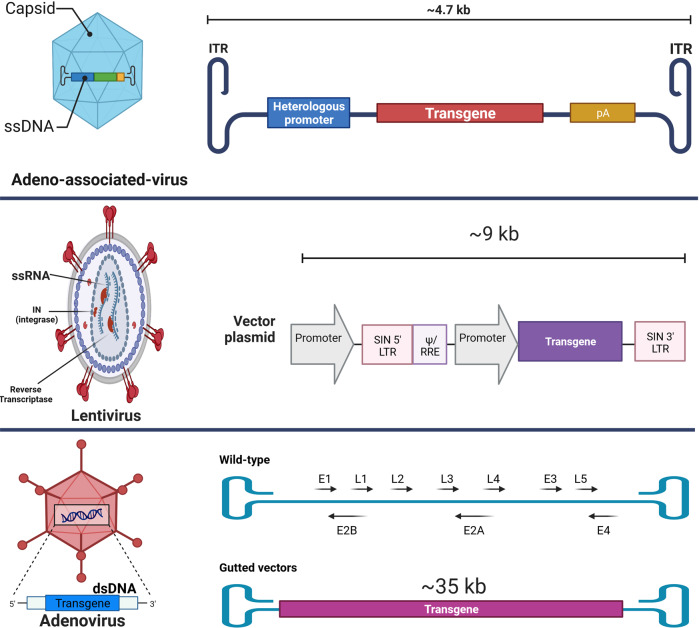
Fig. 2. Commonly used viral vectors for gene delivery.
AAVs are single-stranded DNA viruses with no envelope and small size that are not pathogenic to humans. The gutted Adenoviral vectors are double-strand DNA viruses devoid of most genes from their wild-type, although still capable of transducing a broad spectrum of both dividing and non-dividing cells with a capacity of carrying genetic cargo up to 35 kb. Lentiviral vectors, primarily derived from HIV-1, are capable of integrating their transgene (~9 kb) into the human genome and are suitable for long-term gene expression.
Fig. 3
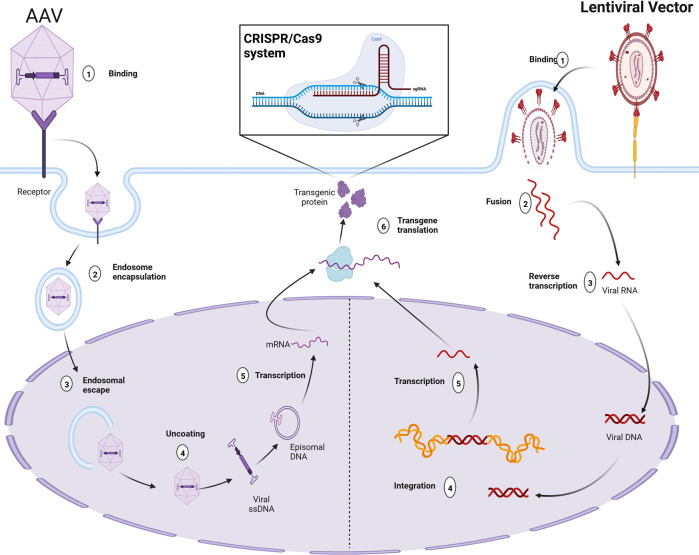
Fig. 3. Viral Vectors encoding CRISPR/Cas.
Mechanism of action of two types of viral vectors for delivery of CRISPR/Cas systems: integrative (lentiviral vectors) and non-integrative (Adenoviral and Adeno-associated viral (AAV) vectors).
Fig. 4
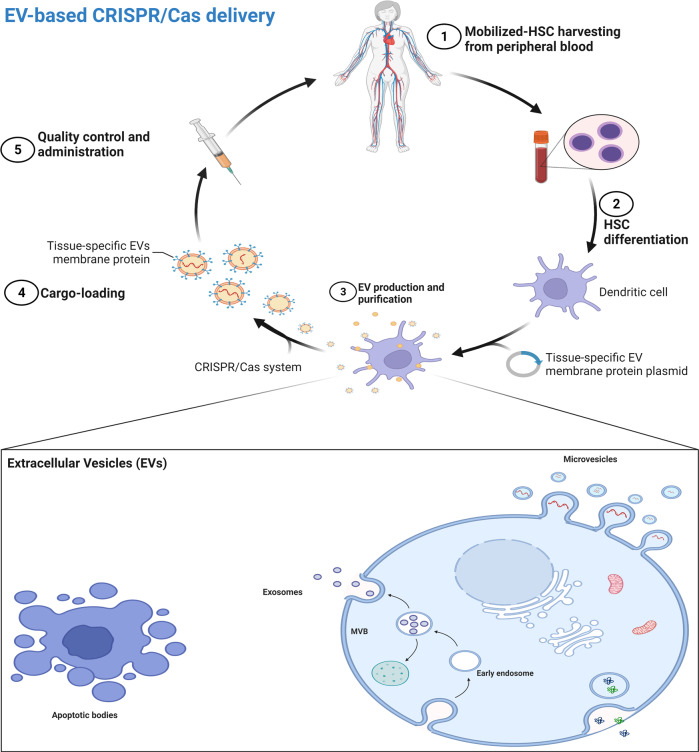
Fig. 4. EV-based gene delivery.
There are different types of EVs, including microvesicles, exosomes, and apoptotic bodies, that can be collected from human cells. These EVs can carry proteins, DNA, and different types of RNA from one cell to another. These exosomes can be engineered to target a specific tissue while carrying our desired cargo like CRISPR/Cas system. This approach allows for autologous tissue-specific gene editing.
Fig. 5
Fig. 5. Tumor-derived exosomes.
Transfecting tumor cells with DOX@E-PSiNPs, CRISPR/Cas system, and viral vector plasmids while inducing the tumor cells to produce exosomes can provide tumor-derived exosomes encapsulating our desired cargo. Since these exosomes originated from the tumor, they can be harvested and injected systematically back into tumor cells for therapeutic purposes.
Fig. 6
Fig. 6. Necroptosis induction using exosomes.
Engineered exosomes with TFNα on their surface, carrying two vectors of the CRISPR/Cas system capable of inhibiting cIAPs and caspase 8. In this approach, the exosome-TNFα ligand provokes TNFR signaling pathways, which can activate the cIAPs, propelling the cell toward survival. CRISPR/Cas9-mediated inhibition of cIAPs alongside active caspase 8 results in apoptosis of cancer cells. Moreover, dual inhibiting of cIAPs and caspase 8 alongside TNFR signaling lead to necroptosis. The advantage of necroptosis over apoptosis is that the former also provokes T-cells to eliminate the remaining cancer cells.

References

    1. Cao W, Chen H-D, Yu Y-W, Li N, Chen W-Q. Changing profiles of cancer burden worldwide and in China: a secondary analysis of the global cancer statistics 2020. Chin Med J. 2021;134:783–91. doi: 10.1097/CM9.0000000000001474. - DOI - PMC - PubMed
    1. Dorgalaleh A, Bahraini M, Ahmadi SE. Personalized anesthesia in hematology. In: Dabbagh A, editor. Personalized medicine in anesthesia, pain and perioperative medicine. Cham: Springer International Publishing; 2021. p. 231–74.
    1. Zahavi D, Weiner L. Monoclonal antibodies in cancer therapy. Antibodies. 2020;9:34. doi: 10.3390/antib9030034. - DOI - PMC - PubMed
    1. Belete TM. The current status of gene therapy for the treatment of cancer. Biologics: Targets Ther. 2021;15:67. - PMC - PubMed
    1. van Gent M, Gack MU. Viral anti-CRISPR tactics: no success without sacrifice. Immunity. 2018;49:391–3. doi: 10.1016/j.immuni.2018.08.023. - DOI - PubMed