


Laboratory Evaluation of a Quaternary Ammonium Compound-Based Antimicrobial Coating Used in Public Transport during the COVID-19 Pandemic
- PMID: 36856438
- PMCID: PMC10057021
- DOI: 10.1128/aem.01744-22
Laboratory Evaluation of a Quaternary Ammonium Compound-Based Antimicrobial Coating Used in Public Transport during the COVID-19 Pandemic
Abstract
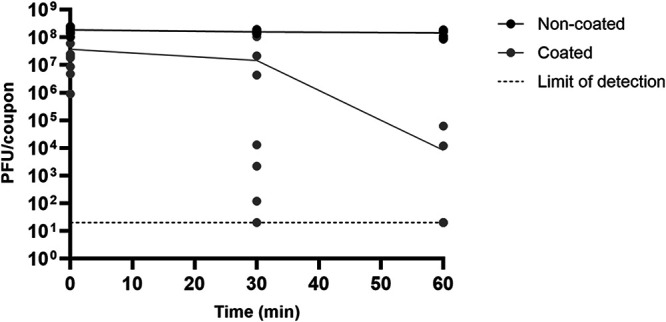
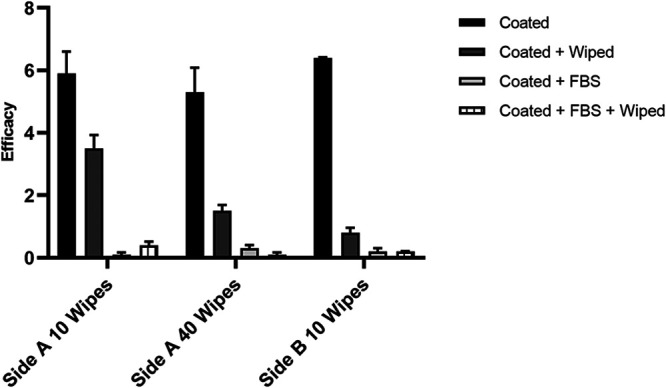
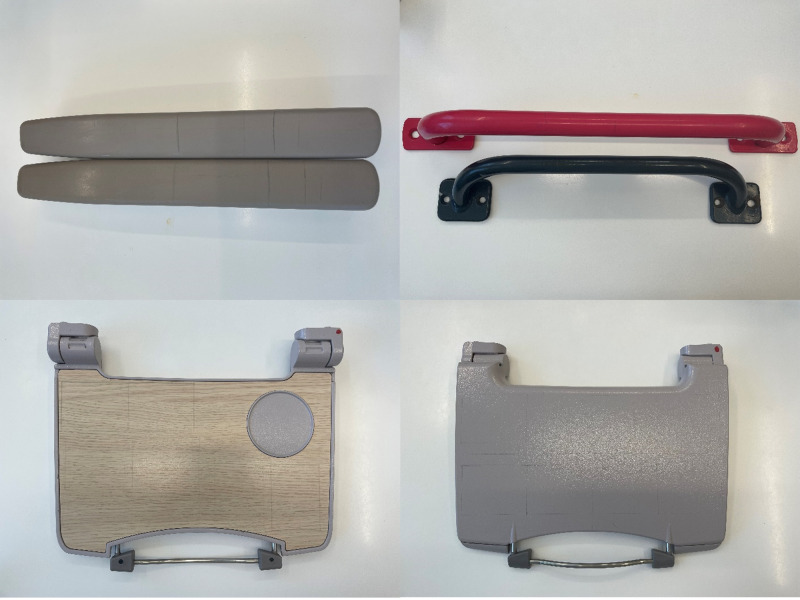
The virucidal activity of the Zoono Z71 Microbe Shield surface sanitizer and protectant, a quaternary ammonium compound (QAC)-based antimicrobial coating that was used by the United Kingdom rail industry during the COVID-19 pandemic, was evaluated, using the bacteriophage ɸ6 as a surrogate for SARS-CoV-2. Immediately after application and in the absence of interfering substances, the product effectively reduced (>3 log10) the viability of ɸ6 on some materials that are typically used in rail carriages (stainless steel, high-pressure laminate, plastic). If, after the application of the product, these surfaces remained undisturbed, the antimicrobial coating retained its efficacy for at least 28 days. However, efficacy depended on the material being coated. The product provided inconsistent results when applied to glass surfaces and was ineffective (i.e., achieved <3 log10 reduction) when applied to a train arm rest that was made of Terluran 22. Regardless of the material that was coated or the time since application, the presence of organic debris (fetal bovine serum) significantly reduced the viricidal activity of the coating. Wiping the surface with a wetted cloth after the deposition of organic debris was not sufficient to restore efficacy. We conclude that the product is likely to be of limited effectiveness in a busy, multiuser environment, such as public transport. IMPORTANCE This study evaluated the performance of a commercially available antimicrobial coating that was used by the transport industry in the United Kingdom during the COVID-19 pandemic. While the product was effective against ɸ6, the efficacy of the coating depended upon the material to which it was applied. Similarly, and regardless of the surface material, the presence of organic debris severely impaired viricidal activity, and efficacy could not be recovered through wiping (cleaning) the surface. This highlights the importance of including relevant materials and conditions when evaluating antimicrobial coatings in the laboratory. Further efforts are required to identify suitable infection prevention and control practices for the transport industry.
Keywords: COVID-19; QAC; SARS-CoV-2; antimicrobial coating; public transport; ɸ6.
Conflict of interest statement
The authors declare no conflict of interest.
Figures
References
-
- Levenson Gower T. 2022. Passenger rail usage January to March 2022.
-
- Johnson M. 2021. Annual bus statistics: England 2020/2021.
Publication types
MeSH terms
Substances
LinkOut - more resources
Full Text Sources
Medical
Miscellaneous
