


Fetal cell microchimerism and susceptibility to COVID-19 disease in women
- PMID: 36857020
- PMCID: PMC9975871
- DOI: 10.1007/s15010-023-02006-x
Fetal cell microchimerism and susceptibility to COVID-19 disease in women
Erratum in
-
Correction: Fetal cell microchimerism and susceptibility to COVID-19 disease in women.Infection. 2023 Aug;51(4):1079. doi: 10.1007/s15010-023-02037-4. Infection. 2023. PMID: 37170056 Free PMC article. No abstract available.
Abstract
Purpose: The clinical outcome of COVID-19 disease is worse in males, and the reasons of this gender disparity are currently unclear, though evidences point to a combination of biological and gender-specific factors. A phenomenon unique to the female gender is the fetal cell microchimerism (FCM), defined as the presence of fetal microchimeric cells in maternal organs and in the circulation for years after delivery and usually evaluated by assessing the presence of male cells or DNA in a woman. In the present case-control study, we aimed to evaluate the possible effect of pregnancy and related FCM on the susceptibility to SARS-CoV-2 infection and on the clinical course and outcome of COVID-19.
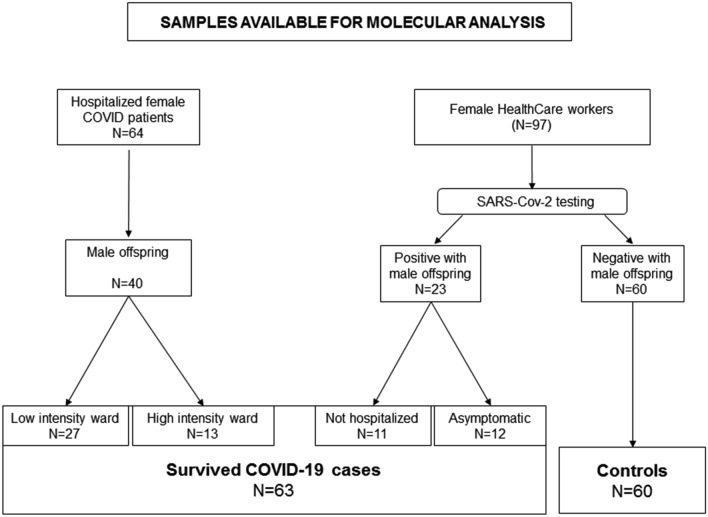
Methods: One hundred twenty-three women with a previous male pregnancy, comprising 63 COVID-19 cases and 60 healthy controls were enrolled. The presence of blood male DNA was assessed by the amplification of the Y-chromosome specific gene SRY.
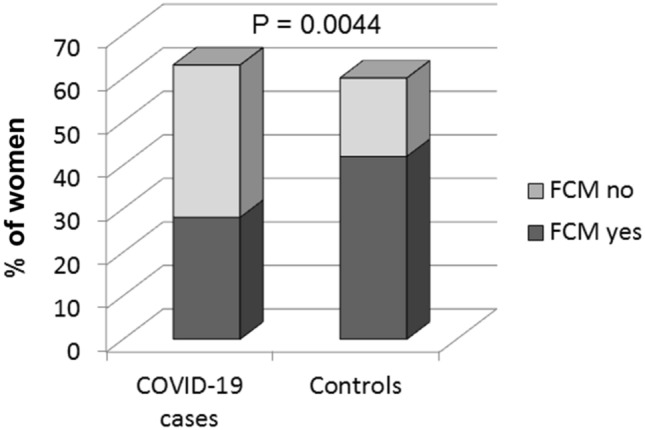
Results: The prevalence of male DNA of presumed fetal origin was significantly higher in healthy controls than in COVID-19 cases (70 vs 44.4%, P = 0.0044; OR 0.3429, 95% CI 0.1631-0.7207, P = 0.0047). Among women affected with COVID-19, the presence of male FCM did not significantly influence the severity of the disease, though the 8 deceased women studied were all FCM negative.
Conclusion: This is the first case-control study reporting the prevalence of FCM in COVID-19 and healthy women. Overall, our data seem to suggest a role for FCM in the protection towards the SARS-CoV-2 infection with a possible positive impact on clinical outcome.
Keywords: COVID-19; Fetal cell microchimerism; Microchimeric cells; Pregnancy; SARS-CoV-2.
© 2023. The Author(s).
Conflict of interest statement
The authors have no relevant financial or non-financial interests to disclose.
Figures
References
-
- Istituto Superiore di Sanità. Bollettino-sorveglianza-integrata-COVID-19 26 marzo 2020. Epidemia COVID-19 Aggiornamento nazionale 26 marzo 2020. Available from: https://www.epicentro.iss.it/coronavirus/bollettino/ %25202020.pdf+&cd=2&hl=it&ct=clnk&gl=it.
-
- Ambrosino I, Barbagelata E, Ortona E, Ruggieri A, Massiah G, Giannico OV, et al. Gender differences in patients with COVID-19: a narrative review. Monaldi Arch Chest Dis. 2020;90. - PubMed
Publication types
MeSH terms
Substances
Grants and funding
LinkOut - more resources
Full Text Sources
Medical
Miscellaneous
