Review
. 2023 Apr 13;186(8):1670-1688.
doi: 10.1016/j.cell.2023.01.038. Epub 2023 Feb 28.

What is cancer metabolism?

Affiliations
Review

What is cancer metabolism?

Lydia W S Finley. Cell. .

Abstract

The uptake and metabolism of nutrients support fundamental cellular process from bioenergetics to biomass production and cell fate regulation. While many studies of cell metabolism focus on cancer cells, the principles of metabolism elucidated in cancer cells apply to a wide range of mammalian cells. The goal of this review is to discuss how the field of cancer metabolism provides a framework for revealing principles of cell metabolism and for dissecting the metabolic networks that allow cells to meet their specific demands. Understanding context-specific metabolic preferences and liabilities will unlock new approaches to target cancer cells to improve patient care.


Conflict of interest statement

Declaration of interests L.W.S.F. holds a patent and is an author on patent applications related to cellular metabolism and cell fate control.

Figures
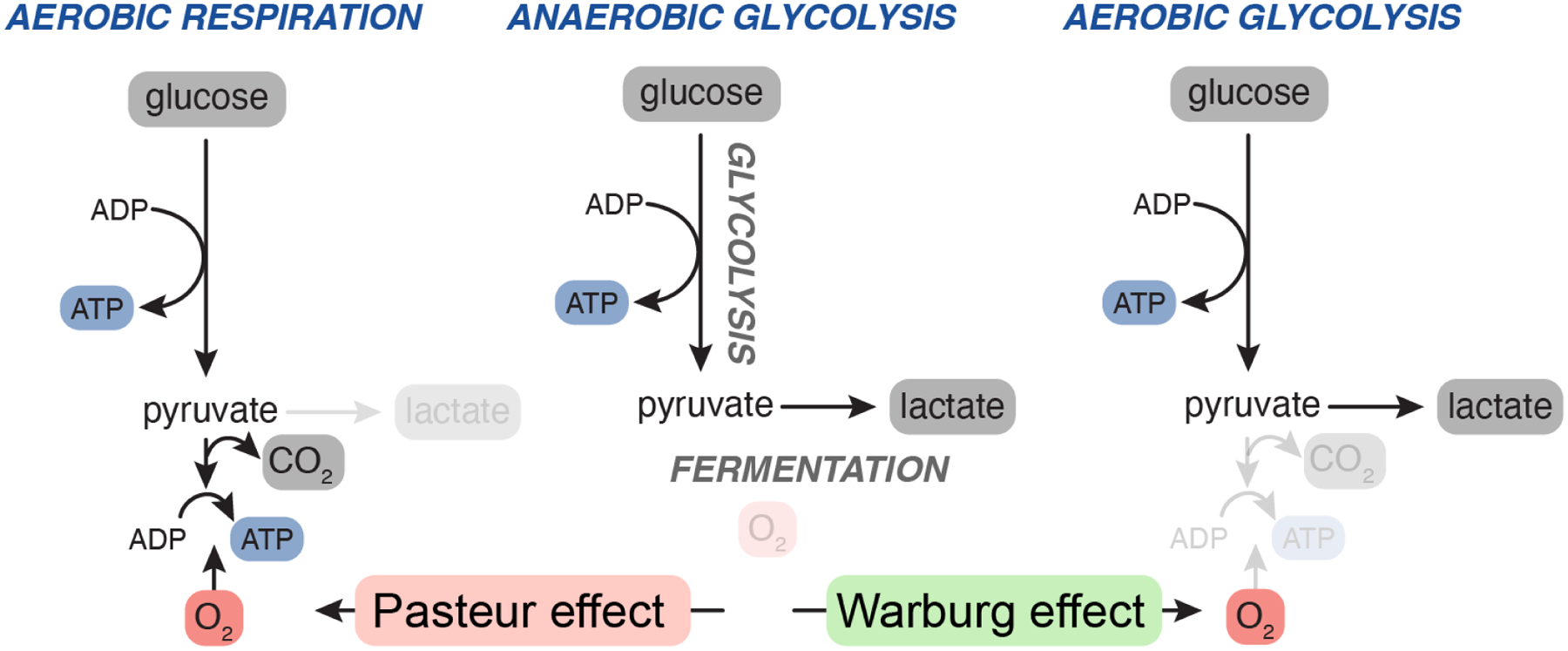
Figure 1.
Figure 1.. Warburg and Pasteur effects.
When oxygen is not present, the glycolytic breakdown of sugars (such as glucose) is sustained by converting the glycolytic end-product pyruvate to ethanol or lactate in a process known as fermentation (middle). Fermentation allows organisms to generate ATP from sugar without oxygen. The Pasteur effect describes the phenomenon in which oxygen suppresses fermentation by allowing organisms to oxidize pyruvate to carbon dioxide (left). The Warburg effect refers to the persistent fermentation (lactate production) of mammalian cells even when oxygen is abundant (right).
Figure 2.
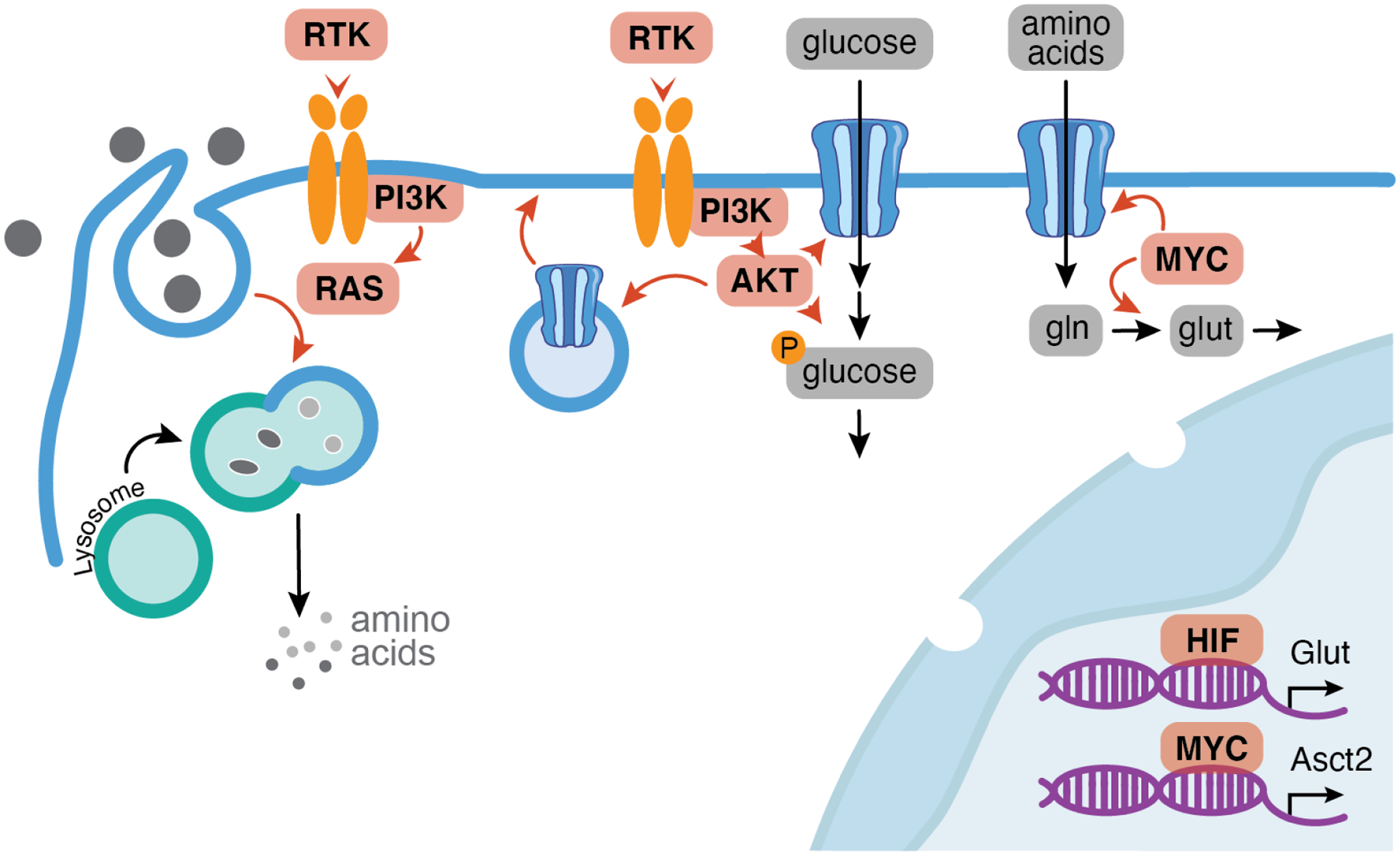
Figure 2.. Mechanisms of nutrient uptake.
Nutrient uptake is largely initiated by receptor tyrosine kinases (RTK) which activate signaling cascades that promote the membrane localization of nutrient transporters and activity of enzymes that metabolize—and therefore help capture—nutrients. Signaling pathways downstream of PI3K, most notably RAS, can also direct bulk uptake of macromolecules via macropinocytosis. Nutrient uptake is also facilitated by transcriptional induction of membrane transporters via oncogenic transcription factors hypoxia inducible factor (HIF) and MYC. Genes frequently mutated or activated in cancer are colored in pink.
Figure 3.
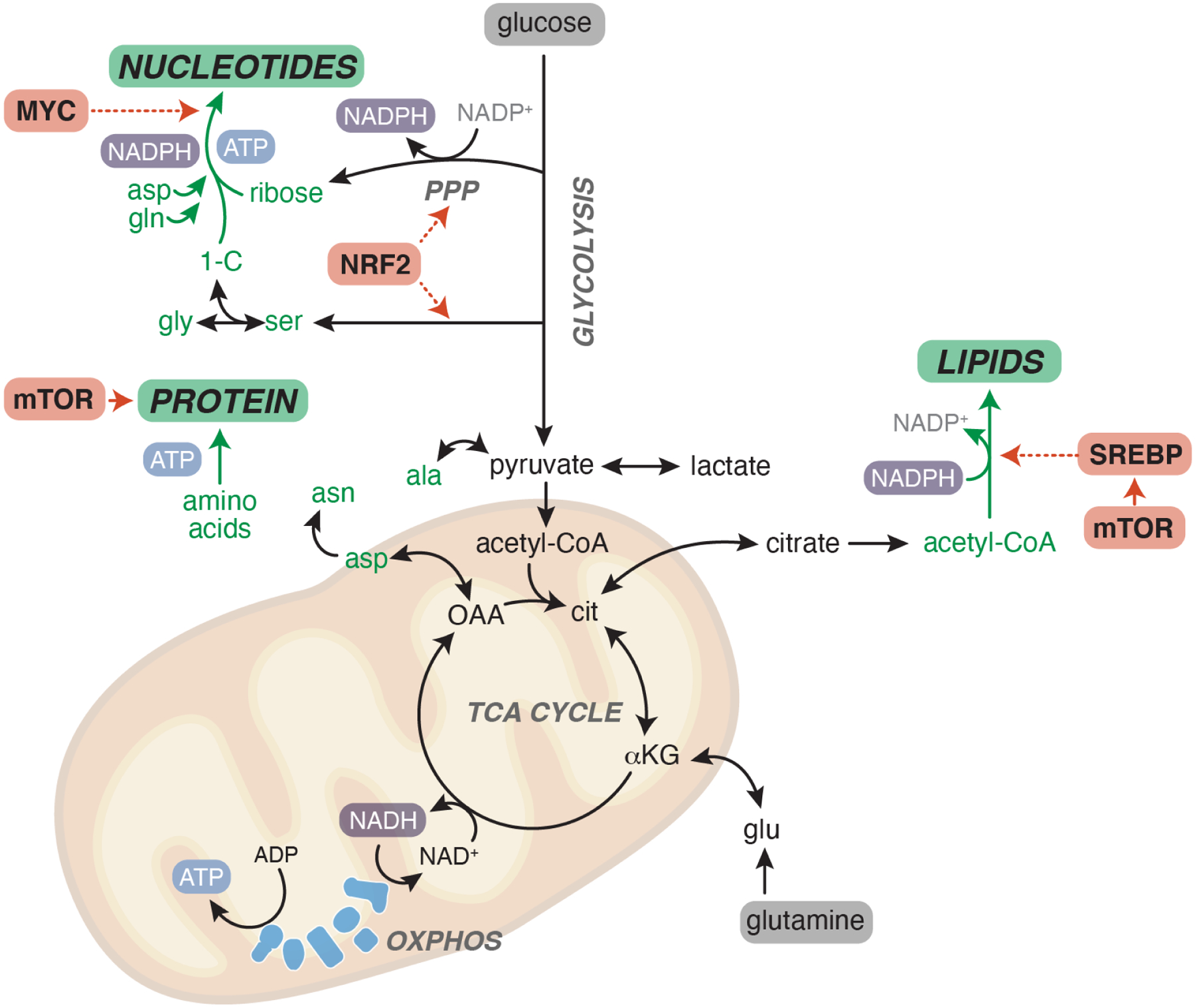
Figure 3.. Biosynthetic networks.
Once inside the cell, nutrients—most notably glucose and glutamine—are funneled into metabolic networks that provide the building blocks necessary to produce the major macromolecules for growth: lipids, nucleotides and protein. Critical metabolic building blocks are shown in green. Major routes for ATP and reducing equivalent (NADPH) production are highlighted. Metabolic regulators commonly activated in cancer are shown in pink. Dashed lines represent transcriptional control of metabolic pathways by indicated transcription factors. PPP, pentose phosphate pathway. OXPHOS, oxidative phosphorylation.
Figure 4.
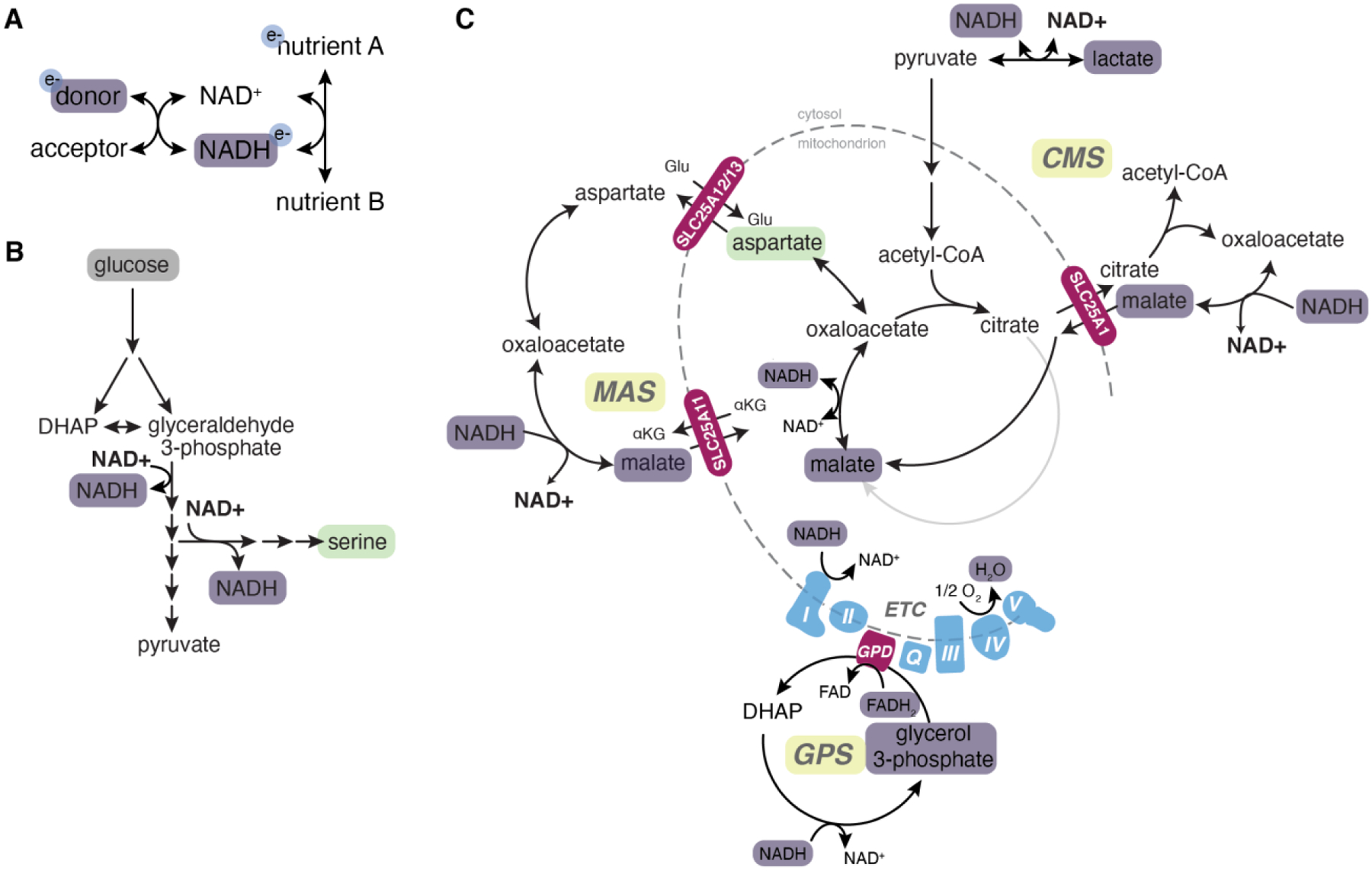
Figure 4.. Electron carrier regeneration.
All metabolic pathways require a continuous supply of electron donors and acceptors. A, Basic principles of redox reactions. For a more reduced metabolite (A) to be converted to a more oxidized metabolite (B), an electron carrier (commonly NAD+) is required to accept reducing equivalents from A. Continued production of B depends on electron carrier regeneration, which can be achieved by the reduced electron carrier (here, NADH) donating electrons to another electron acceptor (for example, complex I of the electron transport chain). B, Major cytosolic sources of NADH are glycolysis (which produces 2 NADH for each molecule of glucose) and de novo serine synthesis. Continued flux through these pathways requires regeneration of oxidized NAD+. C, Reduction of pyruvate to lactate via LDH is a major source of cytosolic NAD+ regeneration, although if pyruvate is produced via glycolysis this reaction is redox neutral. Electrons can be transferred to the cytosol via electron shuttles. The glycerol 3-phosphate (GPS) shuttle couples reduction of dihydroxyacetone phosphate (DHAP) to glycerol 3-phosphate with oxidation of glycerol 3-phosphate back to DHAP thereby transferring reducing equivalents into the mitochondrial electron transport chain (ETC). Both the citrate-malate shuttle (CMS) and malate-aspartate shuttles (MAS) transfer reducing equivalents into mitochondria via reduction of cytosolic oxaloacetate to malate, which is imported into the mitochondria to regenerate oxaloacetate and NADH. The ETC is a major source of electron carrier regeneration and electrons are ultimately used to reduce oxygen to form water. Purple boxes, reduced electron carriers. Green boxes, oxidized metabolites that become limiting in reductive conditions.
Figure 5.
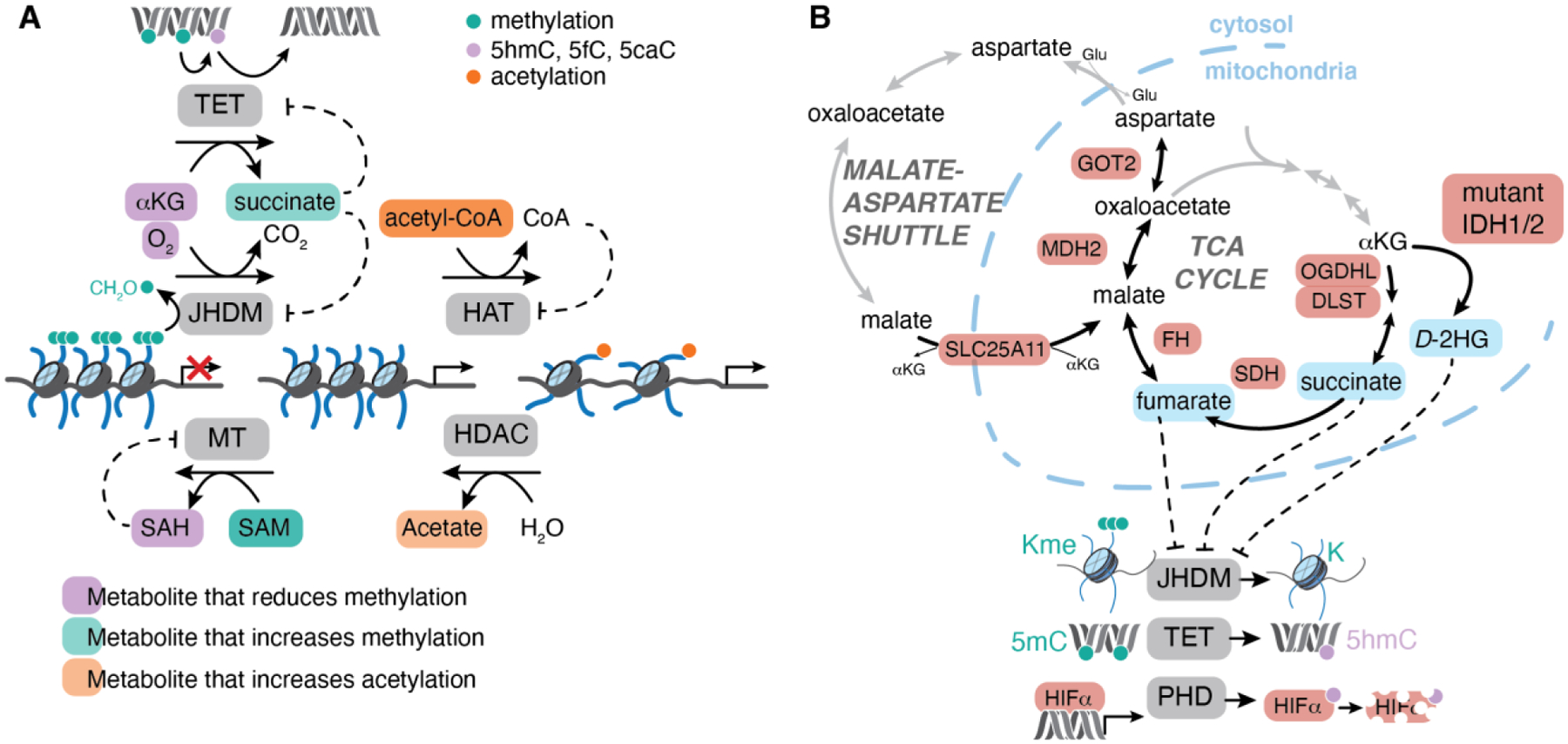
Figure 5.. Intersection between metabolism and chromatin.
A, Overview of metabolites that are substrates and inhibitors of major chromatin-modifying enzymes. DNA and histone methylation is deposited by methyltransferases (MT) that use S-adenosylmethionine (SAM) as a methyl donor, producing S-adenosylhomocysteine (SAH) as a product. Histone acetyltransferases (HAT) use acetyl-CoA or other related acyl-CoAs as substrates to modify histone lysine residues. Most histone deacetylases (HDAC) use water to catalyze simple hydrolysis of acetylated lysine, yielding acetate. Some mono- and dimethylated histone lysine residues can be removed by lysine-specific demethylase 1 (LSD1), which uses FAD as a cofactor that is reoxidized by molecular oxygen. Most lysine and arginine methylation is removed by jumonji-domain containing histone demethylases (JHDM) that use alpha-ketoglutarate (αKG) and molecular oxygen as co-substrates to hydroxylate methylated residues, yielding succinate and carbon dioxide as products. The unstable hydroxyl-methyl intermediate is lost as formaldehyde. DNA methylation is removed by the ten-eleven translocation (TET) family of enzymes that hydroxylate DNA methylcytosine to 5-hydroxymethylcytosine (5hmC). 5hmC can lead to passive loss of DNA methylation during cell division or can be iteratively oxidized to 5-formylcytosine (5fC) or 5-carboxycytosine (5caC) which can be actively removed and replaced with unmodified cytosine. Metabolites whose abundance is linked to changes in chromatin modifications are highlighted in orange (promoting acetylation), teal (promoting methylation) or purple (reducing methylation). B, Mutations in genes encoding components of the TCA cycle or malate-aspartate shuttle (highlighted in red) are found in human cancer patients. Somatic mutations in isocitrate dehydrogenase (IDH1/2) enable production of D-2HG from αKG. Germline mutations in components of succinate dehydrogenase complex (SDH) or fumarate hydratase (FH) are associated with tumor predisposition syndromes marked by loss of heterozygosity and accumulation of succinate or fumarate, respectively. All 3 oncometabolites, highlighted in orange, can inhibit αKG-dependent dioxygenases including the JHDM, TET or prolyl hydroxylase (PHD) proteins and are associated with hypermetylation of histones (Kme) or DNA (5mC) and normoxic stabilization of hypoxia inducible factor alpha subunits (HIFα).
Figure 6.
Figure 6.. Strategies for targeting metabolism.
A, Metabolic interventions hold particular promise in tumors in which oncogenic mutations induce reliance on a specific metabolic pathway. For example, IDH1/2-mutant tumors use mutant IDH1/2 to produce D-2HG from αKG. Blocking this cancer-specific pathway has shown therapeutic efficacy in some patients. B, Some tumors have metabolic liabilities that arise as a result of their oncogenic mutations. For example, the truncated TCA cycle in SDH- and FH-deficient tumors imposes reliance on alternative metabolic pathways that may therefor represent a selective liability in these cancer cells relative to normal cells. C, Targeting a major metabolic pathway (e.x. glutamine usage or OXPHOS) may hold promise but efficacy may be constrained by alternative mechanisms that allow cells to circumvent such inhibition. In this scenario, dual targeting of compensatory pathways could represent an effective strategy, although toxicity to normal cells is likely to be a major risk.

References

    1. Warburg O On the origin of cancer cells. Science 123, 309–314 (1956). - PubMed
    1. DeBerardinis RJ & Chandel NS We need to talk about the Warburg effect. Nat Metab 2, 127–129 (2020). - PubMed
    1. Luengo A et al. Increased demand for NAD(+) relative to ATP drives aerobic glycolysis. Molecular cell 81, 691–707 e696 (2021). - PMC - PubMed
    1. Wang Y et al. Saturation of the mitochondrial NADH shuttles drives aerobic glycolysis in proliferating cells. Molecular cell (2022). - PMC - PubMed
    1. DeBerardinis RJ & Thompson CB Cellular metabolism and disease: what do metabolic outliers teach us? Cell 148, 1132–1144 (2012). - PMC - PubMed

Publication types