


Feasibility and benefits of home initiation of subcutaneous apomorphine infusion for patients with Parkinson's disease: the APOKADO study
- PMID: 36862190
- PMCID: PMC9979890
- DOI: 10.1007/s00702-023-02609-6
Feasibility and benefits of home initiation of subcutaneous apomorphine infusion for patients with Parkinson's disease: the APOKADO study
Abstract
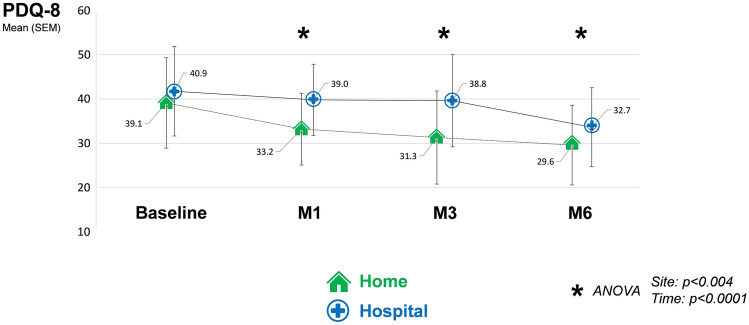
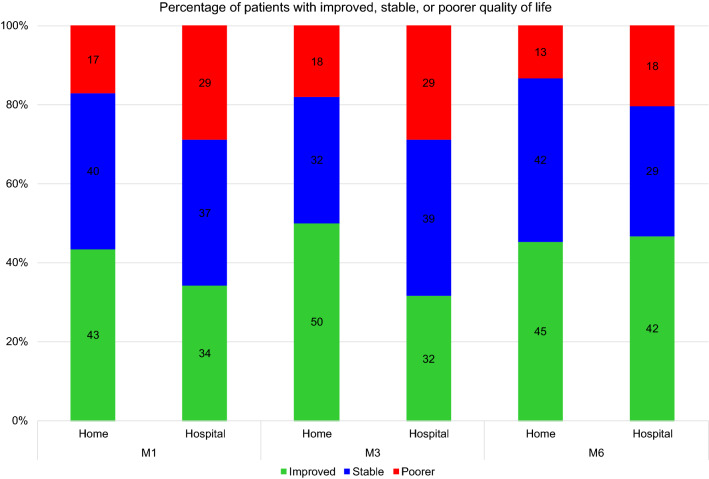
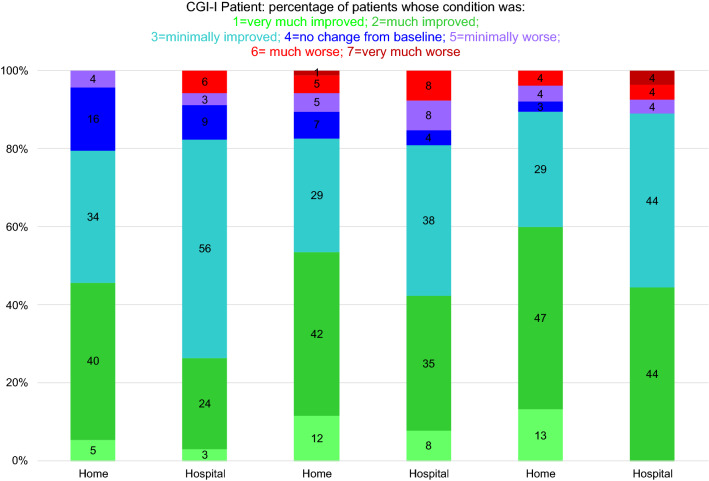
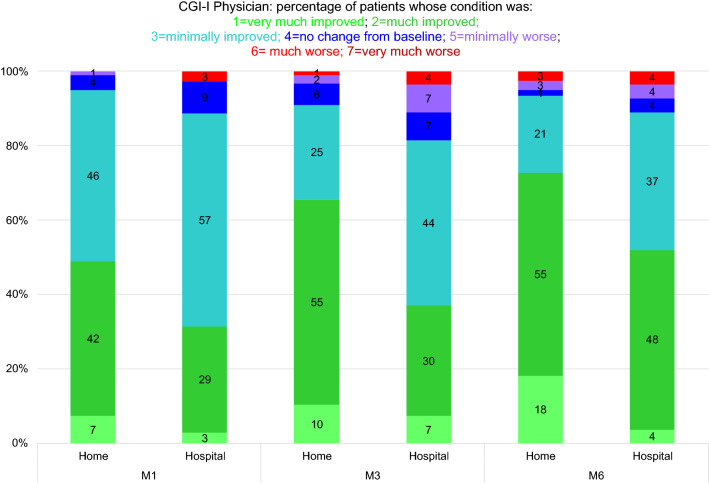
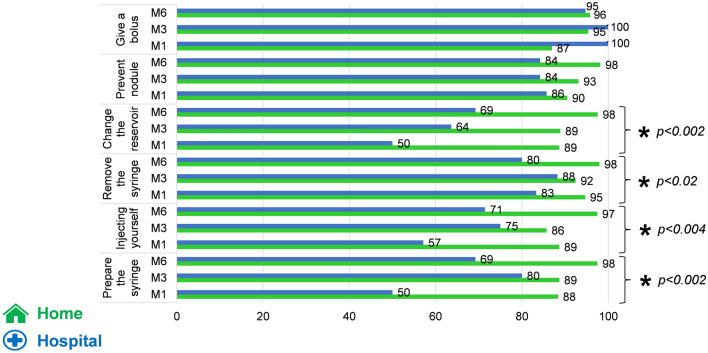
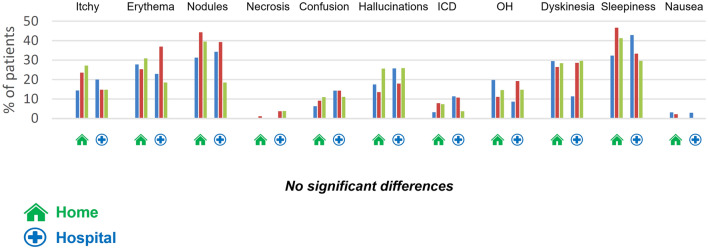
Continuous subcutaneous apomorphine infusion (CSAI) is used to treat patients with Parkinson's disease (PD) who are experiencing motor fluctuations. However, the need to initiate this treatment during a hospital stay may restrict patients' access to it. To assess the feasibility and benefits of initiating CSAI in the patient's own home. A French prospective multicenter longitudinal observational study (APOKADO) among patients with PD who required subcutaneous apomorphine, comparing in-hospital versus home initiation. Clinical status was assessed according to the Hoehn and Yahr score), the Unified Parkinson's Disease Rating Scale Part III, and the Montreal Cognitive Assessment. We assessed patients' quality of life with the 8-item Parkinson's Disease Questionnaire, rated the improvement in their clinical status on the 7-point Clinical Global Impression-Improvement scale, recorded adverse events, and ran a cost-benefit analysis. 145 patients with motor fluctuations were included in 29 centers (office and hospital). Of these, 106 (74%) were initiated onto CSAI at home, and 38 (26%) in hospital. At inclusion, the two groups were comparable for all demographic and PD characteristics. After 6 months, quality of life, adverse events and early dropout rates were similarly rare-across the two groups. Patients in the home group improved more quickly their quality of life and became more autonomous in managing the device than those in the hospital group, and their care costed less. This study shows that home (versus in-hospital) initiation of CSAI is feasible, improves patients' quality of life more quickly, with the same level of tolerance. It is also less expensive. This finding should make it easier for patients to access this treatment in the future.
Keywords: Apomorphine; Home care; Parkinson’s disease; Quality of life.
© 2023. The Author(s).
Conflict of interest statement
F.Z. served on scientific advisory boards for Aguettant, Adsia and Elivie, received research support from Adelia and received travel grant from Aguettant; A.L. served on scientific advisory boards for Adsia and Elivie, received research support from Adelia; I.V.D. received travel grant from Adelia. J.P.D.M. received research support and received travel grant from Adelia; A.P. received travel grant from Adelia. M.Z. received travel grant from Elivie, LVL, Orkyn; M.V. served on scientific advisory boards, received research support and received travel grant from Aguettant, Adelia, Elivie, LVL, Orkyn.
Figures
References
-
- Auffret M, Béreau M, Tatu L, Vérin M (2022) Continuous subcutaneous apomorphine infusion for the management of Parkinson’s disease at the end-of-life: two preliminary case reports Neurology 98, 18 Supplement, P1–4.011
Publication types
MeSH terms
Substances
LinkOut - more resources
Full Text Sources
Medical
Miscellaneous
